Tel: +86-134-31394972
E-mail: sales@pre-webguidesystem.com
Tel: +86-134-31394972
E-mail: sales@pre-webguidesystem.com
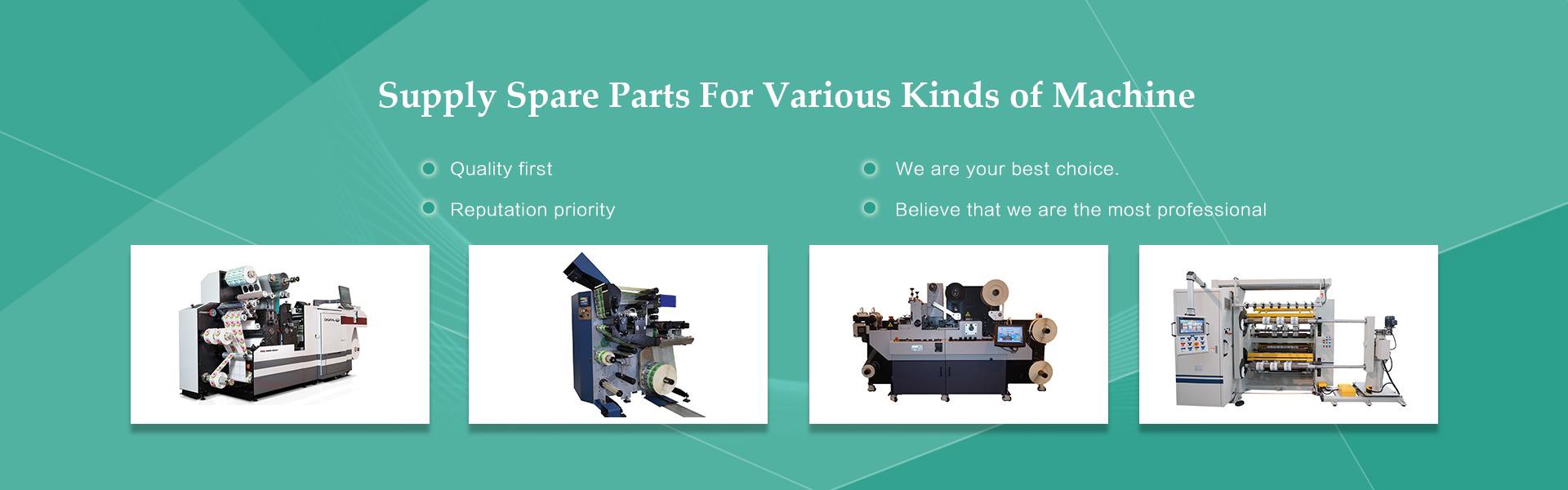
Slitting machine is a kind of mechanical equipment for slitting wide-width paper, mica tape or film into a plurality of narrow-width materials. It is commonly used in papermaking machinery, wire and cable mica tape and printing and packaging machinery. The main application of slitting machine is: mica tape, paper, insulating material and film slitting, especially suitable for slitting of narrow tape (insulation material, mica tape, film, etc.).
With the increasing degree of mechanization, the requirements for the efficiency of the winding operation are getting higher and higher. When the slitting machine is applied to the slitting operation of the film, the tape and the paper, the whole reel of the whole reel can be cut into a plurality of small reels according to different requirements to meet the needs of different occasions. Of course, the slitter can also be used in other production areas where winding work is required.
There are many kinds of slitting machines on the market, but there are many defects and deficiencies at the same time. For example, the traditional slitting uses the thickness calculation of the input paper, so that the actual winding diameter error is large, and the accuracy of the tension control needs to be manually monitored in real time. When the tension is too tight and too tight, you need to manually change the parameters. The tension control system is the core part of the slitter. Today, PRE will talk with you about the tension control of the slitting machine.
Tension control refers to the ability to permanently and stably control the tension of a material as it is transported on a device. The tension control of the slitter is basically manual tension control and automatic tension control. Manual tension control means that during the winding or unwinding process, when the winding diameter changes to a certain stage, the operator adjusts the manual power supply device to achieve the purpose of controlling the tension.
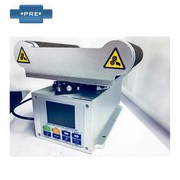
The automatic tension control is to directly measure the actual tension value of the material belt by the tension sensor, and then convert the tension data into a tension signal and feed it back to the tension controller. By comparing the signal with the preset tension value of the controller, the control signal is calculated. The control unit is automatically controlled to make the actual tension value equal to the preset tension value for the purpose of stabilizing the tension.
Tension control must remain effective for any speed of the slitter, including acceleration, deceleration, and constant speed of the machine. Even in the case of an emergency stop, there should be a capacity to ensure that the material being cut is not scratched or damaged. The stability of tension control is directly related to the quality of the slitting product. If the tension is insufficient, the raw material will loose or drift during operation, and the finished product will wrinkle after slitting and rewinding; if the tension is too large, the raw material will be easily broken, so that the broken material of the finished product will increase after the slitting and rewinding.
For this reason, constant tension control is required, that is, the raw material is subjected to an optimum tension during the winding process, and the tension is always maintained. Since the selected detection element and torque adjustment element are different, there are various tension control schemes available.
Tension formation
There are many forms of tension formation, but the basic principles are the same. The formation of tension is an integral part. During the start-up process, the line speed of the receiving roll is greater than the running line speed of the discharging roll, so that a certain tension is generated in the winding roller. When the winding reaches the proper tension required by us, the power mechanism is adjusted in time to make the receiving roll. The line speed is stable with the discharge roll, so that the raw material runs stably under this tension. The tension control system is to satisfy the tension stability of the whole machine.
Factors affecting tension stability
The factors that cause fluctuations and changes in tension are often complicated, and the main influencing factors are as follows:
1. The change of the speed of the machine will inevitably cause the change of the tension of the whole machine:
2. During the process of collecting and unwinding, the diameter of the winding and unwinding is constantly changing, and the change of the diameter will inevitably cause the change of the tension of the raw material. When the unwinding torque is constant, the diameter is reduced and the tension is increased. The winding is reversed. If the winding torque is constant, the tension will decrease as the winding diameter increases. This is the main factor that causes the change in material tension during operation;
3. The change of the tightness of the raw material roll will cause the change of the tension of the whole machine;
4. The unevenness of the material of the raw materials is cut. If the material elasticity fluctuates, the material thickness changes along the width and length direction, the mass of the material roll is eccentric, and the temperature and humidity of the production environment change, which also affects the tension fluctuation of the whole machine;
5. The transmission mechanism (such as guide roller, floating roller, flattening roller, etc.) of the slitting machine has factors such as imbalance and unstable air pressure.
6. The change of speed during slitting affects the change of tension: When the speed is increased or decelerated, the speed of the main motor changes. Firstly, it causes the instantaneous change of the material tension of the unwinding to the winding section, and it must be slightly vibrated after a period of time to gradually stabilize the tension. The instability of this tension is manifested in the fact that the finished roll is not well-wound, and the end face has unevenness, which affects the quality of the product.
Slitting machine unwinding tension detection system
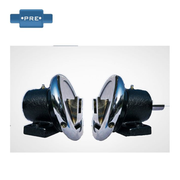
1. Tension sensor detection is a direct detection of tension, closely combined with the machine, and a detection method of moving parts. Usually two sensors are paired and mounted on the end shafts on both sides of the detection guide roller. The strip detects the actual tension value by detecting the applied load on both sides of the guide roller, causing the tension sensor to be displaced or deformed, and converting the tension data into a tension signal for feedback to the tension controller.
2. Indirect tension detection system of floating roller: a set of floating roller is installed in front of the tracking roller. The position of the floating roller is detected by a potentiometer. The tension control method is to keep the tension constant by maintaining the position of the floating roller.
3. The magnetic powder clutch is used to control the rotational torque of the input winding roller to achieve tension control: the magnetic powder clutch is composed of an active part and a driven part, and is connected to the winding roller through a transmission mechanism such as a universal joint, and the fine ferromagnetic powder is filled in the middle. As a torque transmission medium.
A magnetic field is formed by applying a constant current to the exciting coil, and the magnetic powder is magnetized. The magnetized magnetic powder attracts each other to form a chain arrangement. When the active part rotates at a constant speed, the coupling force between the magnetic powders is broken to form a circumferential tangential force, and the product of the tangential force and the radius of the magnetic powder ring is the driving driven part. The winding torque of the winding realizes the coupling of the output torque from the active part to the driven part in continuous rotation, thereby achieving the purpose of controlling the tension.
4. The slitting and unwinding capability and the speed tension detecting system mainly use magnetic powder tension braking to control the unwinding speed. The working principle is as follows: a coupling is installed in the magnetic powder brake, and an input part and an output part with a magnetic coil are installed. . Below the magnetic coil is an annular groove, the underside of which is an annular rotor or output member. The annular groove is located at the center of the output member, and the groove is filled with magnetic powder.
When there is excitation current in the magnetic coil, the coil generates magnetic flux to align the magnetic powder in the direction of the magnetic field, thus generating damping between the input member and the output member, and transmitting the torque. If the tension and speed applied to the aluminum foil are increased or decreased, the magnitude of the exciting current can be changed, or the current value or voltage value applied to the coupling coil by the varying amplifier can be effectively controlled.
5. Inverter system with tension control: The characteristic of this system is that the tension controller is cancelled, the functions and parameters of the tension controller, such as the calculation function of the winding diameter, the winding diameter output, the system is accelerating, decelerating, parking In order to overcome the inertia of the system, the corresponding torque static and dynamic torque compensation; the film breaking alarm function; the system "speed" function is effectively prevented when the system is in an emergency stop. All built in the inverter type, the inverter is used as the tension controller, so that the tension of the whole process is very stable.
For more tension controller and tension sensor information,welcome to visit our website:
https://www.pre-webguidesystem.com/tension-control/
Previous: Main Types Of Tension Controller
Next: No Information