Tel: +86-134-31394972
E-mail: sales@pre-webguidesystem.com
Tel: +86-134-31394972
E-mail: sales@pre-webguidesystem.com
The excitation current is linear with the torque
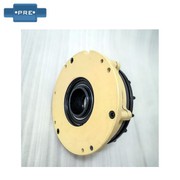
The magnetic powder clutch and the magnetic powder brake use the magnetic powder to transmit the torque according to the electromagnetic principle, and the transmitted torque is substantially linear with the exciting current. Therefore, as long as the magnitude of the exciting current is changed, the magnitude of the torque can be easily controlled. Under normal conditions, the excitation current is proportional to the torque it communicates in the range of 5% to 100% of the rated torque.
Stable slip torque
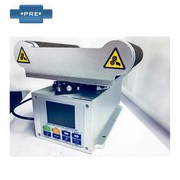
When the excitation current remains unchanged, the torque it transmits is not affected by the differential speed (slip speed) between the transmission member and the driven member, that is, there is no difference between the static torque and the dynamic torque. Therefore, a constant torque can be stably transmitted. If this characteristic is applied to the tension control, the user can accurately control and transmit the required torque by simply adjusting the magnitude of the excitation current, thereby easily and effectively achieving the purpose of controlling the tension of the coil.
Magnetic powder clutch application range
Due to the above characteristics, magnetic powder clutches and brakes have been widely used in papermaking, printing, plastics, rubber, textile, printing and dyeing, wire and cable, metallurgy and other related winding and winding tension control. In addition, the magnetic powder clutch can also be used for buffer starting, overload protection, speed regulation and the like. Magnetic powder brakes are also often used for dynamometer loading and braking of transmission machinery.
Previous: Magnetic powder clutch features
Next: No Information

 русский
  Deutsch
 Latviešu
 اردو
اردو slovenščina
 Polski
 বাংলা
বাংলা bosanski
 magyar
 Srbija jezik (latinica)
 România limbi