Tel: +86-134-31394972
E-mail: sales@pre-webguidesystem.com
Tel: +86-134-31394972
E-mail: sales@pre-webguidesystem.com
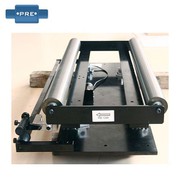
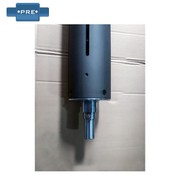
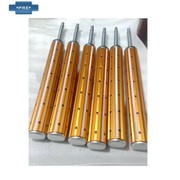
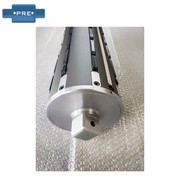
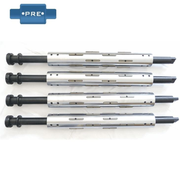
Aluminum guide roller product performance: Dongguan aluminum guide roller, also known as Dongguan aluminum alloy guide roller, is made of high-quality aluminum alloy material (6063-T5), through the mold into a tube type (from outer diameter 30mm ~ 220mm) various specifications, within It has reinforced structure and high strength. It uses precise equipment and special tools for surface finishing to make the surface smooth, coaxiality reaches 0.02mm, the whole axis is corrected within 2g by computer balance correction, the special technology of shaft end and imported bearings It can operate easily and at high speed. According to the different needs of the industry, the surface can also be specially treated, sandblasting, reticulated, Teflon and special hardening treatment HV700, so that it has good scratch resistance and wear resistance.
Features of aluminum guide roller: Dongguan aluminum guide roller has high strength, low resistance, light weight, flexible rotation, no rust, wear and corrosion resistance, especially suitable for precision machinery industry such as printing, packaging, plastic, electronic battery and various Coil processing industry.
The aluminum guide roller is made of high quality aluminum and has been processed by advanced processing technology. Dongguan Shuijing Hardware Products Co., Ltd. is engaged in the manufacture and sale of gas-increasing shafts, air-expansion shafts/safety chucks, edge trackers (edge machines), aluminum guide rollers, magnetic powder brakes and clutches, and retractable materials linkage system. , tension control devices and other industrial machinery parts such as printing, laminating, slitting, rewinding, coating, gluing, extrusion, and laminating.
Causes of corrosion of aluminum guide rolls
1. Tearing: Unqualified lubricating oil or too thick emulsion, sliding between sheet and roll, uneven metal deformation; no control of rolling rate, excessive reduction; rolling speed too large; Incorrect adjustment, unstable tension; poor annealing quality; insufficient metal plasticity; incorrect roll control; excessive internal stress in metal; If it is too large, the feeding volume is not correct, and the tensile stress is generated on the side of the strip, and the compressive stress is generated on the side, so that the edge produces a small crack. After multiple rolling, the expansion continues from the crack to the tear; the stretching machine jaws during finishing If the clamping is not correct or uneven, or the plate has cracked edges, it will cause tearing when stretching; when quenching, the pockets are not well or too tight, causing the plate to be fractured, causing tearing when stretched and straightened. .
2. Too thin: The adjustment of the reduction is not correct; the thickness gauge is faulty or improperly used; the roller type control is incorrect.
3. Folding (folding): The roll type is not correct. For example, the calender bearing heats up, so that the two ends of the roll are swollen. As a result, the plate is thick and thin on both sides; the wave before the calendering is too large, so that the calendering amount is If it is too large, it will produce a crimp; when the sheet is pressed, the feeding will be easy to produce a crimp; the thickness difference between the two sides of the sheet is large, and the crimp is easy to occur.
4. Non-metal press-in: The rolls, roller tables, scissors machines, etc. of the hot rolling mill are not clean, the dirt falls on the pallet belt during the processing, and is formed by rolling; the rolls, guide rolls and three of the cold rolling mill The parts of the contact straightening plate such as the roller straightening machine and the coiler are not clean, and the dirt is pressed in; the rolling oil nozzle is blocked or the pressure is low, and the non-metallic dirt adhered on the surface of the strip plate cannot be washed; the emulsion replacement If it is not timely, the aluminum powder is not cleaned and the emulsion tank is not cleaned.
5. Metal pressing: During the heating process, the metal chips fall on the strip and are formed by rolling; when the hot rolling, the roll side is less, the cracked metal falls on the strip; the quality of the disc shearing edge is not good. There is a burr on the edge of the strip, and the compressed air does not blow off the metal scrap on the surface of the strip; after the roll sticks to the aluminum, the stick is pressed against the strip; the guide is clamped too tightly, and the scraped scrap falls on the board.
6. Wave: The roller type is not adjusted correctly, the original roll type is not suitable; the shape control system is faulty or improperly used; the original shape of the cold rolled wool is poor or the crown is too large; the reduction ratio, tension, speed, etc. Inappropriate selection of process parameters; various types of straighteners are not well adjusted, the gap between the straightening rolls is inconsistent, causing waves on the thin side of the sheet; for straightening and straightening machines, elongation selection improper.
7. Depression (Bumping): The sheet or reel is bumped during handling or parking; the clip is not well worn during cold rolling or annealing, and the annealing material is not clean, there are metal objects or protrusions; Into hard metal slag or other hard things.
8. Pine branches: The amount of reduction during cold rolling is too large, and the metal is slipped due to friction between the rolls. The concentration of the rolling liquid is too large, the fluidity is not good, and it cannot be evenly distributed on the strip surface. After rolling, a pine tree shape is formed; the thickness indicates that the instrument is malfunctioning; the cold rolling tension is too small.
Previous: How Does The Flattening Roller Work?
Next: Printing Roller