Tel: +86-134-31394972
E-mail: sales@pre-webguidesystem.com
Tel: +86-134-31394972
E-mail: sales@pre-webguidesystem.com
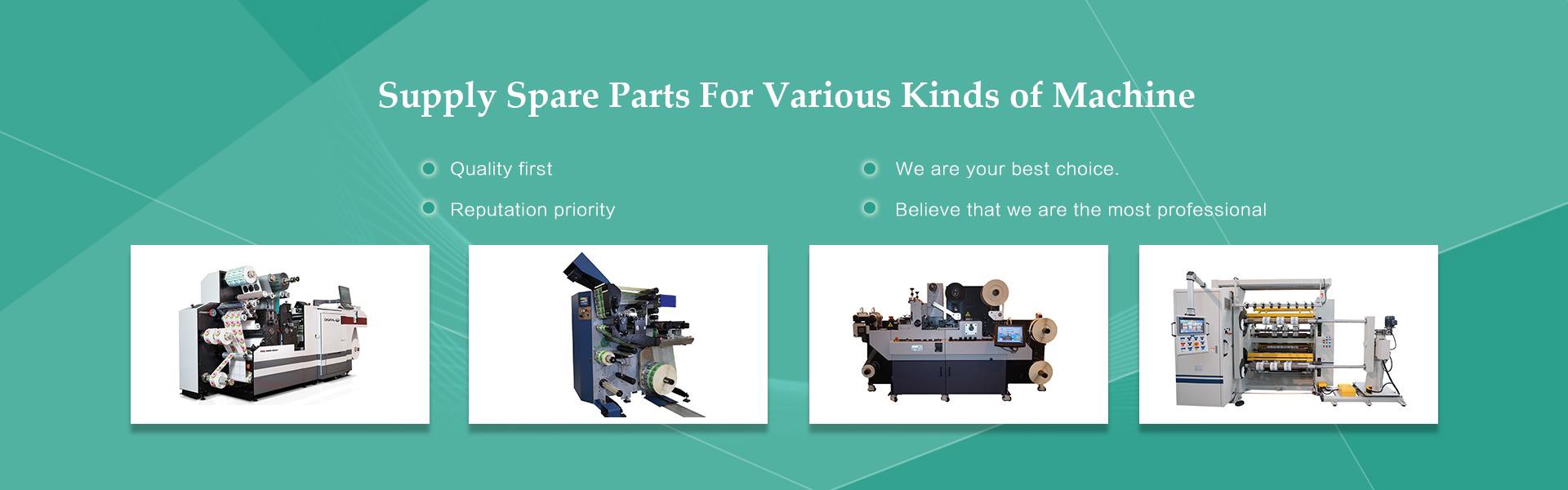
The flexographic printing machine is mainly composed of 4 parts, namely unwinding feeding part, printing part, drying part and rewinding receiving part. On modern flexographic printing presses, there are generally measurement and control devices such as tension control, edge position control, register control, printed product observation, and mechanical condition monitoring and fault diagnosis systems.
In order to expand the scope of application, some flexographic printing presses are also equipped with glazing, laminating, bronzing, slitting, die cutting, punching, screen printing, and gravure printing units, which have become flexographic printing production lines.
Flexographic printing presses generally reach 150m / min (or even higher). Under normal operating conditions, in order to reduce the number of shutdown and roll changes and waste of roll materials, an unwinding feeding device must be installed with a simple structure. The function of unwinding feeding is to unroll the printing material in a roll, continuously and stably feed the printing material into the printing component, and control the speed, tension and lateral position of the printing material before it reaches the first printing component. The unwinding feeding component is composed of a feeding roll frame and a set of guide rollers. The feeding roll frame is arranged in a straight line on the printing component. The roll holder has electric or hydraulic components to control the lifting. Generally, the roll paper shaft is locked by a pneumatic component, and a detector is installed at the end of the roll paper.
The unwinding feeding part is also equipped with a digitally controlled electromagnetic brake tension system, the unwinding feeding part and the tension control system structure of the flexographic printing machine. He can make the best tension control for different substrates, and it is not affected by dust and dirt. Among them, the tension compensation control uses a loop-type self-detection system, which can continuously maintain the tension of the paper (or film) when the diameter of the roll paper continues to decrease.
The unwinding feeding part is also equipped with a driving roller mechanism. The drive roller is an easily adjustable, variable-speed paper feed roller, which controls the speed at which the roll paper enters the printing unit smoothly, and together with the roll braking device, generates the unwinding tension of the tape to adapt to different substrates (card Paper, tissue, plastic film, etc.), while ensuring that the web remains in the correct longitudinal position.
The structure of the floating roller machine of the unwinding feeding part can reduce the fluctuation of the unwinding tension, and at the same time reduce the downtime when changing the reel, in order to improve the use efficiency of the flexographic printing machine. Most flexographic printing machines are equipped with continuous roll changing The device connects the coils without stopping the machine. This is especially important for floating rollers.
The unwinding and feeding device of high-end flexographic printing machine is also equipped with a side position control system. One side position control system is installed in front of the printing unit, and the other side position control system is installed in front of the die-cutting table. This design keeps the roll in the correct position throughout the production process.