Tel: +86-134-31394972
E-mail: sales@pre-webguidesystem.com
Tel: +86-134-31394972
E-mail: sales@pre-webguidesystem.com
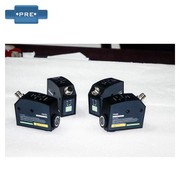
Tension controller (Tension controller) is a system developed by a single chip microcomputer or some embedded devices and peripheral circuits. It is a control instrument that can directly set the tension value required to be controlled, and then directly input the signal of the tension sensor. (Generally, the millivolt level) is used as the tension feedback value. After the deviation is obtained by comparison, it is input to the controller such as PID for processing, and is output to the peripheral actuator for control as much as possible to achieve the purpose of small deviation and fast system response.
The essence of constant tension control with a frequency converter is the dead loop vector control. For winding, the winding volume of the winding is changed from small to large. In order to ensure constant tension, the output torque of the motor is required to change from small to large. At the same time, in different operating processes, the corresponding torque compensation should be carried out. That is, when the small volume starts, accelerate, decelerate, stop, and when the large volume is started, different torque compensation is performed at different winding times, so that the whole process of winding is stable, and the tension is too large when the small volume is small. The phenomenon of loose yarn when the large roll starts.
Let's take a look at the process requirements for tension control inverter winding:
1. Maintain a constant tension throughout the winding process. The unit of tension is: Newton or kilogram force.
2. When starting a small roll, the yarn cannot be broken because the tension is too large; the large roll cannot be loosened when it is started.
3. The above situation cannot occur in the state of acceleration, deceleration or stop.
4. It is required to quantize the tension, that is, the magnitude of the tension (unit of force) can be set, and the actual diameter of the coil can be displayed.
In many industries of industrial production, precise tension control is required to maintain a constant tension to improve product quality. The tension control of the tension controller refers to the ability to permanently control the tension of the tape as it is transported on the device. This control must be effective for any speed of the machine, including acceleration, deceleration and constant speed of the machine. Even in the case of an emergency stop, it has the ability to ensure that the tape does not break. The equipment is widely used in papermaking, printing and dyeing, packaging, wire and cable, fiber optic cable, textile, leather and other industries.
Previous: Analysis Of Tension Control Of Shaftless Rotary Offset Press
Next: The Performance And Use Of The Tension Controller Is Very Important, So Be Sure To Watch!