Tel: +86-134-31394972
E-mail: sales@pre-webguidesystem.com
Tel: +86-134-31394972
E-mail: sales@pre-webguidesystem.com
The working principle, use items, characteristics and use of the pneumatic brake are provided by the Tianji Brand Brake Clutch R&D Base and are for reference only. Pneumatic brakes can be used with high, medium and low friction plates with different friction coefficients, which can easily change the output torque in a wide range. The interchangeability is strong, and the friction parts can be replaced in different specifications and sizes of brakes.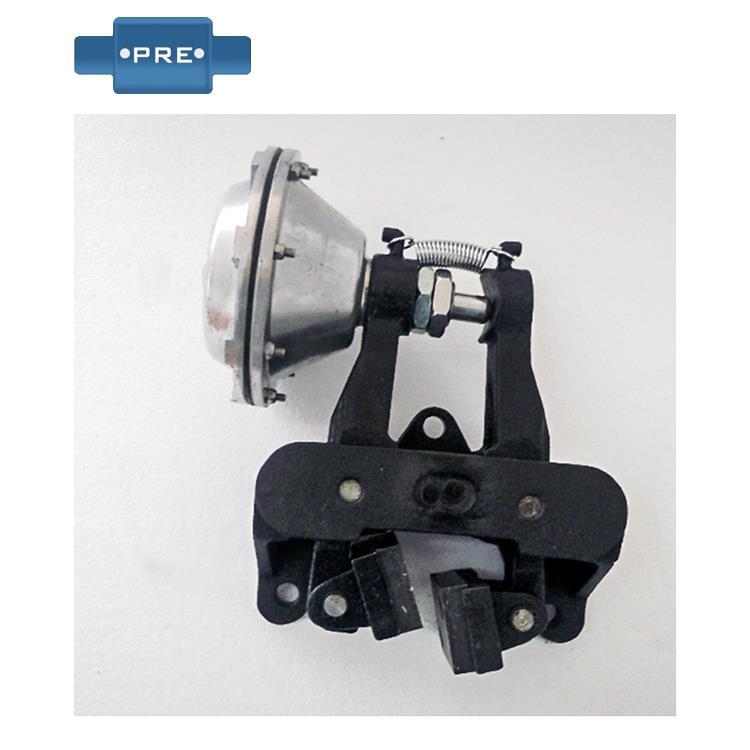
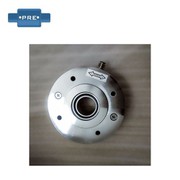
What are the working principles of pneumatic brakes and what are the precautions for use? Pneumatic brakes, commonly known as pneumatic brakes, air-pressure disc brakes, and air-pressure through-shaft brakes, push the piston into a linear motion by introducing a pressurized gas into the airbag of the pneumatic brake to achieve the friction block pressure of the brake. Tightening the brake wheel produces friction and brakes. The pneumatic brake is connected by air pressure, and is released by the return spring. The disc slides along the axial direction by the air pressure to contact the friction plate. A disc, a friction plate, and the like are assembled to the hub to form an integrated structure. The friction plate can be disassembled by unscrewing the adjusting nut, and the exchange is simple. The air-pressure pneumatic brake is mounted on the shaft by a conical shaft bushing with a wedge, and has a friction plate that can be exchanged while maintaining the mechanical equipment as it is. The heat generated by the friction is dissipated by the cooling fins mounted on the disc with the hub. The friction plate is a double-cut split type, and the friction plate can be exchanged by taking out the countersunk screw with a screwdriver through the hole with the hub disk. Pneumatic brakes have good heat dissipation and can be widely used in packaging, wire and cable equipment, tissue paper and corrugated paper industries.
The pneumatic brake manufacturer is still designed to be normally closed for safety reasons. The friction plate and brake disc contact are in the braking state and can work in the dry state. When the air pressure pack is inflated, the internal piston of the air pressure pack is forced outward to open the clamping device, the brake is released, and the transmission is realized.
Pneumatic brakes do not require water cooling or air cooling, and their maximum temperature resistance can reach 130 degrees Celsius. It has good moisture resistance and can be used in wet places. It is safe and durable and easy to maintain. Please set the safety cover.
Pneumatic brake use precautions:
1. A safety cover or other safety measures with good ventilation.
2. The pneumatic brake must be used within the range of allowable connection and braking workload. If it is used beyond the allowable connection brake work during operation, it will cause an increase in heat generation, and the friction surface will turn red and heat. If it is too hot, it may cause fire. In addition, it will directly affect the performance of the pneumatic brake, so be sure to use it in the brake work that allows the connection.
3. Do not increase the number of revolutions without exceeding the allowable number of rotations.
When the number of rotations exceeds the allowable number of rotations, the vibration becomes large, and depending on the occasion, damage or scattering may occur in a very dangerous state. Be sure to use the number of rotations and set the protective cover.
4. The friction plate used should not be stained with water or grease, otherwise it will affect the torque or work performance.
5. Before installing the pneumatic brake, confirm the surrounding environment. If there is moisture, oil, dust or vibration and impact, high humidity environment will directly affect the service life and performance of the pneumatic device.
6. Assembling the position of the brake, use the braking force and the driving force to balance the shaft as much as possible.
Previous: Air Disc Brake Models Introduction
Next: Air Brake