Tel: +86-134-31394972
E-mail: sales@pre-webguidesystem.com
Tel: +86-134-31394972
E-mail: sales@pre-webguidesystem.com
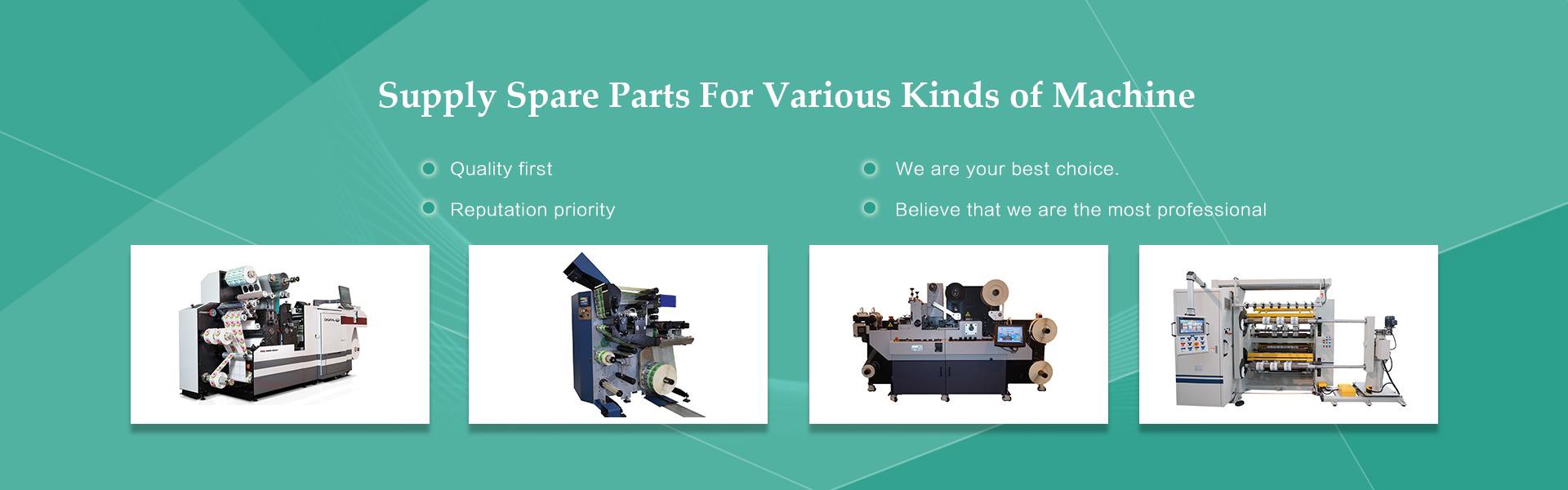
The tension control of the shaftless transmission Universal 70 rotary offset printing press is very important for packaging logistics, because the tension control of the printing press has changed greatly in the case of shaftless transmission, and the tension control under the shaft transmission mode has A big difference. The shaftless transmission tension control is mainly affected by the tension of the paper feed section, the speed ratio of the paper feed roller, and the speed ratio of the RTF (paper feed roller in front of the folding machine triangle). Compared with the shaft transmission, the tension control of the shaftless transmission is more flexible, but the increase of the variable factor also increases the difficulty of the tension control, which requires us to constantly explore the regular ink supply of the three in practice to achieve the best. Matching mode. Here, I will talk about the experience of tension control on the shaftless transmission Universal 70 rotary offset press.
Paper feed tension control ball screw auxiliary dynamometer components
The tension control part of the paper feeding section is composed of brake pads, brakes, floating rollers, etc. In order to keep the tension of the paper tape constant, the paper roll brake must be automatically adjusted according to the fluctuation of the tension of the paper tape to ensure that the paper tape enters at a uniform speed and smoothly. Printing device. During the smooth running of the machine, the tension of the paper tape should be stabilized at a given value to prevent the paper tape from being overloaded and loosely unwound during starting and braking. In the printing process, die-cutting indentation is performed. As the diameter of the dynamometer of the paper-winding straight-type shifting machine is continuously reduced, in order to keep the tension of the paper strip constant, it is necessary to adjust the braking torque accordingly.
The brake of MEG DLP1000 paper feeder paper roll adopts the axle braking method. Brake pads and brake discs are arranged on the shaft end of the paper roll core, and the brake force e-commerce is loaded by pneumatic method, that is, the pneumatic tension control system. During the printing process, the line speed of the paper strip remains the same, while the angular velocity of the paper roll increases as the diameter of the paper roll decreases. Under the premise of not considering the inertia moment and the resistance torque dynamometer generated by the angular acceleration, in order to ensure the stable operation of the paper strip, the following conditions should be met: flexible packaging
F&tim photoelectric centering corrector es; R=T×r
F is the tape tension CTP, R is the paper electric dynamometer roll radius, T is the paper roll core braking force, and r is the paper roll core braking force radius.
It can be seen that as the radius of the paper roll decreases, if the packaging trade is not changed by the size of the braking force, the tension of the paper tape will become larger and larger, and finally the manual tension control device will cause the paper tape to be broken. Therefore, under the premise of keeping the tension of the paper strip stable, as the radius of the paper roll decreases, the braking force must be reduced according to a certain law.
In short, the acquisition is that the brake pad and the brake disc contact a certain amount of friction, so that the paper strip has a certain tension eddy current dynamometer, the floating roller under the action of the tension to swing the potentiometer A certain change occurs, the change of tension is converted into an electric signal, and the air pressure ink of the brake cylinder is controlled, thereby achieving the purpose of controlling the frictional force, and realizing automatic control of the tension of the paper strip.
The distance between the brake pad and the brake disc should be between 1 and 2 mm. If the clearance is too large, the brake pad cannot be effectively clamped when the cylinder air pressure changes, resulting in too small tension, causing the floating roller to be pulled down suddenly to break the paper tape when starting up; if the clearance is too small, CTP is in China, then the cylinder is always The brake dynamometer motor dynamometer piece is clamped, and the cylinder air pressure change cannot adjust the clamping degree of the brake pad and the brake disc, and finally the paper strip is broken. In particular, when the tension display value is changed from 4 digits to 3 digits at the time of power-on, the paper may be broken due to excessive tension of the tape.
The wear condition should be checked regularly according to the material of the brake pad, and the gap water supply/dampening should be adjusted appropriately, otherwise the tension control will be affected. When the brake pad fails, the tension control is extremely unstable. Especially when the paper is picked up, the floating roller swings a lot, and the paper tape floats before entering the RTF. Adjusting the paper feed roller and the RTF and the tension of the paper feeding section cannot solve the problem. When the paper is finished, the tension disappears instantaneously (the floating roller is greatly adjusted after the paper is picked up), causing the paper to break. The reason for the brake effect of the brake pad is that the wear layer of the brake pad is relatively soft and the debris cannot be discharged into the font in time. After being rubbed, it accumulates on the brake pad to form a glaze-like substance, which reduces the friction coefficient. At this time, the brake pads can be polished to remove the glaze, increase the number of flutes or replace the brake pads. typesetting
Printing department inlet tension control
The inlet tension of the printing section and the tension of the paper feeding section are bounded by the paper feed roller, and the paper feed roller is installed on the paper path between the printing device and the paper feeder, forcibly running the paper tape to avoid the tension of the paper tape before the paper feed roller It directly affects the tension of the paper tape after the paper feed roller, ensuring that the paper tape entering the printing device is stable after two tension control. The control principle of the secondary tension system is achieved by friction between the speed of the paper strip and the linear speed of the paper feed roller. In general, the line speed of the paper feed roller is less than the speed of the paper tape. When the paper feed roller is used, the tension of the paper feed portion has a certain influence on the inlet tension of the printing portion, and the speed ratio of the paper feed roller motor to the drum motor is reasonably set by the main console of the printing machine to accurately control the entrance of the printing portion. The key to tension is generally set at around -0.15% (depending on the number of prints, the values are slightly different, but the difference is not too large).
The shaftless transmission method completely changed the mode of controlling the tension by mechanical devices in the past, and the tension control was realized by the relative speed difference formed by the change of the rotational speed between the digital motors, that is, in the paper feed roller, the printing section drum, the folding machine A slight speed difference between the linear speeds of the RTF enables tension control. Decreasing the rotation speed of the paper feed roller motor will increase the inlet tension of the printing portion, and vice versa. In addition to the speed ratio, the other factor is the pressure of the paper feed roller and the pressure roller. The pressure is expressed by the indentation when the pressure is combined, and is generally 5 to 6 mm. If the indentation is too small, the contact pressure of the two rolls is small, the friction between the paper feed roller and the paper is also small, and the tension is reduced at the same paper feed roller motor speed ratio; if the indentation is too large, the rubber will be made. The pressing roller and the paper feeding roller generate excessive heat due to the contact pressure during the pressure running operation, accelerate the aging proof of the rubber roller, and reduce the life thereof. The paper feed roller is critical to the quality of the print, and it effectively prevents the problem of running the rules during the printing process.
Previous: What Are The Advantages Of Tension Control Variable Frequency Winding?
Next: Process Points Of Tension Control Frequency Conversion Winding