Tel: +86-134-31394972
E-mail: sales@pre-webguidesystem.com
Tel: +86-134-31394972
E-mail: sales@pre-webguidesystem.com
Introduction to the advantages and structure classification of aluminum alloy guide rollers
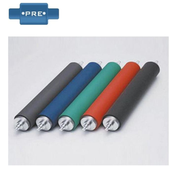
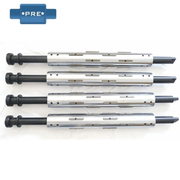
Aluminum alloy guide rollers have the advantages of high unit strength, light weight, low inertia, and appearance of light and no rust. They are widely used in embossing printing, coating, rewinding, film blowing, laminating, coating, slitting, papermaking, textile Wait for the production line.
The aluminum alloy guide rolls produced by our company are produced through a strict material extrusion process. The high-strength special section and reinforcing ribs can greatly increase the rigidity of the aluminum tube. The excellent hot sleeve installation technology and the appearance of the CNC lathe can make the product high Contact strength and precision, good linearity and concentricity, accurate and high-speed dynamic balance system can ensure static balance and high-speed dynamic balance function together (up to ISO1940 G1 level), to ensure that the aluminum roller does not oscillate when working at high speed on the machine. Different surface treatment methods can provide different application needs. The aluminum roller produced by the manufacturer of aluminum alloy guide roller, Ruian Qinjie Machinery Co., Ltd. can greatly improve the function of your machine.
The structure of aluminum alloy guide roller can be roughly divided into:
(1) Hollow aluminum roller: internal bearing type structure, the bearing is installed in the bearing holes on both ends.
(2) Coupling aluminum roller: The two ends of the roller body are connected to the steel shaft or the stainless steel shaft end, which is an integrated structure.
(3) Water-passing aluminum roller: cooling or heating liquid enters and exits through both sides and circulates in the roller body.
(4) Special rollers: various special structure rollers processed according to drawings. Aluminum guide roller
Different surface processing methods of aluminum alloy guide rolls:
(1) Smooth surface: It has a lubricating, low resistance surface, and can reach different surface roughness Ra0.3~Ra6.3 according to requirements
(2) External thread: the commonly used thread is interpenetrating thread and the middle unfolding line (divided from the middle, extending to both ends).
(3) Concave and convex appearance: Various concave, convex and arc appearances can be processed by a CNC lathe.
(4) Sand blasting or shot blasting: Sand blasting or shot blasting can obtain a rougher appearance, which can increase friction.
(5) Knurled or network cable: different sizes and appearances can be provided according to customer needs.
Previous: What Are The Types Of Material Properties Of Rubber Bending Rolls?
Next: Analysis On The Rewinding Structure Of The Slitting Rewinder