Tel: +86-134-31394972
E-mail: sales@pre-webguidesystem.com
Tel: +86-134-31394972
E-mail: sales@pre-webguidesystem.com
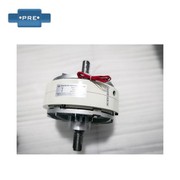
The hollow shaft magnetic powder brake can be called a hollow shaft magnetic powder brake, which is consistent with the magnetic powder brake (single-axis type), but the two are slightly different in construction and design. The hollow shaft magnetic powder brake is divided into two types: the inner shell rotary type hollow shaft magnetic powder brake and the outer casing rotary type hollow shaft magnetic powder brake. The hollow shaft magnetic powder clutch of the same type is also divided into inner shell rotation type and outer casing rotation type.
Precautions for use
1. When the magnetic powder brake and the clutch are used for continuous sliding of winding and unwinding, the product and life may differ depending on the conditions of use (relative sliding speed, etc.). However, in general, the life of iron powder in reducing the rated torque in the constant current is about 4500 to 7500 hours. However, in some cases, it is not available below the rated torque, so it can be used continuously and the life can be extended. However, even if the sliding operation rate is the same, the sliding rotation speed, that is, the relative rotation speed, is continuously in a relatively high state, and the life tends to be reduced. Therefore, it is necessary to reduce the relative rotation speed at the time of setting.
2. In order to prolong the life of the iron powder, it is also a way to allow the sliding work rate to be sufficient when used. For example, if it is used at 50% of the allowable sliding operation rate, the life can be extended to approximately double.
3. If the driven member is used as the input side, it will continue to idle for a long time, and the iron powder will be stirred, and the life will be greatly reduced. Please try to avoid this method. If it is impossible to avoid any structure, please set the current to weak excitation when using.
Hint: When operating at low speed (16 RPM or less), stable torque characteristics are generated during continuous operation such as tension control. However, with the intermittent rotation of the idling, after the voltage is applied, the start of the torque may be delayed, and this situation may not be avoided. Please use the following method even if the winding is finished, the weak excitation is continued. - 150% current), so that the iron powder does not fall from the action surface; please increase the maximum rotation speed after the speed increase to 16RPM.
1. Use the magnetic powder clutch with a regular installation method (using the high-speed rotating side as the input side). If the mechanical structure must be installed in the reverse direction of the shaft, be sure to use it below 1000R/MIN. If the input shaft and the output shaft are installed in reverse, the machine will idle for a long time, and the magnetic powder will be stirred, which will greatly shorten the service life of the magnetic powder clutch.
2, please pay attention to moisture. If the magnetic powder gets wet, the performance will become unstable, so be careful not to let oil or moisture invade the inside. In particular, when it is installed in a gear box, the oil will penetrate into the inside through the shaft, so it is completely sealed with a film.
3. Please pay attention to the surface temperature. The maximum surface temperature caused by continuous operation is 90 degrees or less during operation. When the value exceeds this value, the durability is greatly reduced. Be sure to use the above-mentioned limit temperature as the standard, and be sure to keep it within the allowable sliding work rate when using it.
The magnetic powder clutch is a combination of a transmission unit (input shaft) and a driven unit (output shaft). The space between the two sets of cells is filled with granular magnetic powder (about 40 microns of rest). When the magnetic coil is not conducting, the torque will not be transmitted from the transmission shaft to the driven shaft. However, if the coil is electromagnetically energized, the magnetic powder will attract hardening due to the action of the magnetic force, and the torque will be transmitted between successive slidings. . The principle of the magnetic powder brake is similar to that of the magnetic powder clutch, except that the transmission unit is turned into a fixed unit.
Previous: Magnetic Powder Clutch, Magnetic Powder Brake Product Characteristics
Next: Magnetic Powder Brakes And Magnetic Powder Clutches Are Used In A Wide Range Of Applications.