Tel: +86-134-31394972
E-mail: sales@pre-webguidesystem.com
Tel: +86-134-31394972
E-mail: sales@pre-webguidesystem.com
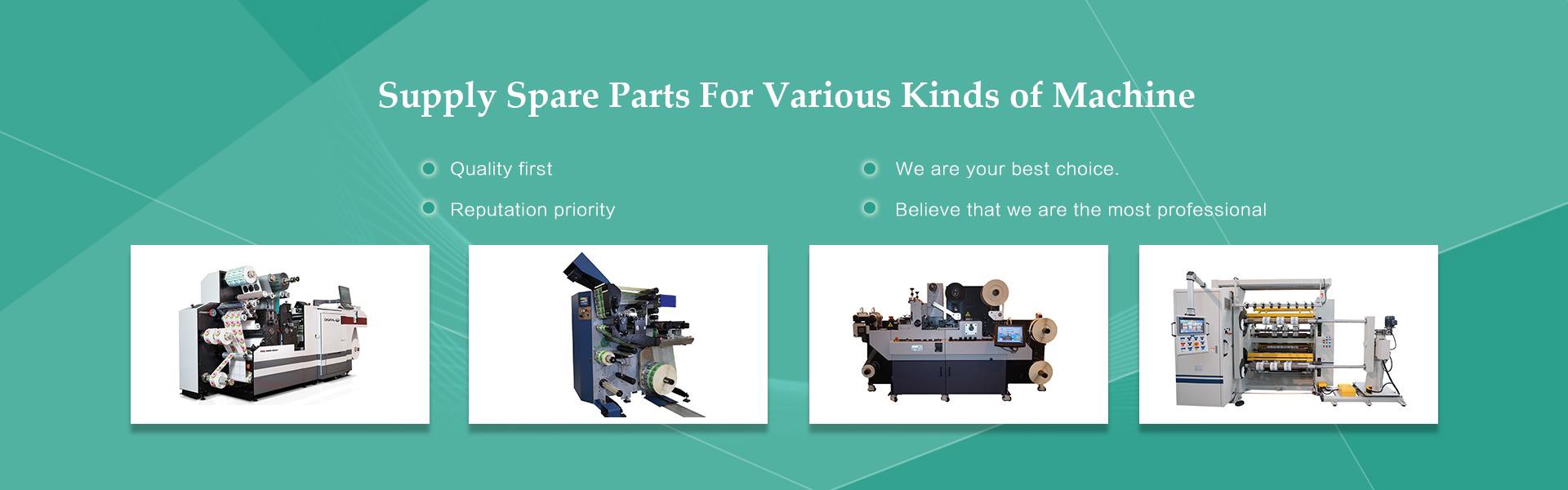
The tension control system of the gravure press is essentially a special follower system in which the input amount changes according to an adjustable attenuation law. The control of tension can be said to be the core of the whole machine control. As long as the tension control is stable and the tension change is small, the color registration accuracy and the reject rate of the gravure printing machine are easily controlled.
To ensure gravure quality and efficiency, a fully functional tension control system must be provided. Tension control refers to the ability to permanently control the tension of the tape as it is transported over the device. This control must be effective for any speed of the machine, including acceleration, deceleration and constant speed of the machine. Even in the case of an emergency stop, it has the ability to ensure that the tape does not break. The gravure press tension control is basically divided into three categories: manual tension control, open-loop semi-automatic tension control and closed-loop automatic tension control. Manual tension control means that during the winding or unwinding process, when the winding diameter changes to a certain stage, the operator adjusts the manual power supply device to achieve the purpose of controlling the tension.
Open-loop semi-automatic tension control, also known as roll-diameter tension control, uses a proximity switch mounted on the reel to detect the rotational speed of the reel and is calculated by cumulative calculation of the initial diameter of the reel diameter and material thickness. The current diameter of the winding or unwinding drum, the corresponding change in the winding diameter, outputs a control signal to control the winding torque or the unwinding braking torque, thereby adjusting the tension of the belt. Because each revolution of the reel, the winding diameter will occur twice as much as the thickness of the strip. This tension control is not affected by external stimuli and can perform stable tension control. However, due to factors such as torque variation, linear variation, and mechanical loss of the transmission, the absolute accuracy of such tension control is poor. The closed-loop automatic tension control is to directly measure the actual tension value of the material belt by the tension sensor, and then convert the tension data into a tension signal and feed it back to the tension controller. By comparing this signal with the preset tension value of the controller, the control is calculated. The signal, the automatic control execution unit makes the actual tension value equal to the preset tension value for the purpose of tension stabilization. It is currently a more advanced method of tension control. Since the printing speed and the production process put forward higher requirements for the tension control, the magnetic powder clutch is no longer suitable for the execution unit of such a system. Therefore, it has been replaced by AC and DC servo motor execution units in modern gravure printing machines, high-speed slitting machines and high-speed coating laminating machines, achieving more advanced tension servo control.