Tel: +86-134-31394972
E-mail: sales@pre-webguidesystem.com
Tel: +86-134-31394972
E-mail: sales@pre-webguidesystem.com

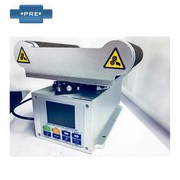
The thermopile sensor in the hot metal detector component is a pyroelectric infrared sensor which is a device composed of a thermocouple. At present, it has been widely used as a temperature detecting device in the fields of ear thermometers, radiation thermometers, electric ovens, food temperature detection and the like. It consists of two or more thermocouples connected in series, and the thermoelectric potentials of the thermocouples are superimposed on each other. Used to measure small temperature differences or average temperatures.
The structure of the thermopile: the radiation receiving surface is divided into several blocks, each of which is connected to a thermocouple, and they are connected in series to form a thermopile. Depending on the application, practical thermopiles can be made into filament and film types, as well as multi-channel and array devices.
The thermopile sensor is an absorbing film that is irradiated with infrared rays and is a film having a small heat capacity and an easily rising temperature. In the lower part of the center of the lining, there is a hollow structure, which is designed to ensure the temperature difference between the cold end and the temperature measuring end. The thermocouple consists of polysilicon and aluminum, which are connected in series. When the temperature of each thermocouple temperature rises, a thermoelectromotive force Vn is generated between the thermocouples, so that the sum of their voltages can be obtained at the output.
The thermopile infrared temperature sensor directly senses thermal radiation and provides a perfect solution for non-contact temperature measurement. Its innovative silicon-based micromechanical technology guarantees its excellent long-term stability and very low temperature sensitivity. Excellent photoelectric properties.
Thermopile infrared sensors in hot metal detectors provide a low price for non-contact temperature measurement systems. It does not require cooling, but achieves an accuracy of ±1 °C over the entire temperature measurement range. For narrower temperature measurement ranges, such as body temperature measurement, the accuracy can reach ±0.1 °C.