Tel: +86-134-31394972
E-mail: sales@pre-webguidesystem.com
Tel: +86-134-31394972
E-mail: sales@pre-webguidesystem.com
In recent years, China's printing industry has developed rapidly, and web roll offset presses and sheetfed offset presses have become two mainstream printing devices. In the increasingly fierce media competition, the printing industry is facing more and more challenges. Improving production timeliness has become the main means for offset printing to maintain the existing market space. Rotary printing is increasingly favored by the market because of its fast production speed, high degree of automation and good production continuity. The application range is expanding and it plays an important role in color printing of commercial, books and magazines. The technical application of rotary offset printing machine and The development trend has been widely concerned by the industry. This article will talk to you about an important parameter control in the use of web offset presses - tape tension control.
Rotary offset press tension control
The web of paper must maintain a constant tension during the printing process. When the tension is too small, the paper roll will slide forward, the paper tape will float, the overprinting accuracy will decrease, the ink will not be transferred correctly, and even the paper tape will wrinkle laterally. The folding and conveying after printing cannot be performed normally; the tension is too large. It will cause the paper strip to wrinkle longitudinally, affecting the overprinting accuracy and ink transfer. When the tension exceeds a certain value, the paper strip will be broken. Therefore, the web paper tape must have a certain paper-feeding force in the pre-press, printing, and post-press processes. The proper tension before printing ensures that the paper tape is smoothly conveyed to the printing unit; the proper tension in the printing ensures the overprinting accuracy of the offset printing, so as to obtain clear and high-quality printed graphics; the proper tension after printing ensures the smooth penetration of the paper ribbon into the triangular plate and folding mechanism. To complete the post-press processing of printed matter.
Control the three components of the tape tension
Paper holder
The web tension control of the paper holder portion is mainly composed of a paper roll brake and a floating roller. The paper roll brake must be able to automatically adjust to the paper belt tension fluctuations to ensure that the paper strip enters the printing unit at a constant speed and smoothly. During the smooth running of the machine, the tension of the paper tape should be stabilized at a given value to prevent the paper tape from being overloaded and loosened during starting and braking.
During the printing process, as the diameter of the paper roll is continuously reduced, in order to keep the tension of the paper strip constant, it is necessary to adjust the braking torque accordingly. There are two ways to brake the paper roll: circumferential braking and axle braking.
(1) circumferential braking
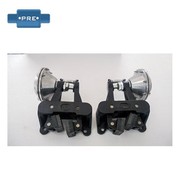
A force is applied to the outer surface of the web to generate a braking torque by friction. The circumferential brake commonly used on the market is a sports belt type paper roll brake. The driving belt of the brake mechanism is driven by a motor separately, and a braking torque is generated by using the surface speed of the paper roll and the speed difference between the brake bands. The braking torque can be adjusted by changing the speed of the brake band, the pressure between the brake band and the paper roll, the brake band and the wrap angle of the paper roll. At present, this kind of mechanism has been widely used for paper roll acceleration and braking on an automatic paper receiving mechanism.
(2) Shaft brake
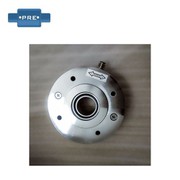
Shaft braking is the application of a braking torque on the web shaft. Most rotary offset presses today use magnetic powder brakes and pneumatic tension control systems. The magnetic powder brake is compared with the measured value of the measuring roller of the printing machine and the standard value in the system. If the measured value is low, the tension of the paper strip is too small, and the exciting current in the magnetic powder brake becomes large, generating a large magnetic force, causing the stator and A large braking torque is generated between the rotors. The pneumatic tension control is to install brake pads and brake discs on the shaft end of the paper roll to load the braking force through air pressure.
At present, there is also a treatment method in which a tension presetting device is installed in front of the first printing unit to further control the paper force of the reel to ensure that the paper strip entering the printing unit is more stable after two tension control. The tension preset device of the web newspaper offset press can be installed between the printing tower and the roll paper holder, or can be combined on the paper holder of the web. The device is mainly composed of a paper take-up roller and a measuring roller that rotates in the direction of movement of the paper tape. There is a certain difference in linear velocity between the paper-feeding roller and the paper tape, and the effect of stabilizing the paper tension is achieved by friction. When using the paper-feeding roller, the speed ratio between the paper-feeding roller motor and the drum motor must be set reasonably through the main console of the printing press. Otherwise, the tension control of the paper tape will be uncoordinated, and the paper strip may be too loose or too tight. . The measuring roller is used to measure and determine the tension of the web of paper. During the printing process, the tension information of the paper tape measured by the measuring roller is directly fed back to the DC servo motor driving the paper pulling roller, and the AC servo motor is correspondingly shifted according to the actual situation of the paper tape tension, and the pulling force will be correspondingly increased or decreased. The purpose of adjusting the tension of the paper tape is achieved. The device is operated by a frequency-controlled AC-DC motor on a modern offset press, so the device becomes very compact.
The above two methods of controlling the tension must be properly configured to achieve tension control on the paper strip entering the printing unit. If the tension of the paper roll to the tape is not large enough, it is not possible to pull the paper roll alone. Because the difference between the speed of the paper feed roller and the rotation speed of the printing cylinder is small (only 1 ‰ to 2 ‰), it is not possible to provide sufficient tape tension for the printing unit. If the speed ratio of the paper feed roller is adjusted too large, the load of the paper feed roller will be increased, which is disadvantageous for maintaining stable operation.
2. Tension adjustment roller
The easiest way to obtain the force of the web is to use an intermediate oscillating or floating adjustment roller. The tension adjusting roller is not only a sensing element but also a component of the control circuit. Any movement of the adjustment roller indicates a change in the roll paper force measurement value and the oscillating compensation load. At this time, the continuously variable transmission gear is used to control and change the paper feed rate, and finally the adjustment roller is restored to the original equilibrium midpoint.
3. Triangle plate pull roller
The function of the triangular plate drawing roller is to maintain a certain tension between the paper strip at the exit of the printing unit and the triangular plate, ensuring that the paper tape can smoothly enter the folding portion after printing.
The rotational speed (linear velocity) of the triangular plate drawing roller motor is generally about 0.8% faster than the rotational speed of the printing section drum, and the variation range is between 0 and 2.0%. The setting of this value depends on the specific situation. If the setting is not suitable, it will not only affect the tension of the printing unit outlet to the triangular plate, but also affect the tension of the paper tape into the folding portion. If the value is too large, the tension of the paper strip that is exported to the triangular plate of the printing unit will become larger, and the tension of the paper strip between the triangular plate and the folding machine will become smaller; if the value is too small, the tension of the paper strip exiting the printing unit to the triangular plate will be small. And the tension of the paper strip between the triangular plate and the folding portion becomes large.
When the printing paper path is small, the tension is relatively easy to control, and the value can be appropriately reduced; when there are many printing paper paths, the motor speed ratio of the triangular plate drawing roller should be appropriately increased to meet the tension requirement of the innermost layer of paper, and The tension of the other paper strips can be controlled by adjusting the value of the tension of the paper feed roller and the printing section. If the exit tension of the printing unit of one of the paper paths is not suitable, the speed ratio of the corresponding paper feed roller motor and the tension of the paper feed portion should be adjusted to achieve the tension adjustment of the separate paper path, and the triangle pull paper roller motor should not be adjusted. Speed ratio.
Rotary offset press tension automatic control system
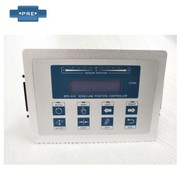
In the rotation production process, the tension of the paper tape is affected by many factors, so the tension of the paper tape constantly changes. In order to ensure a constant tension of the paper strip during the production process of the high-speed web offset press, the fluctuation of the web tension must be adjusted in a timely, automatic and random manner. Therefore, the modern web offset press has a complete automatic tension control system, which is basically an electronic control system: the measuring roller, that is, the web paper guide roller, moves according to the amount of its own charge, which is the receiving component of the system. The other electronic control component is responsible for converting the measurement signal into an excitation signal and controlling the actuator accordingly.
Through the above analysis, we already know that the actuators of the modern offset press web tension control are mainly in three parts: paper roll, paper pull roller and triangle pull paper roll. The automatic tension control system integrates the two actuators into the control of the entire tension system, enabling closed-loop control, accurate and timely adjustment and control of the tape tension to ensure the stability and constant tension of the tape. While the rapid development of many disciplines such as electrical engineering, electronics and mechanics, it has been applied to rotary offset printing equipment in time to make different control systems appear on the market, but the control principles are basically the same. The basic working principle of the automatic control system is introduced below.
Before the printing starts, preset the tension of the paper tape and control the tension of the paper roll. After the printing starts, the tension of the paper tape and the ideal value will be certain due to the actual paper roll condition and the different positions of the corresponding parts of the machine. Error, at this time, the position of the floating roller in the control system will have a corresponding position change, and a small amount of error compensation for the tension. At the same time, the measuring roller transmits the measured tension information to the control system of the paper roll, the tension roller control unit and the triangle pull-paper roller motor, and the tension is adjusted in time. For example, due to changes in the speed of the web offset press, eccentricity of the paper roll, and reduction in the radius of the paper roll, the tension of the paper strip entering the printing unit is too large, and the floating roller will float upward, reducing the amount of paper stored in the paper feeding unit. Small to ensure that the tension of the paper tape does not change greatly in an instant; the measuring roller transmits the information of the detected large paper tension to the paper roll and the paper take-up roller; the brake mechanism of the paper roll is reduced The braking force of the paper roll speeds up the supply of the paper tape and reduces the tension of the paper tape. At the same time, the system reduces the speed difference between the servo motor and the main motor that drives the paper feed roller, and reduces the friction on the paper tape.
Through these actions, the tension of the paper tape will decrease in a short period of time, reaching the desired value, and then the tension of the paper tape will continue to drop, lower than the ideal value, and the corresponding control component will have the opposite chain reaction, increasing the tension of the paper tape. . Through such repeated movements, the tension of the tape will be closer to the ideal value, and finally reach the desired value and be maintained. If there is another fluctuation, the above chain action will happen again.
Rotary offset press belt tension automatic control system is already a necessary device for modern high-speed web offset presses. Only by ensuring the constant tension of the paper strip can the printing quality and quantity be ensured. Although the system is relatively simple in structure, we must master its working principle and always pay attention to the working conditions of the corresponding components. Any abnormality in any part will affect the printing quality and continuous operation of the web offset press.