Tel: +86-134-31394972
E-mail: sales@pre-webguidesystem.com
Tel: +86-134-31394972
E-mail: sales@pre-webguidesystem.com

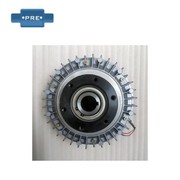
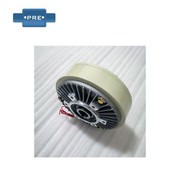
Disc brakes, also known as disc brakes, are named after their shape. It is controlled by hydraulic pressure. Click to enlarge the picture. The main components are brake disc, sub-pump, brake caliper and oil pipe. The brake disc is made of alloy steel and is fixed to the wheel and rotates with the wheel.
The disc brakes are hydraulic and are hydraulically controlled. The main components are brake discs, sub-pumps, brake calipers, and oil pipes. The magnetic powder brake has fast heat dissipation, light weight, simple structure and convenient adjustment. Especially in high load, the high temperature resistance is good, the braking effect is stable, and it is not afraid of muddy water attack. In winter and bad road conditions, many disc brakes used in cars have flat brake discs, perforated brake discs and strokes. Linear brake discs, in which the scribing brake disc has better braking effect and ventilation and heat dissipation capability.
The disc brake is biased along the brake disc, the brake shaft is not subjected to bending moment, the radial dimension is small, and the braking performance is stable.
Disc brakes have been widely used in cars, but except for all high-performance cars used for all wheels, most of them are only used as front wheel brakes, and with the rear wheel drum brakes, in order to have a higher braking time. Directional stability. In the truck, magnetic powder brakes are also used, but there is still a considerable distance from the popularity.
Advantage
Generally, there is no frictional auxiliary effect, so the brake performance is less affected by the friction coefficient, that is, the performance is more stable; the efficiency is less reduced after immersion, and it can be restored to normal only after one or two braking; the output braking torque is the same In the case of the case, the size and quality are generally small; the amount of thermal expansion of the brake disc in the thickness direction is extremely small, and the brake gap is not significantly increased as the thermal expansion of the brake drum causes the brake pedal stroke to be excessively large; Automatic adjustment, other maintenance and repair operations are also relatively simple.
1. Better thermal stability. Because the size of the brake friction pad is not long, the working surface area is only 12% to 6% of the brake disk area, so the heat dissipation is good.
2. Water stability is good. Because the brake pad has a high unit pressure on the disc, it is easy to squeeze out the water, and at the same time, it is easy to be smashed after being wetted by the centrifugal force, and the wiping action of the pad on the disc, so that only after the water is discharged First, the second brake can return to normal; while the magnetic powder brake needs more than ten brakes to restore normal braking performance.
3. The braking torque has nothing to do with the car's forward and reverse driving.
4. Under the condition of outputting the same amount of braking torque, the quality and size of the disc brake are smaller than the drum type.
Disadvantage
Disc brakes have their own drawbacks. For example, the manufacturing requirements of the brake and the magnetic powder clutch pipeline are relatively high, the friction disc wears a large amount, and the cost is high, and since the friction lining has a small area, the relative friction working surface is also small, and the required brake hydraulic pressure is high, and must be It is inefficient to use a vehicle with a booster device, so the brake actuation line pressure required for a hydraulic brake system is high, and a servo device is generally used.
The brakes are rough. Two friction discs with friction linings can slide back and forth over the spline shaft, which is the rotating part of the brake. When braking, the magnetic powder clutch can stop the vehicle in a very short time. In addition, the inclination angle of the ball groove on the pressure plate is not infinite, so the braking is not smooth.发送反馈