Tel: +86-134-31394972
E-mail: sales@pre-webguidesystem.com
Tel: +86-134-31394972
E-mail: sales@pre-webguidesystem.com

The ultrasonic sensor is a sensor that is developed using the characteristics of ultrasonic waves. Ultrasonic wave is a kind of mechanical wave whose vibration frequency is higher than sound wave. It is generated by the vibration of the transducer wafer under the excitation of voltage. It has high frequency, short wavelength, small diffraction phenomenon, especially good directionality, and can be oriented as a ray. Characteristics such as communication. Ultrasonic penetration of liquids and solids is very large, especially in sunlight opaque solids, which can penetrate depths of several tens of meters. When an ultrasonic wave hits an impurity or an interface, it will produce a significant reflection to form a reflection into an echo, which can produce a Doppler effect when it hits a moving object. Therefore, ultrasonic testing is widely used in industrial, national defense, biomedical and other aspects.
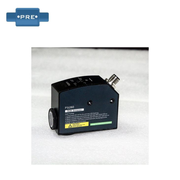
Technical parameters: Optimized ultrasonic transmission mode, material unevenness changes have no effect on measurement; 24 VDC power supply, 0-10VDC analog output signal; internal electrical isolation, anti-electrical interference.
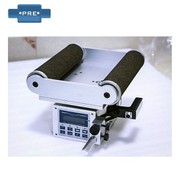
Ultrasonic guide system features:
1. Joint venture precision ball screw, Japanese DC motor, long service life.
2. Imported ultrasonic sensor can be used in high temperature environment.
3. Ultrasonic sensors can accurately detect ultra-transparent materials.
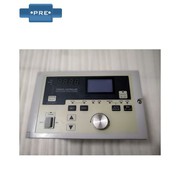
4. The control box is small in size, and the panel can be installed independently.
Ultrasonic receiving circuit: The system sets a certain threshold value for judging the leading edge of the echo signal. However, since the peak value of the echo envelope is different for each ranging, it is necessary to set the corresponding threshold according to the peak of the echo envelope. The peaks of the two echo signals before and after the same target distance measurement are basically the same, so the system determines the comparator threshold by the peak of the previous echo envelope, and then transmits the ultrasonic pulse to calculate the transit time.
The amplitude of the ultrasonic echo signal received by the ultrasonic receiving transducer is generally in the order of millivolts, and the signal needs to be multi-stage amplified. Since the signal is weak, the signal-to-noise ratio is relatively small. After the first-stage amplification, the noise is filtered by the band-pass filter and then sent to the second-stage amplifier circuit for amplification. The amplified signal is detected by the envelope detection circuit and then sent to the envelope. The peak detection circuit detects the peak. The system determines the comparator level reference voltage by multiplying the detected peak by a scale factor. The next pulse emission starts timing, and the MCU detects whether the echo signal reaches the threshold value. When it arrives, it stops timing and calculates the transit time.
Previous: Do You Know The Main Advantages Of Photoelectric Guiding Devices?
Next: Do You Know The Precautions For Using Automatic Photoelectric Guide?