Tel: +86-134-31394972
E-mail: sales@pre-webguidesystem.com
Tel: +86-134-31394972
E-mail: sales@pre-webguidesystem.com
Concept: Usually the ratio of the length to the diameter of the shaft is greater than 7 is the slender axis, and the axis greater than 25 (ie L/d ≥ 25) is called the slender shaft.
Difficulty in processing: The slender shaft has poor rigidity. In the process of machining, due to the influence of many factors such as the bed and the cutter business, the workpiece is easy to produce, bending the waist drum, polygon, sugar paste, etc., especially in the grinding process. Generally, the size is poor, the surface roughness is required to be high, and the workpiece is generally required to have heat treatment requirements such as tempering and quenching and tempering during grinding. The cutting heat during grinding is more likely to cause deformation of the workpiece, etc., so how to solve the above The problem has become a key issue in the processing of ultra-slim shafts.
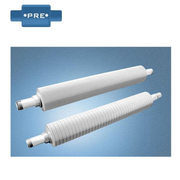
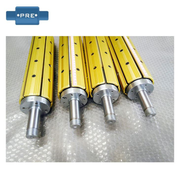
There are two ways to install the inflation shaft on the shaft.
The expansion shaft is mounted on the shaft in two ways: directly on the conical shaft or on the cylindrical shaft using an adapter sleeve or withdrawal sleeve.
The use of adapter sleeves or withdrawal sleeves allows the use of lower cost axle seats (without reverse cone cost), making it possible to use larger shaft tolerances and change the position of the bearings on the shaft. Since the dimensional accuracy of the bushing is not as high as that of the bearing, the bushing is not suitable for applications requiring high precision or high rotational speed.
In general, tapered bore bearings that use adapter sleeves no longer require a shoulder. To prevent the nut from loosening, use a washer for a shaft with a diameter of not more than 200 mm and a lock card for a shaft with a diameter of 200 mm or more. The nut is tightened in the opposite direction to the direction of rotation.
For shafts with shoulders, install the inflatable shaft with a withdrawal sleeve with nuts and washers or locking clamps and nuts. The nut should be tightened in the opposite direction of rotation.
When accuracy is of paramount importance, the direct mounting method of the expansion shaft mounted directly on the conical shaft is used.
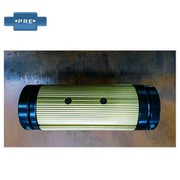
The old customers of our inflatable shaft have feedback that the inflation shaft has a leak. In fact, if it is used improperly or for a long time, this problem will occur. Later, we also deal with it. Today, we mainly share this issue with you. Some common problems with leaking shaft leaks.
Reasons for leakage of the inflation shaft:
1. There is a gap between the sealing rings. At this time, it is only necessary to install the sealing ring and then apply a layer of sealing glue on the surface.
2, the gas nozzle leaks, this is because the inflation nozzle is not installed, this time only need to replace an inflatable nozzle and then install it to solve the problem.
3, the rubber tube leaks, this is because the quality of the hose itself is not good, there is a phenomenon of air leakage after the installation is completed.
4, the pressure ring loose, this problem is simple, just need to tighten the pressure ring.
5, the hose is broken, if this happens, only a good quality hose can be replaced and reinstalled.