Tel: +86-134-31394972
E-mail: sales@pre-webguidesystem.com
Tel: +86-134-31394972
E-mail: sales@pre-webguidesystem.com
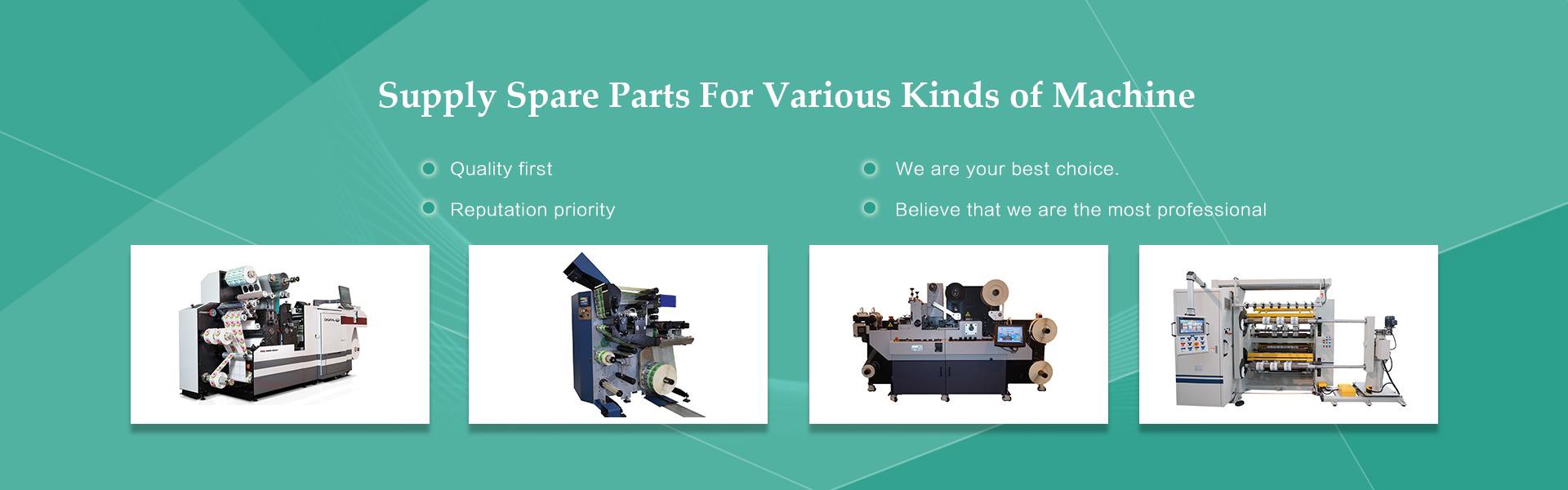
Paper, cellophane, plastic film, aluminum foil, etc. used in packaging of food, medicine, clothing, clothing, cigarettes, etc., have their own characteristics, and are often printed by gravure rotary printing presses. In recent years, printing has been diversified and printing has been speeding up, in particular, the dimensional accuracy requirements of the next process equipment, as well as the saving of materials and the improvement of the yield. Tension control methods are widely used. At present, foreign countries have become more mature in the use of tension control, and their use is very common.
Tension control principle and characteristics
First, the gravure features
At present, the main application layouts of printing include three types: letterpress, lithographic and gravure. The gravure feature is that the graphic part is concave, the layout is completely immersed in the ink tray, and then the excess ink is scraped off with a doctor blade to transfer the residual concave ink to the printed matter. The upper method is gravure printing.
Gravure printing features:
The ink in the concave surface of the plate can transfer enough ink to the layered print. The shade of the print is indicated by the depth of the plate. The printed matter has a three-dimensional effect, and the small lines can be clearly printed. It is free to widely select and use various plates.
Second, gravure tension control
Before describing this problem, you should understand what tension control is.
At present, there are two main parts to using the gravure printing machine:
The first part is from the feed to the feed draw rolls. Overprinting error, that is, the accuracy of overprinting between colors of multicolor printing is poor. The positional relationship of the printing machine mechanism is correct. The error is caused by the elongation or shortening of the material. The elongation is controlled within the allowable range. The tension control is the most effective.
The second part is from the receiving traction roller to the post-receipt parts. Attention should be paid to the tension control of the receiving coil to be tight, tidy and reliable.
Tension control between feed shaft and feed traction rolls
The pulling roller moves the printing material from the feeding shaft at a certain speed and tension and feeds it into the printing portion. This part of the tension is greater than the tension of the printing portion, and the tension is usually controlled by the brake on the paper feed shaft. As is known, the diameter of the work is gradually reduced at the same time. In recent years, the speed has been increased, the materials used have been diversified, and the winding diameter has changed greatly. Manual mechanical brakes used in the past are not possible for high quality prints. The use of automatic control methods, especially the use of tension measurement tables for data management becomes a necessity. The detection methods include spring-shaking roller type and micro-displacement type detection. Mechanical brakes have been used from a very early age and are inexpensive, but the torque values are not accurate. Gradually there are other forms. The magnetic powder brake uses the magnetic powder as the friction medium current to generate the braking force, and its torque--current characteristic has good linearity. being widely used. Pneumatic brakes, which have many printing machines, but have nonlinear torque characteristics and large wear factors. It has also been gradually replaced by large-capacity magnetic powder brakes.
Feed tension control problem, feed tension is determined by the following factors:
Uneven thickness causes tensile changes;
Material slips and even gets slower;
The material roll is not installed, the material and the shaft are eccentric;
A change in the peripheral speed occurs during the rotation of the turning device;
Pressure roller and cutter reaction force when picking up paper;
The roundness of each roller is not enough.
Most of the above changes occur in a short period of time, and all of the changes in tension are transmitted to the printing department. From the mechanical structure point of view, it must be noted that the inertia of the guide roller between the feed shaft and the traction roller and the manufacturing error are both causes of the increase in tension, especially the low tension below several kilograms cannot be ignored.
Tension change and control between traction roller and plate roller (traction section)
The traction roller in the gravure press is usually provided with a peripheral speed synchronizing mechanism adjacent to the first plate roller. This is different from the feeding situation, the diameter is not changed, and the tension is controlled by other principles.
Printed materials are as elastic and plastic as normal objects, and printing processes are carried out within elastic limits. The tension is controlled by the law of elasticity. This is to understand the different material properties.
The same elongation can be used to determine the tension according to the material width and thickness.
There are two ways to get the right tension:
1 makes the diameter of the pinch roller slightly changed;
2 Correct the number of rotations of the pinch roller.
The time required for the printing material to reach the set tension from the no-tension state during operation is to delay the distance between the pressure roller and the speed as a time constant, which is usually called tensile control.
The basic form of the gravure press between the paper traction and the plate roll, between the plate roll, between the plate roll and the receiving draw, produces tension.
In addition, there is a pendulum roller control tension method. The principle is that the tension changes with the weight change and the weight position change. Under what circumstances, the pendulum roller has the effect of absorbing tension change. The pendulum roller generally adopts manufacturing error, small inertia, light weight and large diameter. Rollers (such as hollow aluminum tubes) usually use this method to produce a short-term simultaneous tension change between the feedstock and the traction rolls to stabilize the small tension changes. This method also reduces the loss of paper when it is picked up.
Then describe the receiving traction part, drying from the plate roller to the receiving traction, usually increasing the distance, drying and heating, extending the car to change, causing the material to change in expansion and contraction, which are the reasons for the inaccurate overprinting. As with the feed traction section, better alignment control is required. There are also ultra-thin paper low-tension materials that are also blown by the wind of the dryer and are easily attached by static electricity, which causes minor changes, which must also be considered.
The tension control of the coiling section (between the receiving traction roller and the receiving shaft) is also an important issue.
In this part, the printed material is used as the final product and sent to the next process of compounding, slitting, and bag making. At the same time, care should be taken to avoid even scratching and wrinkling of the product. The value is noted in plastic film and aluminum foil, care should be taken to prevent thickness variations. This is only the problem of how much tension is taken up. It is important to increase the diameter of the coil while adjusting the tension. It is adjusted by the constant tension and adjusted by the dimensional tension.
There are two types of winding drive modes:
(1) Surface driving;
(2) Center drive.
Although the general center drive type is used in a large amount, the surface winding type also has a good property, and the roller peripheral speed is always good. Some industries use more. Compared with the feeding part, the receiving part should pay more attention to the taper tension and the inertia compensation error.
The center drive is a direct take-up material on the paper tube. In the past, the friction control method was used, which is a high-level, automatic, high-performance electrical control method. The method of receiving and winding is as follows:
1 using a magnetic powder clutch;
2 using a torque motor;
3 Use a DC motor.
The magnetic powder clutch can obtain excellent performance at a price; when the torque motor has a large change in the winding diameter, it is not easy to use; the large-capacity and automatic paper-feeding use a DC motor.
Third, the taper tension
Under normal circumstances, the tension is taken up by the constant tension, and the moment of the material inside the material of the coil is increased, resulting in slippage, that is, coiling and shrinkage. Further, the material shrinks and the air is discharged to the center to increase the material to be crushed or extruded laterally, resulting in a so-called bamboo shoot phenomenon. The crepe is produced near the core to make the surface uneven. To solve these problems, the tension should be gradually reduced when the winding diameter becomes larger, that is, the taper tension is used. The initial tension at the time of winding determines the tension at the end of the winding. The degree of reduction is called taper. Generally 10%-50% taper is used. For example, with a 30% taper; that is, starting with a tension of 10 kg, the tension is terminated from 7 kg. At this time, the ratio of the material and the mechanical properties of the change are different. The manufacturer should test various types of test curves and adjust the production control.
Fourth, inertia compensation
The so-called inertia compensation is to compensate when the machine starts, during the operation, when the speed reaches the fixed speed when the speed changes, the tension of the roll causes the tension to change. In practice, the nonlinear moment is proportional to the diameter and the material density is proportional to the material width. The printing manufacturer uses the formula to calculate the average value and accurately calculate the compensation curve to guide the production.
Previous: Regarding Tension Control, We Need To Understand More
Next: The Difference Between Electromagnetic Clutch And Magnetic Powder Clutch