Tel: +86-134-31394972
E-mail: sales@pre-webguidesystem.com
Tel: +86-134-31394972
E-mail: sales@pre-webguidesystem.com
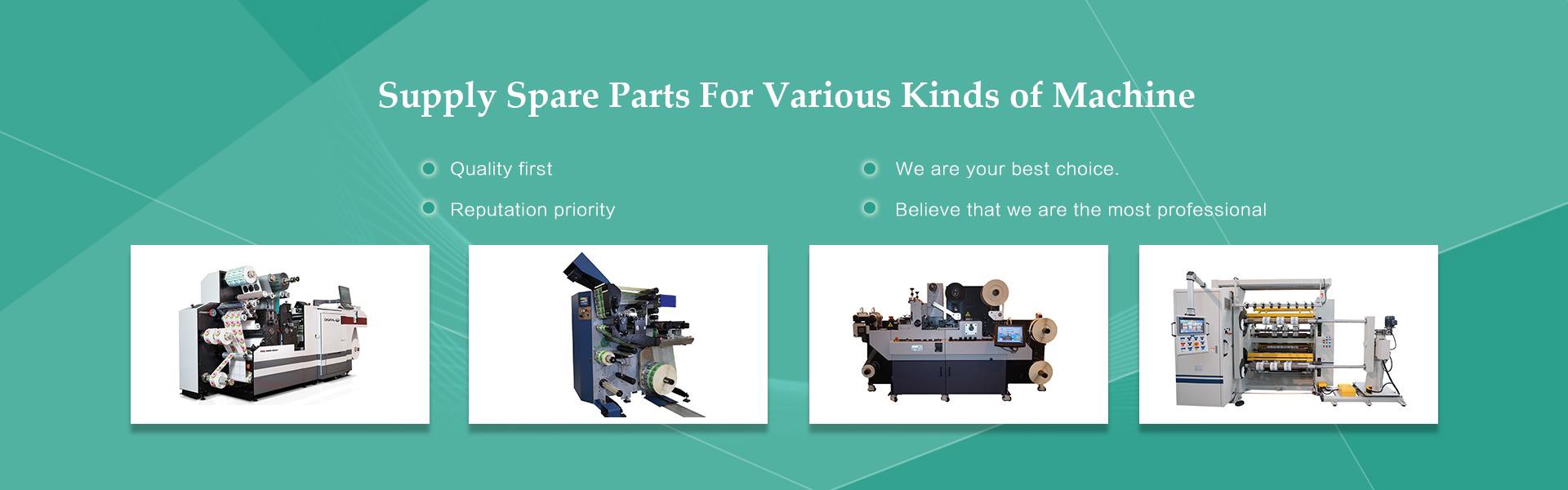
In many industries of industrial production, winding control problems are often encountered. For example, in the production process of paper, textiles, plastic film, electric wire, printed matter, magnetic tape, metal strip wire, etc., the unwinding and winding tension of the strip or wire is critical to the quality of the product, and constant tension control is required for this purpose. That is, the product is subjected to good tension during the winding process and remains unchanged throughout.
Tension control refers to the ability to permanently control the tension of a material as it is delivered on a device. This control must be effective for any speed of the machine, including acceleration, deceleration and constant speed of the machine. Even in the case of an emergency stop, there should be the ability to ensure that the cuts are not damaged. The stability of tension control is directly related to the quality of the slitting product. If the tension is too large, it will cause tensile deformation of the processed material; if the tension is too small, the stress between the layer and the layer of the wound material will be deformed, resulting in unwinding and affecting the processing quality. In the strip take-up system, the tension control system occupies an important position and it is quite complicated.
The tension controller is a system developed by a single chip microcomputer or some embedded devices and peripheral circuits. It is a control instrument that can directly set the tension value required to be controlled, and then directly input the signal of the tension sensor as the tension feedback value. After the deviation is obtained by comparison, it is input to the controller such as PID for processing, and is output to the peripheral actuator for control, and finally achieves the purpose of small deviation and fast system response.
The effects of tension control include:
1. Ensure that the continuous production and processing process can be carried out normally, that is, to ensure that the flow rate of the material to be processed is equal in each part of the continuous production line, so as to achieve the requirement of neither stacking nor breaking;
2, to ensure the quality of the processed products, such as dimensional accuracy (thickness, width, cross-sectional shape, etc.), flatness, winding tightness, shape and material properties meet the standard requirements.
The tension controller is a system developed by a single chip microcomputer or some embedded devices and peripheral circuits. It is a control instrument that can directly set the tension value required to be controlled, and then directly input the signal of the tension sensor as the tension feedback value. After the deviation is obtained by comparison, it is input to the controller such as PID for processing, and is output to the peripheral actuator for control, and finally achieves the purpose of small deviation and fast system response.
A typical tension control system consists mainly of a tension controller, a tension reader, a tension detector, a magnetic powder brake and a clutch. The coil stationary magnetic powder clutch and the magnetic powder brake are automatic devices that control the input current to change the output transition. When the coil is not energized, the input shaft rotates, and the magnetic powder is pressed against the inner wall of the clamp ring by the centrifugal force, and the output shaft is not in contact with the input shaft. At this time, it is in an idling state. When the coil is energized, the magnetic powder generates a magnetic flux under the action of the magnetic force line, so that the output shaft and the input shaft become a rigid body and rotate, and a slip occurs when the overload occurs, and the working state is at this time. Thereby achieving the purpose of transmitting torque.
In many industries of industrial production, winding control problems are often encountered. For example, in the production process of paper, textiles, plastic film, electric wire, printed matter, magnetic tape, metal strip wire, etc., the unwinding and winding tension of the strip or wire is critical to the quality of the product, and constant tension control is required for this purpose. That is, the product is subjected to good tension during the winding process and remains unchanged throughout. The stability of tension control is directly related to the quality of the slitting product. If the tension is too large, it will cause tensile deformation of the processed material; if the tension is too small, the stress between the layer and the layer of the wound material will be deformed, resulting in unwinding and affecting the processing quality. In the strip take-up system, the tension control system occupies an important position and it is quite complicated.
Tension control refers to the ability to permanently control the tension of a material as it is delivered on a device. This control must be effective for any speed of the machine, including acceleration, deceleration and constant speed of the machine. Even in the case of an emergency stop, there should be the ability to ensure that the cuts are not damaged. The tension control is high in precision and easy to adjust.发送反馈历史记录
Previous: What Is The Working Principle Of The Tension Controller?
Next: Analysis Of The Application Principle Of Tension Controller System In Gravure Printing Machine