Tel: +86-134-31394972
E-mail: sales@pre-webguidesystem.com
Tel: +86-134-31394972
E-mail: sales@pre-webguidesystem.com
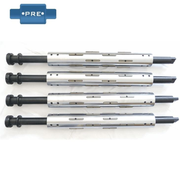
The slip shaft manufacturer will bring you to understand the specific classification of the differential shaft. There are many types of slip shafts. In simple terms, it can be divided into the West Village type slip shaft, the mechanical slip shaft, and the pneumatic slip shaft. . Let's take a look together:
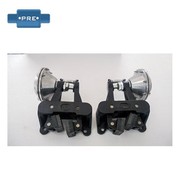
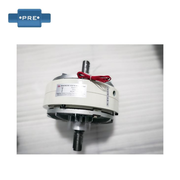
Nishimura slip axis
Center air pressure differential shaft, pneumatic locking, pneumatic slip. Accurate, performance, torque accuracy, precise control of tension within the range.
It is suitable for the sliding shaft of fully automatic loading and unloading coils, ensuring that the core is not displaced or loose during forward and reverse rotation.
It is most suitable for short-axis use. When coiling metal foil, copper foil or aluminum foil, it shows its excellent performance.
The special form of Nishimura: It can also achieve extremely low friction tension and is applied to the slitting of the thinnest PET film and electronic film.
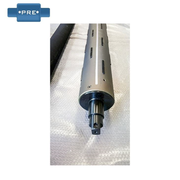
Pneumatic slip axis
The rotational moment between the slip ring and the core of the slip shaft is realized by adjusting the air pressure in the main shaft, thereby controlling the core driven by each slip ring, thereby solving the thickness of the coil. The difference caused by the uneven tension caused by the rewind problem.
Because it is a special sealing pressurization method, there is no rubber airbag in the main body, and almost no maintenance is required. Relative to mechanical air expansion shaft, it is not easy to cause pollution, so it is especially suitable for food packaging industry.
Mechanical slip shaft
The slip ring of the slippery shaft has two rows of ball lugs, and six of the columns (12 in total) can hold the core of the core at the same time when the force is taken up. True roundness and concentricity; the other 6 balls are all raised and the core is inflated. At the beginning of the coiling, as the tension of the coil increases, the axial pressure is set, and the diameter difference of the coil is caused by the uneven thickness of the paper. When the pressure is greater than the set pressure, the slip is generated, thereby controlling the tension between the slits. Balance.