Tel: +86-134-31394972
E-mail: sales@pre-webguidesystem.com
Tel: +86-134-31394972
E-mail: sales@pre-webguidesystem.com

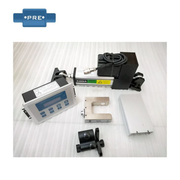
The photoelectric guiding device comprises: a correcting controller, a pusher and a sensor. The working principle: the sensor detects the deviation of the material, and then transmits the signal to the controller, and the controller guides the pusher to work, and the pusher is The material offset is solved by adjusting the rack. Generally, the total weight of the material feeding frame can be corrected by photoelectricity within three tons, and the photoelectric hydraulic guiding is generally recommended for more than three tons.
The photoelectric guiding device is a mechanical device for guiding the side error of the coil in the forward movement. The displacement type correcting is to realize the side correction of the coil by changing the span of the coil at the inlet and the outlet. It is a differential and oscillating selectable rectification controller that tracks the edges or printed lines of working materials for high accuracy.
It is composed of large-scale industrial integrated circuits, with strong working environment, strong anti-interference ability, high reliability and long service life. It is very suitable for the continuous non-stop production work of the packaging industry. It has been widely used in plastic film slitting machines, special material slitting machines, coating machines, printing machines, laminating machines and other equipment. The photoelectric guiding controller sensor is composed of a correction controller, a photoelectric eye, and a motor servo mechanism.
This guiding is made up of a fixed base and one or more rotating devices that act as swinging arms that move around a fixed or virtual point of rotation. The maximum angle of rotation is ±7.5°. The ideal position of the point of rotation is in the range of the inlet or in the range of no more than 10% during the correction.
Photoelectric guiding Units provide the corrective control you need to help your production line run efficiently and efficiently. Combined with appropriate sensors, drivers, and other guiding components, the guiding device can provide high-precision, balanced, closed-loop, high-dynamic response servo system. A photoelectric guiding controller sensor system is basically a displacement sensor that detects the position of the strip and compares it with the given amount. If there is an offset, the actuator is corrected to offset until it is within the given amount. Since the offset of the center position is difficult to measure, the edge position of the material is usually taken as a reference for the control signal.
How to judge and eliminate the fault of photoelectric guiding?
Photoelectric guiding sensor manufacturers believe that the emergence of photoelectric guiding has brought great contributions to the development of the guiding industry. Its quality is safe and reliable, and it is widely used in the industry. Photoelectric guiding is mainly applied to the lateral deviation control of the reel material: it can correct the deviation of the web such as web film, non-woven fabric and woven fabric.
It can correct the deviation of various coil materials such as web film, metal foil, non-woven fabric and woven fabric. The controller can select the heel and follow-up methods according to the different materials, and freely select single/double electric eye detection to meet the needs of various materials.
The troubleshooting and troubleshooting methods for photoelectric guiding are explained as follows:
1. The motor does not turn: open the outer casing to check the control board terminal, check whether the power supply and motor wiring are wrong, check the power supply insurance, check whether the panel control button is set correctly;
2. The photoelectric head is not bright, check whether the aviation plug connection cable is connected normally;
3, the set reference can not be found, check the material contrast color difference, eliminate interference factors;
Photoelectric guiding sensor manufacturers believe that when using the photoelectric guiding system on a daily basis, it should be operated by trained personnel, and it is strictly forbidden to touch the internal circuit. If there is a malfunction during use, the power should be turned off and repaired and inspected.