Tel: +86-134-31394972
E-mail: sales@pre-webguidesystem.com
Tel: +86-134-31394972
E-mail: sales@pre-webguidesystem.com

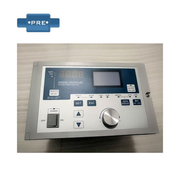
Rectification controller is now a widely used equipment, the main function is to correct the serpentine deviation when the material is running, to ensure the linear movement of the material. It has greatly improved the quality and quantity of products, and is deeply loved by people in the industry. The following editor will tell you about its working principle and safety precautions!
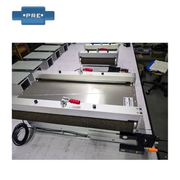
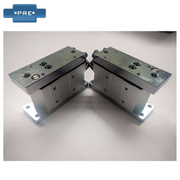
A set of automatic rectification controller system test device, the strip used is paper, width 220nm. The lateral deviation of the strip in transmission is detected by the photoelectric sensor, and an electric signal proportional to the offset is generated and sent to Amplifier, and through the gate circuit to become the required pulse control signal and then sent to the stepper motor through power amplification to make it forward, stop or reverse. A screw is connected to the shaft end of the stepper motor. The screw drives the nut fixed to the rolling guide to move the unwinding roller on the rolling guide laterally in the direction of deviation, so as to achieve the purpose of correcting the deviation. This form of correction is suitable for the processing and handling of irregularly wound materials. There is also a form of rectification of the winding roller. This system does not correct the deviation of the strip, but allows the sensor to always track the edge of the strip, so as to achieve the purpose of neatly winding the strip.
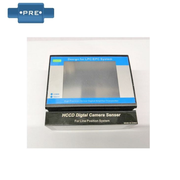
Measurement of strip deviation signal The continuous training of displacement signals is fast and accurate. The reliable measurement is the prerequisite for ensuring the normal operation of the system. The device uses a non-contact reflective photoelectric sensor. The light source emits a stable DC light source, which becomes parallel light through the lens, and is divided into two beams through the semi-transparent mirror, that is, direct light and reflected light. The reflected light is referred to as photosensitive After receiving the tube, the direct light is directed to the reflector, and then returned in the same way. After being reflected by the semi-transparent mirror, it is converged into a point through the lens and projected onto the measuring photosensitive tube. When the strip moves near the optical axis, the measurement of the illuminance of the photosensitive tube changes related to the strip movement and movement laws, and sends out corresponding electrical signals. The electrical signal output by the sensor is very small, and this electrical signal needs to be released by an amplifier. The amplifier is composed of differential input configuration, which can drive bipolar input and output.
Strip deviation is the result of many reasons. It is difficult to make the deviation meet the requirements through the machine itself. Only the method of using an external correction system is the means to ensure high yield and high quality.
For safety, please read the following notes on safety:
(1) Please do not open the enclosure when power is on, and do not energize after opening the enclosure, otherwise there is a risk of electric shock.
(2) Please do not disassemble or modify this device, otherwise fire, failure and malfunction may occur.
(3) The controller of the correcting machine must be grounded, otherwise it may cause electric shock.
(4) This device has no explosion-proof function, and this machine is definitely not suitable for installation where it must be used with explosion-proof function.
(5) Please use it in the environment specified in this manual. Do not place it in a place with high temperature, humidity, dust, or corrosive gas. Avoid vibration and shock. Otherwise, electric shock, fire, and failure may occur.
(6) Do not allow conductive objects such as metal sheets or flammable foreign objects such as motor oil to enter the device. Otherwise, it may cause fire, damage to the device and malfunction.
Previous: How The Sensor Works
Next: KN95 N95 Mask Machine Photoelectric Automatic Correction System