Tel: +86-134-31394972
E-mail: sales@pre-webguidesystem.com
Tel: +86-134-31394972
E-mail: sales@pre-webguidesystem.com

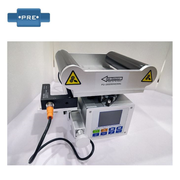
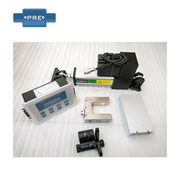
The photoelectric automatic correction system is a system for controlling the horizontal position deviation of thin soft materials in the transmission process, and has the functions of automatic detection, automatic tracking and automatic adjustment. It can track and rectify the marking lines or edges of paper, film, adhesive tape, aluminum foil and other materials to ensure the neat winding and slitting. The system can be used in light industry, textile, printing and dyeing, printing and other industries.
The correction control system is distinguished according to the control type and can be divided into:
(1) Edge position control type (E.P.C);
(2) Line position control type (L.P.C);
(3) Centerline position control type (C.P.C);
Three installation methods of actuator
1. Unwinder side
Actuator working method: the unwinding shaft moves axially.
Photoelectric sensor position: fixed.
Control effect: if the original unwinding shaft is not wound up, the material is released at a fixed position through the correction control.
2. Winder side
Actuator working mode: the winding shaft moves axially.
Photoelectric sensor position: installed on the rewinding car, moving with the car, the distance from the reel is greater than 2 times the material width.
Control effect: The rewinding car tracks the material, always keeping the material edge perpendicular to the reel, and finally makes the rewinding neat.
3. Intermediate orientation
Working mode of the implementing agency: the working platform makes plane torsion along the material input plane;
Photoelectric sensor location: installed on the edge of the output surface.
Control effect: This mechanism is stable, no damage to the material, and the effect is good.
Three installation methods of photoelectric switch
1. Double switch unilateral control
The photoelectric head is placed on the side of the material. Place the edge of the material in the second dead zone of the photoelectric sensor.
Advantages: The control error is small, and the position of the photoelectric head can be unchanged when the material width changes.
Disadvantages: If the edge is damaged, it will force tracking and cause the material to tear. After the material is finished, the actuator will run to the limit position.
2. Single switch unilateral control
When controlled by one side and one switch, the photoelectric head is placed on the side of the material. Place the edge of the material under the light spot of the photoelectric sensor.
Advantages: small control error and simple debugging; when the material width changes, the position of the photoelectric head can be unchanged.
Disadvantages: If the edge is damaged, it will force the tracking to cause the material to tear; the actuator will run to the limit position after the material is finished; there is no balance point, and the motor keeps rotating.
3. Double switch bilateral control
Use two photoelectric switches, placed on both sides of the material, to always keep the two photoelectric heads in the same state.
Advantages: If the edge of the material is damaged, or the material is finished, it will not affect the operation.
Disadvantages: If the width of the material changes frequently, the position of the photoelectric head needs to be changed frequently. If the distance between the optical axis of the two photoelectric heads and the material width are not equal, a correction error will occur.
Previous: Introduction To The Working Principle And Safety Precautions Of Rectification Controller
Next: What Factors Determine The Accuracy Of The Photoelectric Corrector?