Tel: +86-134-31394972
E-mail: sales@pre-webguidesystem.com
Tel: +86-134-31394972
E-mail: sales@pre-webguidesystem.com

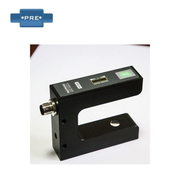
Photoelectric sensors are used to detect advanced systems in automation equipment and devices. At the same time, they are based on advanced process control, operation optimization, and energy saving strategies.
This paper through the statistical analysis of the photoelectric switch sensor circuit principle and test results, it is more applicable. Operational feasibility. Parameter optimal performance indicators, creating favorable conditions for field use. 1. Working principle
The photoelectric sensor emits a light source through infrared or invisible light. The chip receives the signal and makes corresponding actions. The switch detects the presence or absence of an object within a certain distance. The photoelectric sensor emits the light source through infrared or invisible light. The chip receives the signal and responds accordingly. The switch detects the presence or absence of an object within a certain distance. Install the light emitter and the light receiver face to face, adjust the position and sensitivity of the optical axis, and then connect the power supply; then adjust the light emitter and light receiver left and right to fix the switch at the center position of the action indicator light; adjust the up and down direction in the same way After the adjustment is completed, place the detection object on the optical axis and fix it in a stable action position. The mirror-reflective photoelectric switch and mirror (MS-2) are placed face to face and turned on. Then, adjust the mirror left and right. And the position of the photoelectric switch, confirm the action range of the action indicator and fix it at the center position; adjust the position in the up and down direction in the same way; after the adjustment is completed, place the detection object on the optical axis and fix it in a stable action position ;
If more than 2 photoelectric switches are used in parallel, the distance between them should be greater than 30cm, leave enough space between the switch and the measured object, or make the measured object and the optical axis at an angle of 30-45 degrees. For high-rate objects, you can choose to use the photoelectric switch with a built-in polarized mirror surface.) When the light emitted by the light emitter passes through the polarizer, it will be changed into horizontal and horizontal light and reach the reflector MS-2 (MS-3), and then It is a polarizer that reaches the receiver as the reflector changes to vertical light. This detection object can be detected even if it is a general mirror. Generally, it can be used at the position of maximum sensitivity. However, considering the influence of the background and the mounting surface, the sensitivity must be adjusted. When the detection object is placed in the detection position, the sensitivity adjustment knob is slowly adjusted from the minimum sensitivity position (Min.) To The action indicator (yellow LED) is ON and the self-diagnostic indicator (green LED) is OFF. Record this position as: remove the detection object and continue to slowly increase the sensitivity knob to the action indicator (yellow LED) OFF and self-diagnosis indication Light (green LED) ON position, record this position as. [When the self-diagnosis indicator (green LED) and action indicator (yellow LED) are both OFF, the maximum sensitivity (Max.) Position is]; and the middle position This is the best sensitivity position.
The superior advanced detection performance of photoelectric sensors, such as excellent protection, sensitivity and accuracy, is widely used in automatic equipment detection devices, but it is still limited by the use conditions. Strong light is strictly prohibited. Sunlight. Spotlights. Within the direction angle of direct incident photoelectric switches You must use a light shielding plate. Support plate to block and other requirements.
Previous: How To Install Photoelectric Guide Sensor?
Next: How To Operate The Special Electric Eye Of Photoelectric Guide System?