Tel: +86-134-31394972
E-mail: sales@pre-webguidesystem.com
Tel: +86-134-31394972
E-mail: sales@pre-webguidesystem.com
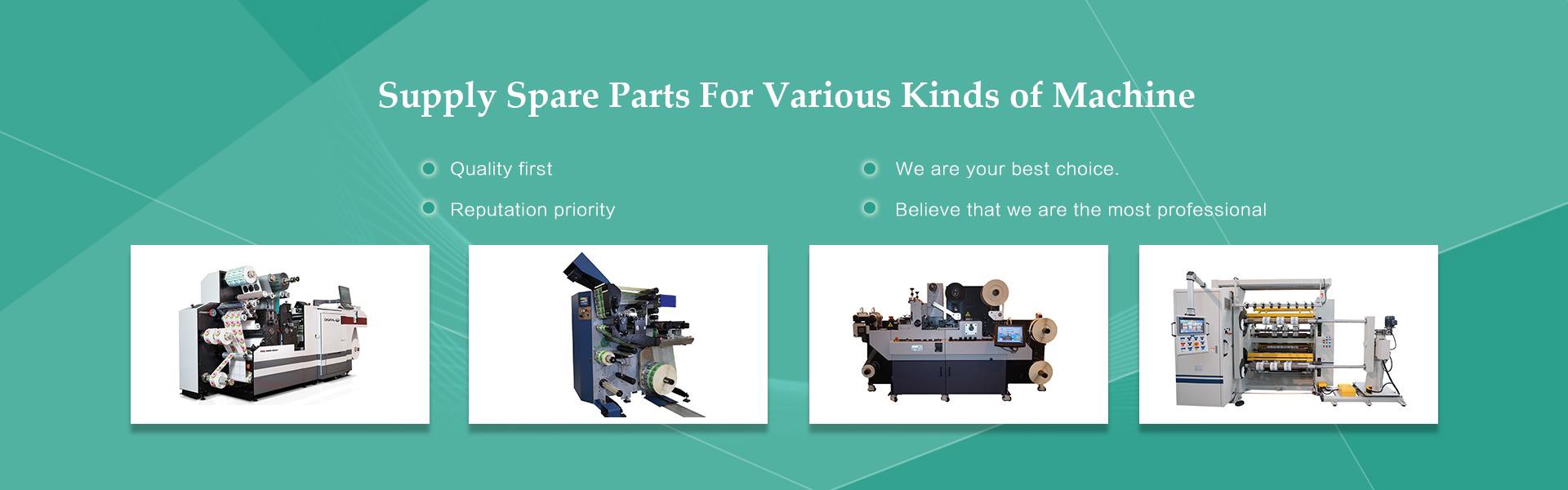
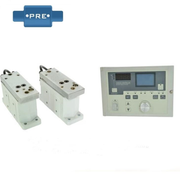
Bearing type tension sensor is made of stainless steel. Because of its stainless steel material, it has the characteristics of corrosion resistance and long life. It has the industry's highest measurement accuracy, stability and long service life. The extremely flat structure is suitable for strict space requirements. The following is a brief analysis of the working principle of the bearing tension sensor.
Each bearing-type tension sensor includes two Wheatstone bridge measuring circuits composed of foil strain gauges, and the measuring circuits perform practical tension measurement. The force to be measured is applied to the strain gauge through the shaft roller bearing, and the strain gauge is located on two parallel faces instead of the traditional zigzag beam. Bearing-type tension sensors have two ranges of high and low ranges. For each range, the tension sensor internally corresponds to a mechanical overload maintenance organization, which protects the sensor from two directions of pulling or pressing, thereby ensuring that the sensor has a strong overload capacity. And hardly damage the bearing type tension sensor. Each dual-range sensor outputs two tension signals to the transmitter. When the force of the sensor exceeds the limit of the small range, the overload protection organization will prevent the sensor from being damaged due to the overload. At this moment, the sensor will actively enable its high-range measurement scale. The above characteristics ensure that the bearing-type tension sensor has high measurement accuracy and reliability without the need for de novo calibration. In order to obtain a more accurate tension measurement value on a low range scale, the weight of the measuring roller should be as light as possible.
In modern industrial production, especially in the automated production process, various bearing-type tension sensors are used to monitor and control various parameters in the production process, so that the equipment operates in normal conditions or in good conditions, and the products reach good quality. Therefore, it can be said that without many excellent sensors, modern production has lost its foundation.
In the basic scientific research discussion, the bearing type tension sensor has an excellent orientation. The opening of modern scientific skills has entered many new categories: for example, the vast world of thousands of light-years in the macro, the particle world as small as fm, and the hundreds of thousands of years of astronomical evolution in the vertical. Instant response as short as s. In addition, various pole skills such as ultra-high temperature, ultra-high pressure, ultra-high vacuum, ultra-strong magnetic field, and ultra-weak magnetic field, which have an important role in deepening the understanding of materials, pioneering new energy, and new materials, were also presented.
In order to obtain information from the outside world, it is necessary to use the sense organs. But people's own sense organs are not enough to study natural phenomena and rules and their production activities. It is impossible to obtain information that cannot be directly obtained by human senses without corresponding sensors. Sensors are an extension of human features, also called electrical features.
Sensors have long penetrated into the extreme areas of industrial production, international development, marine exploration, environmental protection, resource inquiry, medical diagnosis and even cultural relic protection. It can be said without exaggeration that almost every modern project can not be separated from the bearing type tension sensor.
It can be seen that the role of bearing tension sensor technology in economic development and social progress is very significant. It adopts the strain gauge bridge test principle and uses high-precision structural design. It is especially suitable for bearing-type tension sensors that need to be mounted on shafts. The bearing-type tension sensor can accurately detect the force applied to the tension roller when the coil passes the tension roller, and outputs a voltage signal proportional to the force according to the magnitude of the force. The bearing type tension sensor is directional, and the direction of the red dot is the direction of the force. It is a special sensor for strip tension testing. It forms a tension control system with constant tension automatic controller, magnetic powder brake and magnetic powder clutch to realize closed-loop tension control. It is widely used in electronic control systems such as vacuum coating machines.