Tel: +86-134-31394972
E-mail: sales@pre-webguidesystem.com
Tel: +86-134-31394972
E-mail: sales@pre-webguidesystem.com
With the advancement of technology, the meaning of some technical words has changed, which has led to people often misunderstanding. The sensor is one of them.
Now people often say that the sensor is composed of two parts, namely the sensitive element and the conversion element. Among them, the sensitive element refers to the part in the sensor that can directly sense or respond to the measurement; the conversion element refers to the part in the sensor that converts the measured or response of the sensitive element into an electrical signal suitable for transmission or measurement. Because the output signal of the sensor is generally weak, it needs to be debugged and amplified. With the development of integrated technology, people can also install this part of the circuit and power circuits inside the sensor together. In this way, the sensor can output a usable signal for easy processing and transmission.
However, when the previous technology is relatively backward, the sensor refers to the sensitive element in the text, and the transmitter is the conversion element above.
There are various types of transmitters. The transmitters used in industrial control instruments are mainly temperature transmitters, pressure transmitters, tension transmitters, flow transmitters, current transmitters, and voltage transmitters. The transmitter is equivalent to a signal amplifier. Generally speaking, the transmitter is to provide power to the sensor and amplify the signal. And the sensor just collects the signal, such as the strain gauge changes the displacement signal into a resistance signal. There are also sensors that do not use power.
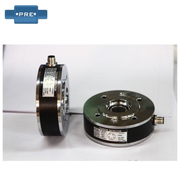
We have used different types of tension sensors, but the transmitter has not been changed. The tension sensor detects the tension signal, which usually refers to one meter at a time. The tension transmitter is a combination of a primary meter and a secondary meter. And convert the detected signal into a standard 4-20mA / 0-20mV or 0-5V, 0-10V signal, you can also understand this vividly: the sensor is the "feel" of the transmitter, the transmitter Not only did you feel it, but the signal that became "standard" was then "sent" out. A tension sensor generally refers to a sensitive element that converts a change in tension signal into a corresponding change in resistance signal or capacitance signal. The tension transmitter generally refers to a complete set of circuit units for measuring tension composed of a pressure-sensitive element and a conditioning circuit. Generally, it can directly output a standard voltage signal or current signal that has a linear relationship with the tension for the instrument, PLC, acquisition card And so on.发送反馈历史记录