Tel: +86-134-31394972
E-mail: sales@pre-webguidesystem.com
Tel: +86-134-31394972
E-mail: sales@pre-webguidesystem.com
Tension control refers to the ability to permanently control the tension of raw materials as they are conveyed on the equipment. This control must be effective for any running speed of the machine, including acceleration, deceleration and uniform speed of the machine. Even in an emergency stop situation, you should be able to ensure that the cut object is not damaged. Carry out an external inspection to check whether the fixing screws and wiring screws of fuses, relays, contactors, and limit switches are loose? Is there any disconnection? Is there any phenomenon such as burning out of money or welding of contacts? Whether the electrical activity mechanism is flexible and so on.
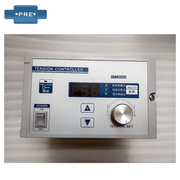
The tension controller is a system developed by a single-chip microcomputer or some embedded devices and peripheral circuits. It is a control instrument. It can directly set the tension value to be controlled, and then directly input the signal of the tension sensor as the tension feedback value. After the deviation is obtained through comparison, it is input to the controller such as PID for processing. Remove obvious faults in time. The tension controller is a system developed by a single-chip microcomputer or some embedded devices and peripheral circuits. It is a control instrument. It can directly set the tension value to be controlled, and then directly input the signal of the tension sensor as the tension feedback value. After the deviation is obtained through the comparison, it is input to the PID and other controllers for processing, and it is output to the external actuators for control, and finally the purpose of small deviation and fast system response is achieved.
The daily maintenance of equipment is the basic work of equipment maintenance and must be standardized. Regular maintenance of the photoelectric correction controller can ensure that the mechanical equipment is always in a good technical state, can be put into operation at any time, and greatly extends its service life. The regular inspection of equipment is a planned preventive inspection, and the daily maintenance workers take the initiative to inspect the installation level and accuracy of the equipment in the district and make detailed records for archival inspection.
Regarding the disadvantages of traditional winding devices:
Textile machinery such as: sizing machine, size-dyeing combined machine, parallel machine and other equipment will have a rewinding link. Traditional rewinding uses mechanical transmission. The coaxial transmission of this type of machinery is very serious for the wear of the machine, and it often requires maintenance. Maintenance is very troublesome. It not only wastes manpower, but also has high maintenance costs. A lot of inconvenience. In particular, the textile equipment is basically not allowed to stop halfway after it is turned on. If there is an unexpected situation, the parking will cause a lot of waste. In this case, the tension-controlled frequency conversion winding gradually began to replace the traditional mechanical transmission system.
In many industries of industrial production, winding control problems are often encountered. For example, in the production process of paper, textiles, plastic films, wires, printed materials, magnetic tapes, metal tapes and wires, the unwinding and coiling tension of the tape or wire is very important to the quality of the product. To this end, constant tension control is required That is, the product is subjected to good tension during the winding process, and remains unchanged from beginning to end. The stability of the tension control is directly related to the quality of the slitting product. If the tension is too large, it will cause the tensile deformation of the processed material; if the tension is too small, it will deform the layer-to-layer stress of the coiled material, causing uneven winding and affecting the processing quality. In the strip winding system, the tension control system occupies an important position, and it is quite complicated.
About the advantages of tension control frequency conversion winding:
1. Use advanced control algorithms: recursive calculation of coil diameter; linear increase of tension when hollow coil diameter is activated; application of tension taper calculation formula; dynamic adjustment of torque compensation and so on.
2. The real-time calculation of the winding diameter has very high accuracy, which ensures the smooth performance of the output torque of the winding motor. In addition, a recursive calculation of the coil diameter is added in the calculation of the coil diameter, and when the operation error occurs, the coil diameter can be corrected to the correct value by itself.
3. The tension setting is set on the man-machine, humanized operation.
4. Because the moment of inertia of the winding device is very large, when the winding diameter changes from small to large. If the operator accelerates, decelerates, stops, and reactivates, it is easy to cause the phenomenon of yarn burst and loose yarn, which will directly lead to the quality of the yarn. After the transformation of the frequency conversion winding, the winding is stable and the tension is always constant under the above-mentioned conditions. And after PLC processing, in the specific dynamic process, add some dynamic adjustment measures to make the winding performance better.
5. On the basis of traditional mechanical transmission winding, it is transformed into variable frequency winding, which is very simple and low in cost. Basically, there is no need to modify the original machinery. The transformation cycle is small, and basically the installation and commissioning can be completed in two or three days.
6. It overcomes the disadvantages of mechanical winding on mechanical wear, prolongs the service life of the machine, and facilitates the maintenance of equipment.
In many industries of industrial production, precise tension control is required to maintain constant tension to improve product quality. The purpose of tension control is to keep the tension on the wire or strip constant. Industries such as paper making, printing and dyeing, packaging, wire and cable, fiber optic cable, textile, leather, metal foil processing, fiber, rubber, metallurgy and other industries are widely used.
Previous: Key Points Of Tension Controller System Adjustment
Next: Importance Of Tension Sensors In The Field Of Online Cutting