Tel: +86-134-31394972
E-mail: sales@pre-webguidesystem.com
Tel: +86-134-31394972
E-mail: sales@pre-webguidesystem.com
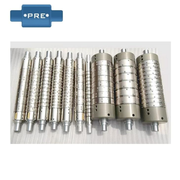
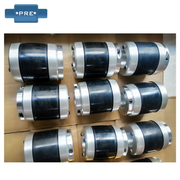
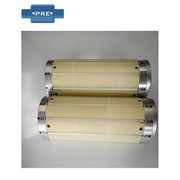
The cloth guide roller is a cloth guide device of printing and dyeing equipment, which requires wear resistance, corrosion resistance, smooth surface without rust, good straightness, no bending deformation, etc., so it has strict requirements for the production of its rollers.
One is to ensure that the cloth guide rollers have sufficient rigidity, so that under heavy load, there will be no bending deformation, which will not affect the use.
Secondly, the roller should have sufficient hardness and strong corrosion resistance, and the plating layer has anti-stripping ability, which guarantees better wear resistance and corrosion resistance, and prolongs the service life of the cloth guide roller.
Third, the surface of the cloth guide roller must have sufficient smoothness and a certain degree of roughness to ensure smooth cloth guide. The surface must not have air holes or grooves, and the roller wall thickness must be uniform.
The above are the relevant requirements for cloth guide rollers.
In related industries such as dyeing, finishing, and textile finishing, the force of the cloth guide roller is indispensable to improve the production efficiency and quality of textiles. The cloth guide rollers are more prominent and generally operate in a state where more than various sizing machines, sizing and dyeing machines, combined machines and qualitative tenter machines cooperate with each other. Therefore, the first important characteristic of the cloth guide roller is to have versatility, so that the performance of the product can not be reduced or reduced when converting on various mechanical equipment, nor will the cloth guide roller occur on a certain machine. Due to the failure, other mechanical products cannot be used, and the general performance of the cloth guide roller reduces a part of the capital investment for the client.
There are two commonly used methods for repair of cloth guide rollers: in-situ cutting and repairing methods and in-situ overlaying and repairing methods. The main purpose is to understand the in-situ cutting and repair methods.
The method is: Install a special knife holder on the frame of the crusher, and its moving track should be parallel to the axis of the cloth guide roller. When repairing, start the crusher and use a manual feed mechanism to cut the roller. But pay attention to the following issues:
The axes must be parallel to avoid taper after cutting and affect the crushing effect.
The linear speed of the cloth guide roller should not exceed the allowable cutting speed of the cutting tool, so as not to damage the tool.