Tel: +86-134-31394972
E-mail: sales@pre-webguidesystem.com
Tel: +86-134-31394972
E-mail: sales@pre-webguidesystem.com
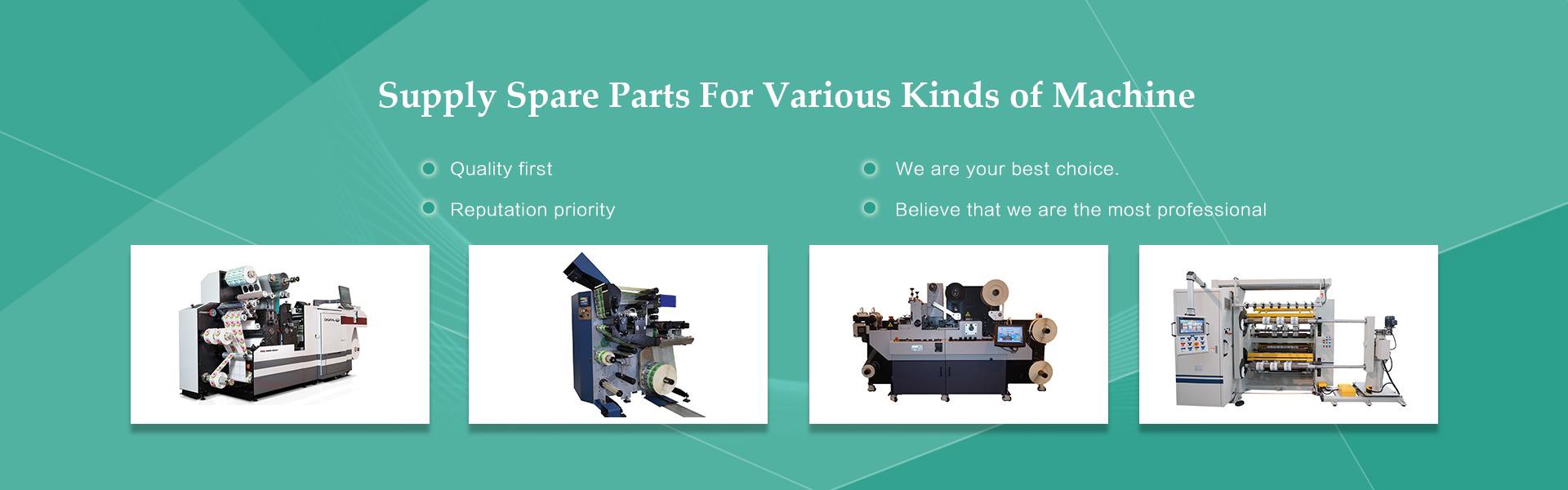
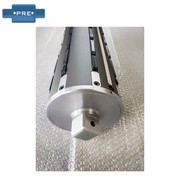
In recent years, the trend of economic internationalization has been rising on a global scale. International economic cooperation has achieved brand-new breakthroughs in both breadth and depth. Our company has seized this opportunity and developed increasingly mature. The main role of the cloth guide roller is For open-width transmission of fabrics in printing and dyeing machinery. The width of the cloth guide roller is generally 1100mm~3600mm. According to the bearing form, the cloth guide roller can be divided into: sliding bearing cloth guide roller and rolling bearing cloth guide roller. The material of the cloth guide roller can be made of materials: optional shaft head carbon steel, extra stainless steel; or all stainless steel. The company specializes in the research and development, manufacturing and engineering design, installation and commissioning of dyeing and finishing equipment, metallurgical machinery and pressure vessels. With advanced design concepts, professional quality, and complete supporting capabilities, we provide users with efficient production equipment and complete sets of supporting services.
Here are some common guide rollers and their corresponding properties:
1. Butyl rubber roller: high resistance to chemical solvents, good heat resistance (170℃), excellent acid and alkali resistance, suitable for color printing machinery, leather making machinery, coating equipment, etc.
2. Ethylene-propylene rubber roller: Excellent ozone aging resistance, weather resistance, wide operating temperature, long-term work at -65℃-140℃, excellent insulation performance, used in plastic printing machinery, tanning machinery, and general fields.
3. Nitrile rubber roller: excellent oil resistance, wear resistance, aging resistance, heat resistance performance is also good, used in printing, printing and dyeing, chemical fiber, paper, packaging, plastic processing and other equipment and other contact oil and aliphatic hydrocarbons For solvents.
4. Natural rubber rollers: excellent elasticity and mechanical strength, good alkali resistance, used in compression rubber rollers in textile, paper and leather, packaging and other equipment and traction rubber rollers in metallurgy, mining and other industries.
5. Neoprene rubber roller: excellent abrasion resistance, high fire resistance, aging resistance, better heat resistance, oil resistance, acid and alkali resistance, used for printed board corrosion machines, plastics, tanning, printing, food Printing iron, ordinary coating machine and other equipment.
6. Fluorine rubber roller: It has extremely high heat resistance, oil resistance, acid and alkali resistance, gas permeability, electrical insulation, aging resistance, flame resistance, and abrasion resistance. It is also used for special coating equipment. . These eight types are the types of cloth guide rollers and their characteristics.
7. Silicone rubber roller: using its high temperature resistance, ozone resistance, chemical inertness and non-adhesion to plastics, it is used for processing hot-bonded products, such as polyethylene calendering, embossing, printing and dyeing, and film and fabric coating Adhesives, plastic compounding, corona treatment and other machinery are also used as release rollers on sugar production and packaging machines and non-woven fabric manufacturing.
8. Polyurethane rubber roller: It has extremely high mechanical strength and abrasion resistance, aging resistance and oil resistance. It is often used in papermaking, chemical fiber, wood processing, plastic processing and other machinery.
The drying cylinder drying machine uses steam heating, and the steam is introduced into the hollow column (or the steam pipe beside the trough rectangular column) of the drying machine through the steam main pipe, and is respectively introduced into each drying cylinder. Each steam inlet column (or steam inlet pipe) is equipped with a regulating valve, a safety valve and a pressure gauge. When the steam pressure per unit area exceeds the specified pressure, the safety valve will automatically open to release the overpressure steam. The steam entering the drying cylinder transfers heat to the drying cylinder, and then from the surface of the drying cylinder to the water-containing fabric surrounding the surface of the drying cylinder. The steam loses heat and condenses into water, and the condensed water is discharged from the drying hopper or siphon. The cylinder enters the column (or water outlet pipe) at the drain end, and is discharged out of the machine through the steam trap. Due to the role of the steam trap, the water and steam are prevented from being discharged at the same time.