Tel: +86-134-31394972
E-mail: sales@pre-webguidesystem.com
Tel: +86-134-31394972
E-mail: sales@pre-webguidesystem.com
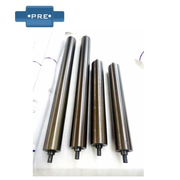
Introduction of Mirror Roller
As an indispensable part of industrial production, mirror rolls play a vital role in various processing fields. From steel hot rolling to plastic film production, to the printing and paper industry, mirror rolls, through their unique surface treatment capabilities, not only make the product surface to achieve a high degree of finish, but also play a key role in improving production efficiency and quality. In this paper, we will discuss the definition, working principle, manufacturing process, application areas, quality control and future development trends of mirror rolls to provide readers with a comprehensive perspective.
1. Definition and classification
Mirror roll is a precision tool for surface treatment, which is mainly characterized by extremely high surface finish and precise geometry. Depending on the field of application and processing requirements, mirror rolls can be divided into several main types:
Hot Rolling Rolls: Used in the hot rolling process in the steel industry to ensure the surface finish and dimensional accuracy of sheet metal.
Calendering rolls: Mainly used in plastic film production to achieve a mirror finish on the surface of plastic films through high pressure and precise surface treatment.
Printing rollers: widely used in printing and paper industry to ensure the surface flatness and printing quality of printed materials.
2. Working principle
The working principle of mirror rollers is basically to make the material surface achieve the required mirror effect through the special processing technology on its surface. The main working principles include:
Precision grinding: Using high-precision grinding technology to minimize the irregularity and roughness of the roll surface.
Polishing: Mechanical or chemical methods are used to further improve the finish and flatness of the surface.
Electroplating: In some cases, electrochemical plating techniques are used to enhance the hardness and wear resistance of the surface.
Each type of mirror roll has its own specific processing techniques and parameters to suit different materials and processing requirements.
3. Manufacturing process
The manufacturing process of mirror rollers is very complex, involving a variety of high-precision processing technology and strict quality control:
Material selection and pretreatment: Selection of suitable metal materials, such as special alloy steel or carbide, heat treatment, pre-grinding and balancing.
Precision grinding and polishing: using advanced CNC grinding and polishing machines to ensure that the surface finish of the rolls reaches the sub-micron level.
Electroplating and coating: If required, electroplating or coating treatment is carried out to increase the surface hardness and wear resistance.
Quality inspection and commissioning: Check the dimensional accuracy, surface quality and other functional characteristics of the rolls by means of high-precision CMMs and optical inspection equipment.
4. Application fields
Mirror rolls play a key role in a variety of industrial fields, specific applications include but are not limited to:
Iron and steel industry: Hot rolls are used to produce high quality sheet metal.
Plastics industry: Calendering rolls are used in the production of polymer films to ensure a high degree of surface finish and flatness.
Printing and paper industry: Printing rolls are used in the printing process to ensure image clarity and color accuracy of printed materials.
5. Quality control and inspection
Quality control of mirror rollers is critical to ensure stability in the production process and product consistency:
Surface quality assessment: Use surface roughness meter and optical microscope to assess the finish and flatness of the rolls.
Dimensional accuracy testing: Measurement of roll diameter, roundness and profile using CMMs.
Functionality testing: such as abrasion resistance testing and corrosion testing to ensure the stability and durability of the rolls in long-term use.
6. Technology development and trends
As industrial technology advances and market demand changes, the mirror roll industry is evolving:
Digital manufacturing technology: such as the application of CNC machining and intelligent manufacturing systems, which improves manufacturing efficiency and consistency
Previous: How To Choose The Right Aluminum Alloy Guide Roller Material To Cope With Different Equipment?