Tel: +86-134-31394972
E-mail: sales@pre-webguidesystem.com
Tel: +86-134-31394972
E-mail: sales@pre-webguidesystem.com
Automatic tension control is to directly measure the actual tension value of the strip by the tension sensor, and then convert the tension data into a tension signal and feed back to the tension controller, through the comparison of this signal with the tension value preset by the controller, the control signal is calculated, and the automatic control execution unit makes the actual tension value equal to the preset tension value to achieve the purpose of tension stability. It is currently the most advanced tension control method. In addition, in the tension control system of medium and high-grade printing machines manufactured and sold in China, due to the higher printing speed and production process put forward higher requirements for tension control, the magnetic particle clutch has been unable to be qualified for the execution unit of this kind of system. Therefore, in modern gravure printing machines, high-speed slitting machines, and high-speed coating compounding machines, AC and DC servo motor execution units have been replaced, and more advanced tension servo control has been realized.
The tension control of a tension controller refers to the ability to permanently control the tension of the strip as it is conveyed on the equipment. This control must remain effective for any operating speed of the machine, including acceleration, deceleration, and constant speed of the machine. Even in the event of an emergency shutdown, it has the ability to guarantee that the strip does not break in the slightest.
Key features of the tension controller:
1) The tension controller can help to adjust the tension state of the equipment very well, and it also has a good practical effect on the measurement range of runout.
2) The tension controller can help the engineering facilities to realize the role of the regulating equipment in the use of the tension controller, which is conducive to the complete performance of the engineering facilities and better helps the unique technical content of the plan.
3) The tension controller adopts a more powerful and highly intelligent facility, which not only shows the alarm function, but also has better practical characteristics.
4) The tension controller has a good perfection in the adjustment of the internal structure, which shows the unique main template measures and adds a better setting circuit.
Gravure machine tension control is basically divided into three categories: manual tension control, open-loop semi-automatic tension control and closed-loop automatic tension control:
1) Manual tension control is that in the process of winding or unwinding, when the diameter of the coil changes to a certain stage, the operator adjusts the manual power supply device, so as to achieve the purpose of controlling the tension. However, the manual tension control system of modern gravure printing machines has been basically eliminated, and only exists as an operating mode in the closed-loop automatic tension control system.
2) Open-loop semi-automatic tension control, also known as winding diameter detection tension control, is to use the proximity switch installed at the reel to detect the speed of the reel, and through the initial value of the set reel diameter and material thickness, the current diameter of the rewinding or unwinding drum is calculated cumulatively, and the corresponding reel diameter change output control signal to control the rewinding torque or unwinding braking torque, so as to adjust the tension of the strip. Because with each rotation of the reel, the reel diameter changes by 2 times the thickness of the strip. This kind of tension control is not affected by external stimulus, and can implement stable tension control. However, due to factors such as torque changes, linear changes, and mechanical losses of the transmission, the absolute accuracy of this tension control is poor.
3) Closed-loop automatic tension control is to directly measure the actual tension value of the strip by the tension sensor, and then convert the tension data into a tension signal and feed back to the tension controller, through this signal and the pre-set tension value of the controller, calculate the control signal, and the automatic control execution unit makes the actual tension value equal to the preset tension value, so as to achieve the purpose of tension stability. It is currently the most advanced tension control method.
How the tension controller works:
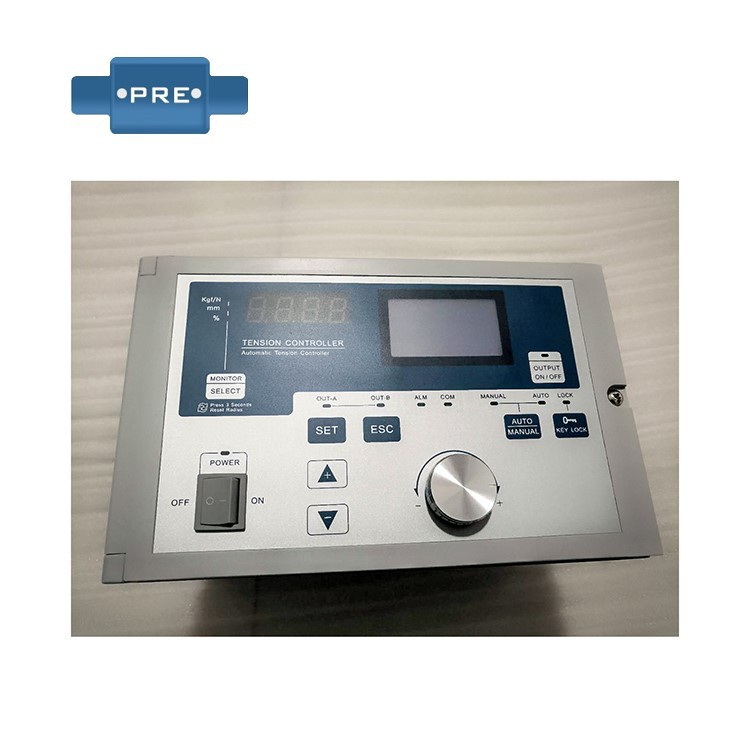
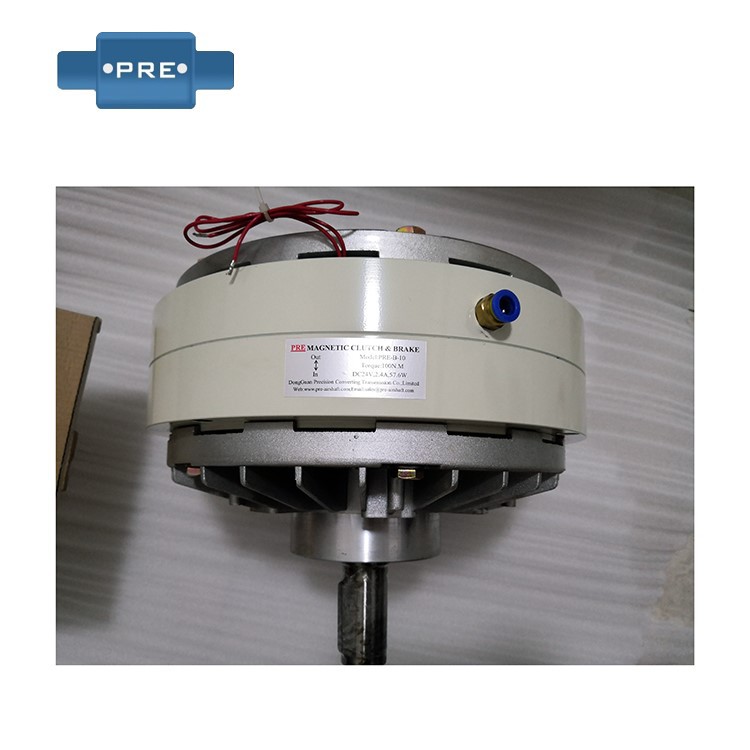
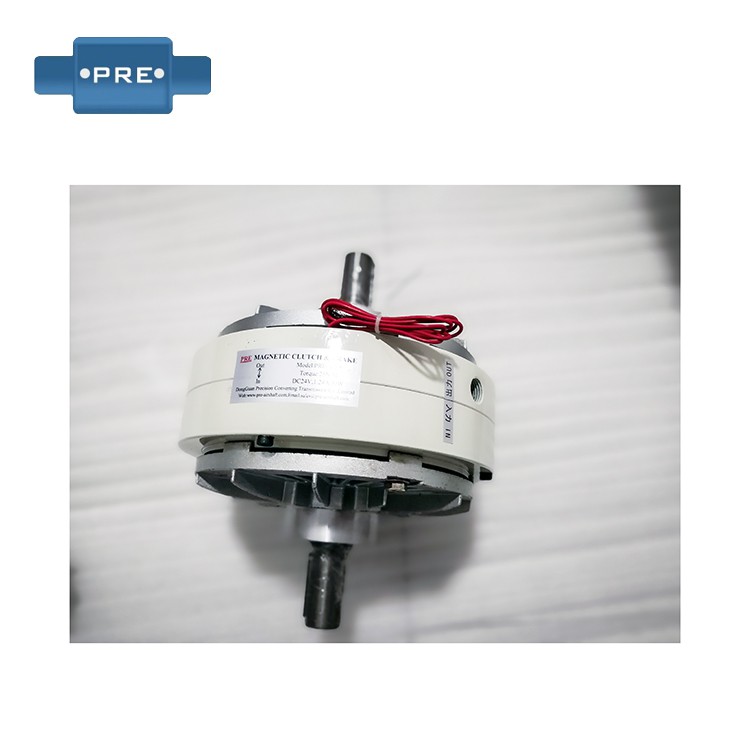
The tension controller is mainly used in the tension system where the actuator is a magnetic particle clutch or a magnetic particle brake, and is suitable for manual control, semi-automatic control (coil diameter tension control) and automatic tension control system.
The manual tension controller manually adjusts the excitation current of the clutch or brake according to the change of the coil diameter of receiving or discharging, so as to obtain a certain tension.
The semi-automatic tension controller, also known as the coil diameter of the coil type tension controller, can automatically detect the coil diameter of the receiving or discharging, and automatically adjust the excitation current of the clutch or brake to control the tension of the coil according to the set target tension and the measured coil diameter.
The automatic tension controller can measure the actual tension of the coil, and automatically adjust the excitation current of the clutch or brake to control the tension of the coil according to the set target tension and the measured tension after PID calculation. The automatic tension controller has extremely high tension control accuracy, which is suitable for use in occasions with high requirements for tension control accuracy.
Gravure printing machine main components such as base, wallboard, guide roller and other manufacturing accuracy and assembly accuracy deviation, printing process caused transmission synchronization error, also bound to make the tension of each printing unit change, gravure machine material roll in the process of rewinding, unwinding diameter is constantly changing, the change of diameter must cause the change of belt tension, unwinding in the case of constant braking torque, the diameter decreases, the tension will increase.
Tension control must be effective for any running speed of the machine, including the acceleration, deceleration and constant speed of the machine, and also have the ability to ensure that the strip does not produce the slightest damage, and the manual tension control system of modern gravure printing machine has been basically eliminated.
Closed-loop automatic tension control is to directly measure the actual tension value of the strip by the tension sensor, and calculate the control signal by comparing this signal with the tension value preset by the controller. Due to the higher printing speed and the higher requirements of the production process for tension control, the magnetic particle clutch is no longer competent as the execution unit of this type of system.
Advantages of fully automatic tension controllers:
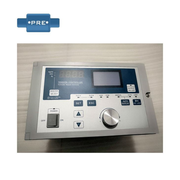
The automatic tension controller can directly drive the magnetic particle clutch and magnetic particle brake, and can also control the inverter, servo motor, etc. Other advantages include the ability to accept single or dual sensor input signals, automatic zeroing, and automatic calibration. User-friendly interface design, very easy to operate. And there is a password setting function inside, which can avoid changing the setting parameters by mistake. With a storage box, it can back up various parameters, which is light and beautiful, and has a strong anti-electromagnetic interference function. However, the automatic tension controller has some requirements in the application environment, such as the ambient temperature range of -10~40°C, and the ambient humidity between 35~85RH. At the same time, the automatic tension controller is also one of the indispensable high-quality components of the tension control system.
The tension control system of the gravure printing machine is essentially a special follow-up system that changes the input amount according to a certain adjustable attenuation law, the fluctuation of the elastic modulus of the material, the thickness of the material changes along the width and length direction, etc., the eccentricity of the quality of the coil, as well as the change of temperature and humidity in the production environment, will have a subtle impact on the tension fluctuation of the whole machine. Receiving and cutting off the material will cause the original stable tension of the whole machine to suddenly interfere with the change.
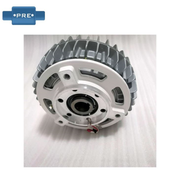
Magnetic particle brakes and magnetic clutches are widely used in papermaking, printing, plastics, rubber, textile, printing and dyeing, wire and cable, metallurgy, tablet presses and other related coiling processing industries in unwinding and winding tension control, tension control refers to the ability to permanently control the tension of the belt when conveying on the equipment.