Tel: +86-134-31394972
E-mail: sales@pre-webguidesystem.com
Tel: +86-134-31394972
E-mail: sales@pre-webguidesystem.com
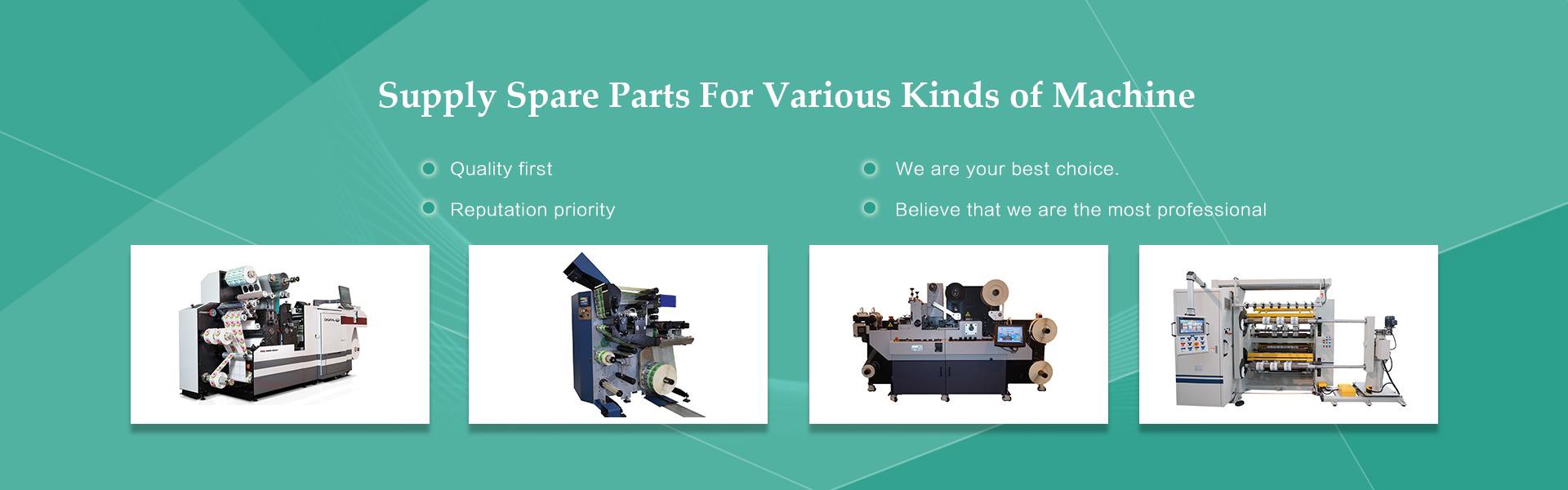
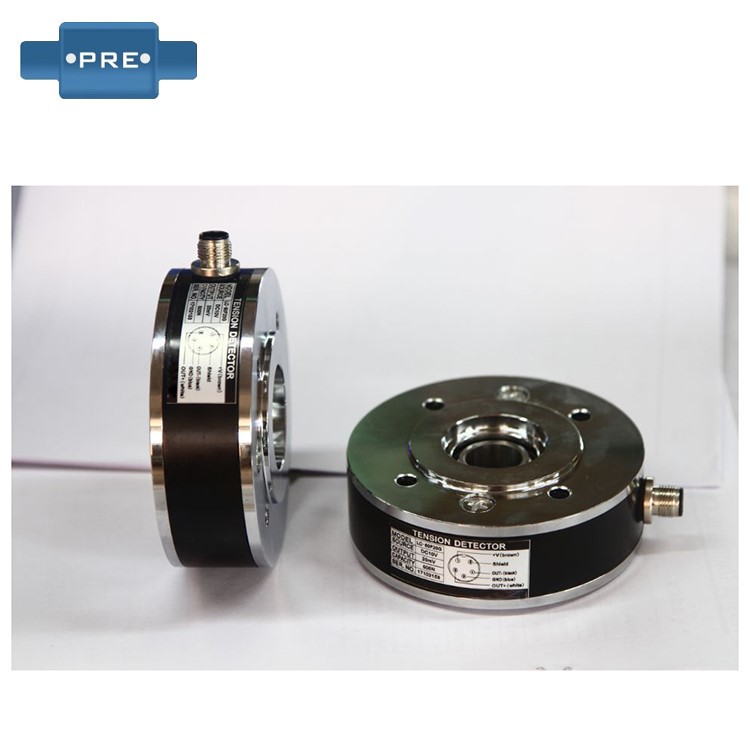
A typical tension control system consists of a tension controller, a tension readout, a tension detector, a brake and a clutch. According to the loop, it can be divided into open-loop, closed-loop or free-loop tension control system; According to the monitoring mode of different coils, it can be divided into ultrasonic type, floating roller type, tracking arm type, etc., and Figure 1 is a typical closed-loop tension control system.
What is Tension Controller:
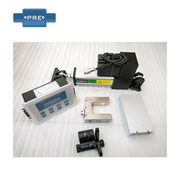
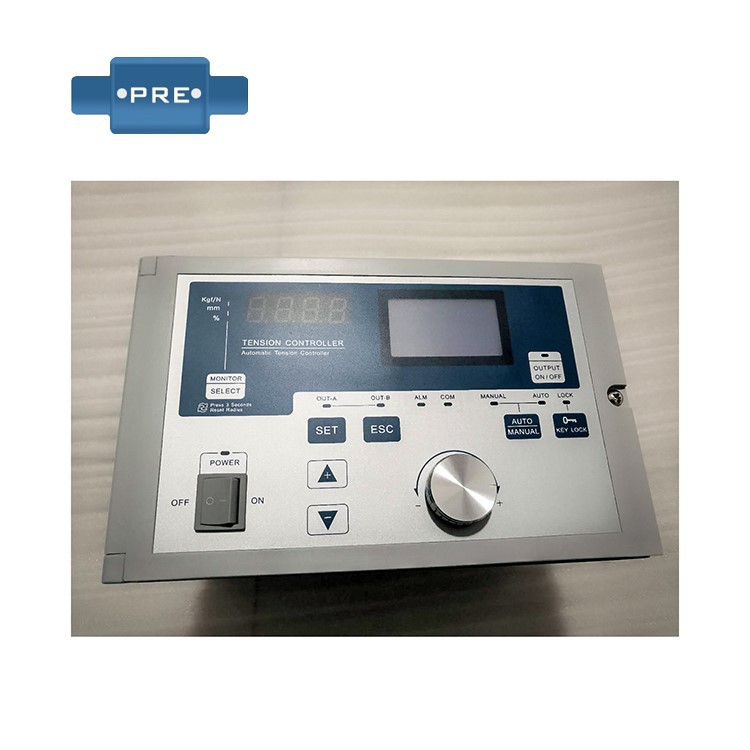
Tension controller is a kind of instrument to control this kind of tension, tension controller is a system developed by single-chip microcomputer or some embedded devices and peripheral circuits, is a kind of control instrument, it can directly set the tension value required to be controlled, and then directly input the signal of the tension sensor (generally millivolt level) as the tension feedback value, through the comparison of the deviation, input to the PID and other controllers for processing, it is best to output to the peripheral actuator to control, and finally achieve the purpose of the smallest deviation and the fastest system response.
The tension controller also has the so-called manual control function, which generally means that a certain output can be given to the actuator by the tension controller (often the amount of current of the motor); The general tension force controller also has the function of calculating the diameter of the winding, which is generally used in the winding equipment, and is divided into unwinding and rewinding; In addition, there is a taper adjustment function, which can set some of the required take-up taper directly inside the controller.
About the classification of tension controllers:
The tension controller is mainly used in the tension system where the actuator is a magnetic particle clutch or a magnetic particle brake, and is suitable for manual control, semi-automatic control (coil diameter tension control) and automatic tension control system.
The manual tension controller manually adjusts the excitation current of the clutch or brake according to the change of the coil diameter of receiving or discharging, so as to obtain a certain tension.
The semi-automatic tension controller, also known as the coil diameter tension controller, can automatically detect the coil diameter of receiving or discharging, and automatically adjust the excitation current of the clutch or brake to control the tension of the coil according to the set target tension and measuring the coil diameter.
The automatic tension controller can measure the actual tension of the coil, and automatically adjust the excitation current of the clutch or brake to control the tension of the coil according to the set target tension and the measured tension after PID calculation. The automatic tension controller has extremely high tension control accuracy, which is suitable for use in occasions with high requirements for tension control accuracy.
A good fully automatic tension controller should have the following key features:
Accurate perception ability, high-speed adjustment response, flexible adaptability, stability and reliability. First of all, the ability to accurately perceive is the core competency of a fully automatic tension controller. It is able to accurately measure and sense changes in tension and grasp process parameters in real time, so as to achieve precise control. Secondly, the high-speed adjustment response is an important factor in ensuring production efficiency and quality.
The fully automatic tension controller can quickly respond to tension changes, automatically adjust tension control parameters, and maintain a stable production state. In addition, the flexibility of the fully automatic tension controller allows it to be adapted to different production environments and process requirements. Whether it's light thin paper or heavy packaging materials, the fully automatic tension controller enables precise tension control. Finally, stability and reliability are the basic requirements of a fully automatic tension controller. It must have good anti-interference ability and the ability to run stably for a long time to ensure the reliability and consistency of the production process.
Tutorial and precautions for using tension controller:
1) The tension controller should provide a DC24V power supply that is not messy. When using, the tension bar should preferably be in the horizontal position in the upward range of 15 degrees. Do not give external pressure or impact force to the shaft connected to the tension rod, because the shaft is connected to a high-precision sensor, which will affect its accuracy and normal use, the 3 adjustable resistors on the board surface should not be adjusted by themselves.
2) Do not plug and unplug the power connection plug often. Do not use it in a dry environment for a long time. The mechanical tension controller should not be installed with too much force, which will affect the firmness of the insert.
3) Prevent dropping, which will damage the ceramic parts and housing. When the tension rod is installed, the locking screw should be aligned with the shaft plane. Do not use the time line that does not match the model. It is strictly forbidden to add any grease to the damping wheel.
4) Do not open and self-adjust without authorization. Replace the wool ring often so as not to clog the spout. Because the bearing has worn out the damping wheel, if the damping wheel rolls and slips, please use the cotton thread stained with alcohol to pull and rub the O-ring in the damping wheel, which can remove the waxy dirt left in the enameled wire. Keep the production site clean, as long-term dust accumulation can easily wear out tension controller components. Correct use of tension controller, reasonable maintenance, better improve the generation efficiency.
Here are some things to keep in mind when installing a tension sensor:
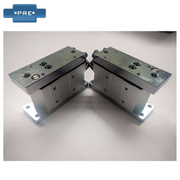
1) When installing the tension sensor, it is necessary to pay attention to the screw of the tension sensor should not be too long, and the same is true for the bearing seat, the screw should not be too long, otherwise it is easy to make the spring plate of the tension sensor not work normally, so that the performance of the tension can not be detected.
2) When installing the tension sensor, it needs to be fixed with the side, and the screws that are too long can not be used when fixing, because if the screws are too long, it is easy to damage the internal measuring device of the tension sensor.
3) When installing the tension sensor, it is necessary to pay attention to the behavior that the tension sensor cannot be subjected to violent impact, otherwise it is easy to damage the tension sensor.
4) After the installation of the tension sensor, it is necessary to pay attention to the all-round inspection, so as not to miss the place, or during the installation process, do not pay attention to some parts of the damage, only after the detailed inspection, in order to ensure the effective operation of the tension sensor.
Tension transducers can be used in:
Applications for tension sensors include high-quality load cells, instrumentation and software for the pharmaceutical, chemical, food and other batch industries. Typical applications include the weighing of agitated containers that handle the corresponding prescriptions during processing at the plant.
Force measurement and servo-hydraulic control systems for tension sensors are used in machines in paper mills, steel mills, foil production plants, cable laying and sawmills. Typical applications include tensile testing of paper, mooring control of oil platforms, and others.
Previous: The Usefulness Of Tension Control For Gravure Presses
Next: The Tension Control System Plays An Important Role in The Coil Rewinding And Unwinding Process