Tel: +86-134-31394972
E-mail: sales@pre-webguidesystem.com
Tel: +86-134-31394972
E-mail: sales@pre-webguidesystem.com
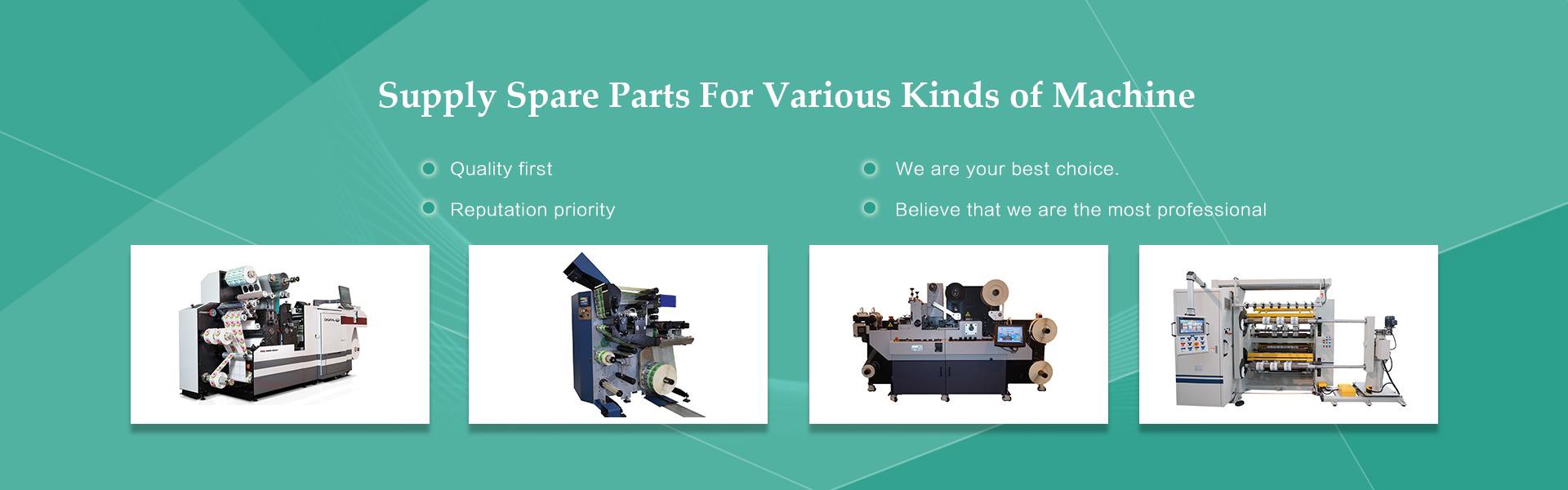
Users in printing, paperwork, bag making, papermaking and other industries are to use a combination of magnetic particle clutch and tension controller, but many users who have just come into contact with these industries are not very clear about the principle.
The magnetic particle clutch is usually used with a tension detector, and the tension controller automatically controls the torque of the hollow shaft magnetic particle clutch to make the tension constant. Generally, when the hollow shaft magnetic particle clutch works in a slip state, the tension is controlled by the torque of the hollow shaft magnetic particle clutch, in order to keep the tension constant. When the excitation current remains constant, the torque is transmitted stably and is not affected by the change in rotational speed. This feature is used in tension control, and only the excitation current needs to be adjusted to accurately control the torque, so as to achieve the purpose of tension control.
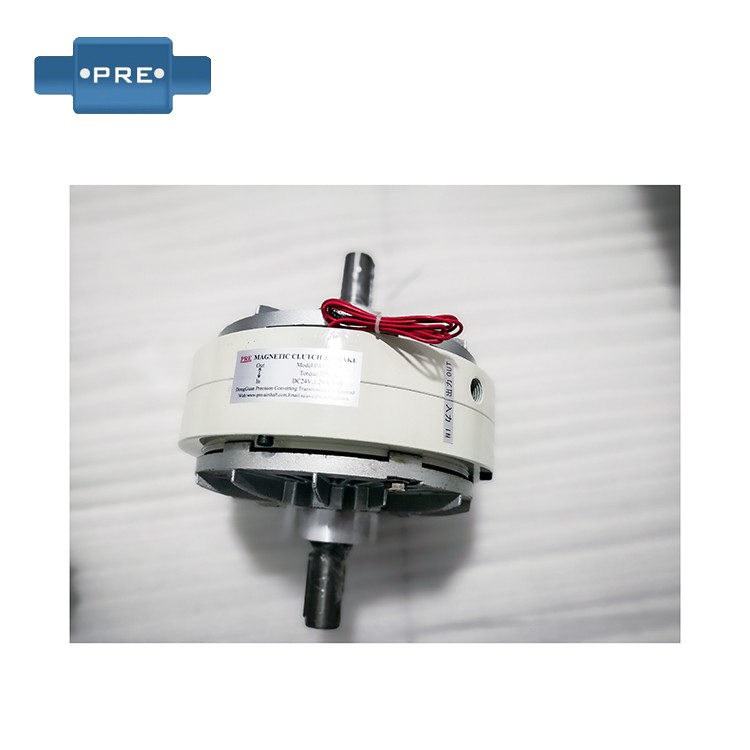
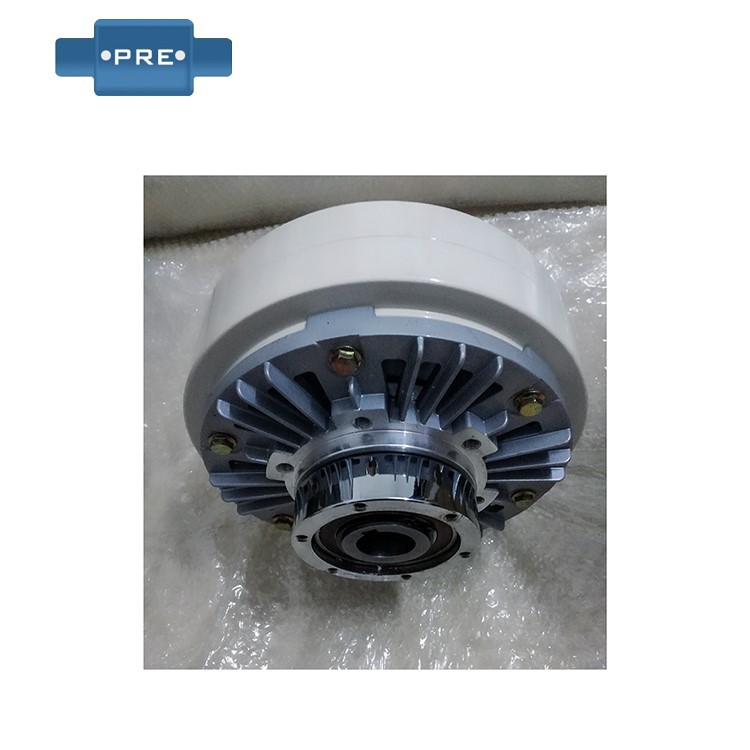
The magnetic powder clutch is a combination of a transmission input unit and a driven unit, and the space between the two sets of units is filled with granular magnetism. The principle is that when the magnetic coil is not conductive, the torque will not be transmitted from the transmission shaft to the driven shaft, but if the coil is electromagnetically energized, the magnetic particle will be attracted due to the action of magnetic force and the hardening phenomenon will be transmitted, and the torque will be transmitted between successive sliding.
The magnetic particle clutch is formed by merging the transmission unit (input shaft) and the driven unit (output shaft). The space between the two sets of cells is filled with granular magnetic particles (about 40 μm of reproduction). When the magnetic coil is not conductive, the torque will not be transmitted from the transmission shaft to the driven shaft, but if the coil is electromagnetically energized, the magnetic particle will be attracted by the magnetic force and the hardening phenomenon will be transmitted, and the torque will be transmitted between successive sliding. The principle of the magnetic particle brake is similar to that of the magnetic clutch, except that the transmission unit becomes a fixed unit.
The characteristics of the magnetic particle clutch are as follows:
1) High-precision torque control
The torque control range is very wide, and the control accuracy is high, and the transmission torque and excitation current are in the correct proportion, so that high-precision control can be realized.
2) Superior durability and long life
The use of heat-resistant, wear-resistant, oxidation-resistant, corrosion-resistant super alloy magnetic powder, long life.
3) Constant torque characteristics with excellent stability
The magnetic characteristics of the magnetic particle are good, and the binding force between the powder particles is stable, and the sliding torque is very stable, which has no relationship with the relative number of revolutions, and can maintain a constant torque for a long time.
4) Continuous sliding operation
The cooling structure with excellent heat dissipation effect and uniform thermal deformation, coupled with the high heat resistance of the magnetic particle, allows high bonding and braking power and sliding power, and can slide smoothly without causing vibration.
5) The connection is sleek and impact-free
The impact of the connection is minimal, and it can start and stop smoothly without impact. In addition, the resistance torque is extremely small, so it does not cause unwanted heat generation.
6) Suitable for high-frequency operation
Agile and fast response and special heat dissipation structure, suitable for high-frequency operation.
7) Lightweight, maintenance-free, long life
The type is simple and lightweight, using high-temperature resistant coils and special grease bearings, and applying wear-resistant special treatment to the armature that is prone to wear and tear to prolong the service life.
What is the specific role of magnetic particle clutch in mechanical equipment?
1) Buffer start, stop: The cushioning effect of the smooth characteristics and constant torque characteristics of the connection is used, that is, the peak torque with stable acceleration and no impact.
2) For continuous sliding and tension control
3) For torque limiters
4) High-speed response
5) Power absorption
6) Positioning is stopped
7) For simulated loads
8) It can be used for the separation effect and torque braking effect in the process of torque transmission.
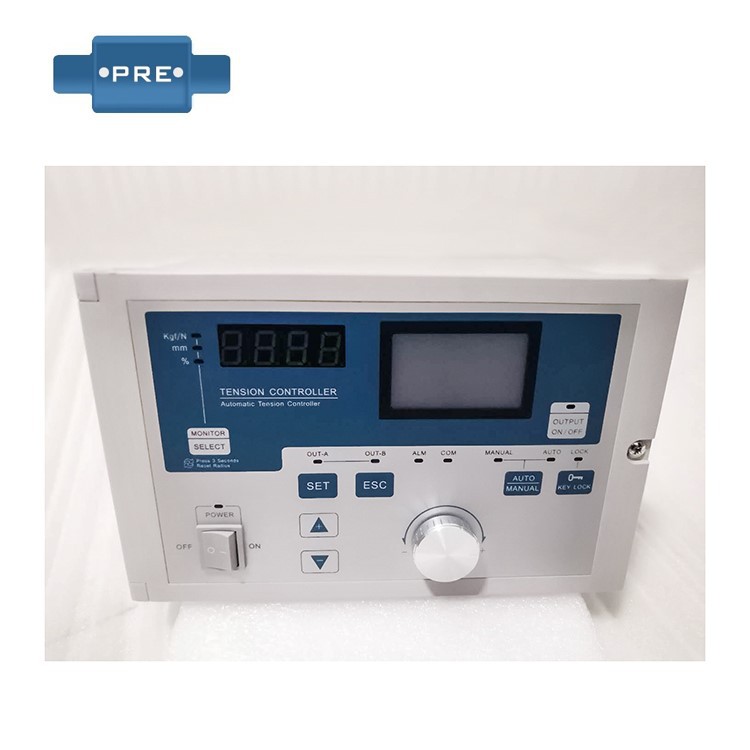
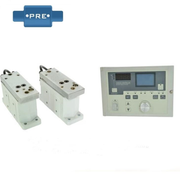
The tension controller is divided into: manual tension controller, semi-automatic tension controller, automatic tension controller, its functional characteristics using large LED liquid crystal display, Chinese and English display selection, friendly operation interface. Fully digital design, no adjustable potentiometer, simple tension calibration process, accurate, stable and reliable tension measurement. It can receive single/dual sensor input signals, and adapt to the use of various tension sensors as input signals: special tension sensors for micro displacement can be selected (the input signal range is 200mV, and the power supply is 5V).
The tension controller system is to control the units of the magnetic particle clutch, and the speed must maintain a consistent proportional relationship, and the tension in the material must be kept constant, or the tension must be controlled according to the specified law to ensure production efficiency and product quality. The function of the tension controller principle itself is to require the tension controller to maintain constant tension during the working process, and the performance of the tension controller system will directly affect the winding quality, such as the surface of the coil is flat, tight and neat, uniform and not wrinkled, and the material is fine and the size is the same.
The tension control system is composed of magnetic particle brake, proportional amplification, power amplification, tension detection, etc. The system can be based on different paper tension requirements, through manual selection of tension, normal operation of the "automatic" position, through the "given" to the tension, the tension adjustment roller is in a balanced state, if due to some interference caused by tension change, tension adjustment roller displacement, tension detector will output the corresponding change signal, after the circuit amplification, control the braking torque of the magnetic particle brake to change accordingly, the tension changes, the tension adjustment roller returns to the equilibrium state, so as to maintain the tension stability. The proximity switch is used to measure the diameter of the wind, and the taper tension control function can be realized.
The main function of the tension controller: to achieve constant tension control of the coil, or according to the process requirements, to achieve the taper control of the coil tension. Tension controllers are generally used to control magnetic powder brakes, inverters, servo motors, etc. In general, there are many occasions that require constant tension control; If taper control is required, it is generally used in the occasion of winding, such as realizing the tightness of the inner ring and the loosening of the outer ring of the coil, so that the material is not easy to deform after being rolled.
How the tension controller works:
Coil stationary magnetic powder clutch and magnetic particle brake are automatic devices that control the input current to change the output rotation.
When the coil is not energized, the input shaft rotates, and the magnetic particle is pressed to the inner wall of the clamping ring under the action of centrifugal force, and the output shaft is not in contact with the input shaft.
When the coil is energized, the magnetic particle generates a flux under the action of magnetic field lines, so that the output shaft and the input shaft become a rigid body and rotate, and produce slippage when overloaded, which is in a working state at this time. So as to achieve the purpose of transmitting torque.
The role of the tension controller on the finished product after slitting and rewinding:
Usually when the machine is operating, in order to ensure the speed of the machine, the tension controller is often used to control the running speed of the machine. This control must remain effective for any operating speed of the machine, including acceleration, deceleration, and constant speed of the machine. Even in the case of mechanical emergency braking, it should be able to guarantee that the cut object is not damaged. The stability of the tension control is directly related to the quality of the slitted product. If the tension is insufficient, the raw material will drift during operation, and the finished paper will wrinkle after slitting and rewinding; If the tension is too large, the raw material is easy to be pulled off, so that the broken end of the finished paper after slitting and rewinding increases.