Tel: +86-134-31394972
E-mail: sales@pre-webguidesystem.com
Tel: +86-134-31394972
E-mail: sales@pre-webguidesystem.com
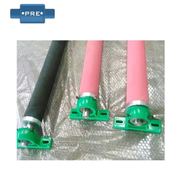
The working principle of aluminum guide rollers:
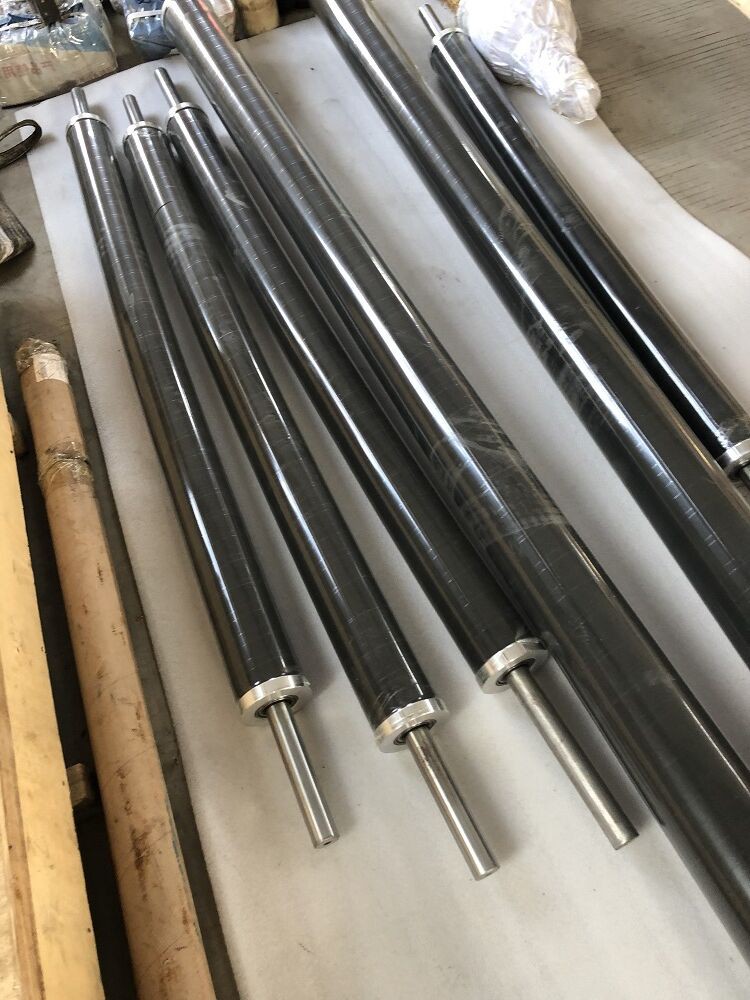
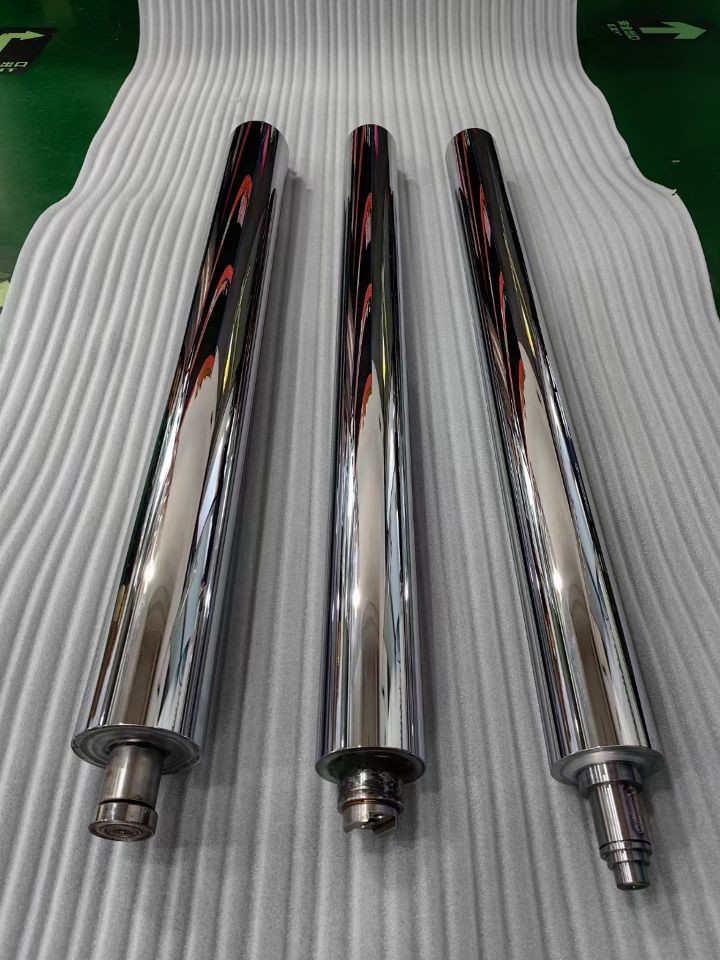
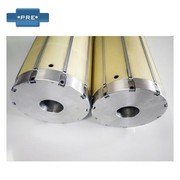
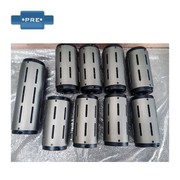
Aluminum guide roller is a device used to convey and support materials, and its working principle is mainly to support and rotate the guide roller through bearings to make it run on the production line. When the material is transferred to the guide roller, the rotational motion of the guide roller helps the material to be smoothly transferred to the next working position. Aluminum guide rollers are often used with conveyor belts or other conveying equipment to support and guide the material.
There are mainly aluminum guide rollers of the following different materials:
1) Aluminum alloy guide rollers: Aluminum alloy guide rollers usually have low weight and good mechanical properties, including high strength, corrosion resistance, and thermal conductivity. They are suitable for use in environments that require high strength and corrosion resistance, such as in the food processing, pharmaceutical, and chemical industries.
2) Steel guide rollers: Steel guide rollers are usually more wear-resistant and durable than aluminum alloy guide rollers, and are suitable for high-load and high-speed operation in heavy-duty industrial environments. Steel guide rollers are commonly found in metalworking, mining, and logistics.
3) Plastic guide rollers: Plastic guide rollers are lightweight, stainless steel, non-conductive, and rust-free, and are suitable for scenarios with high requirements for no scratches on the surface of the guide rollers, such as light conveyor lines, food processing and pharmaceutical industries.
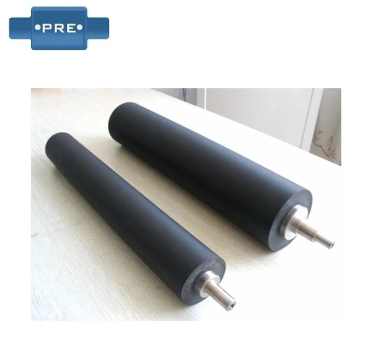
4) Rubber guide roller: Rubber guide roller has good shock absorption and noise reduction characteristics, and is suitable for occasions with high requirements for product surface and easy damage, such as printing, paper processing and glass industry.
5) Ceramic guide rollers: Ceramic guide rollers have excellent wear resistance and corrosion resistance, and are suitable for scenarios with extremely high surface requirements for guide rollers, such as precision machining, semiconductor production, optical manufacturing and other fields.
6) Composite guide roller: Composite guide roller combines the advantages of a variety of materials, such as aluminum alloy shell and rubber or plastic surface covering, with good comprehensive performance, suitable for special environments or occasions with high requirements.
The common problems of aluminum guide rollers in industrial applications are mainly as follows:
1) Abrasion and breakage: Long-term use and friction may cause wear or breakage on the surface of the aluminum guide roller, especially in the case of high load or high speed operation.
2) Deformation and eccentricity: In the case of heavy pressure or improper use, the aluminum guide roller may be deformed or eccentric, resulting in instability during operation and the risk of damage to other equipment.
3) Temperature problem: Some industrial occasions may require aluminum guide rollers to operate in a high or low temperature environment, and if the thermal conductivity or high temperature resistance is not good, there will be temperature-induced problems.
4) Surface treatment: The treatment of the surface of the aluminum guide roller (such as plating, coating, etc.) may be corroded, peeled off or worn, which will affect the working effect and life of the guide roller.
5) Coordination problems: During installation or use, there may be problems such as improper coordination, too large or too small clearance, which will affect the normal operation and service life of the guide roller.
The length of an aluminum guide roller is usually determined based on the following main factors:
1) Material type and size: Different materials may have different requirements during production, processing and transportation. For example, for longer, heavier materials, longer guide rollers may be required to provide support and transmission stability. Therefore, the length of the guide rollers is determined according to the size range and weight of the material being treated.
2) Transmission speed and tension: Transmission speed and tension are important considerations when choosing the length of aluminum guide rollers. Longer guide rollers can provide a larger contact area, increase friction, which increases grip and stability, and reduces the risk of material slippage.
3) Application environment: The characteristics of the application environment will also affect the length selection of aluminum guide rollers. For example, for applications that need to operate in tight spaces, shorter guide rollers may be required to accommodate limited space. In addition, factors such as special process requirements, operating temperatures, and the presence of chemicals may also influence the selection of guide roller lengths.
4) Transmission accuracy: Some applications requiring high precision may require long guide rollers to ensure stability and accuracy during material transfer.
What is the service life of aluminum guide rollers?The service life of aluminum guide rollers is determined by a variety of factors, including the use environment, working conditions, load degree, maintenance, etc. Therefore, it is difficult to give an accurate service life. In general, aluminum guide rollers can have a long service life under reasonable use and maintenance. Here are some common measures to extend the life of aluminum guide rollers:
1) Correct installation and use: ensure the correct installation of the guide roller, avoid overload and severe impact, and pay attention to timely cleaning and maintenance of the guide roller.
2) Choose the right material: According to the specific working environment and needs, select the appropriate aluminum alloy material to ensure that the aluminum guide roller has sufficient strength and corrosion resistance.
3) Maintenance: Regularly check the surface condition of the guide roller, keep it clean, avoid the accumulation of impurities and solvent pollution, and replace the parts with serious wear in time.
4) Lubrication and protection: Lubricate and update the lubricant of the guide roller within the specified lubrication interval to reduce wear and friction.
Aluminum guide rollers are mainly used in the following industries:
1) Printing industry: Aluminum guide rollers are widely used in equipment such as offset printing machines, gravure printing machines and flexographic printing machines to transfer inks or cleaning agents to provide good contact and smooth movement.
2) Packaging industry: In the fields of cigarette packaging, plastic film packaging and paper packaging, aluminum guide rollers are used as rolling and tension control equipment to ensure the flatness and tightness of the panel.
3) Textile industry: In equipment such as textile machines, looms and printing machines, aluminum guide rollers are used to transfer textiles and printing media to help realize the manufacturing and processing of fine quercery.
4) Iron and steel industry: In the steel rolling and casting process, aluminum guide rollers are used in rollers, roller presses and cooling systems to undertake important process tasks.
Custom aluminum guide rollers need to provide the following key data to the manufacturer:
1) Size requirements: Provide the exact size of the guide roller, including diameter, length, width, and possible deviation range. These dimensions should be determined based on the actual application needs.
2) Material requirements: determine the grade and specifications of the aluminum to be used. According to the application environment and requirements of the guide roller, the appropriate aluminum alloy material is selected, for example, based on factors such as strength, wear resistance, corrosion resistance and thermal conductivity.
3) Overall structural requirements: According to the application requirements, determine the overall structure of the guide roller, such as whether bearings, shaft hole diameters, axial hole design, threaded holes and other special requirements are required.
4) Surface treatment requirements: determine the surface treatment method of the guide roller, such as anodizing, spraying, sandblasting, polishing, etc. Surface treatment can improve the wear resistance, corrosion resistance and aesthetics of the guide rollers.
5) Load requirements: provide the load and working conditions of the guide roller, so as to determine the appropriate strength and bearing capacity of the guide roller.
6) Environmental requirements: determine the working environment of the guide roller, such as temperature range, humidity, corrosive environment, etc. These factors affect the material selection and surface treatment of the guide rollers.