Tel: +86-134-31394972
E-mail: sales@pre-webguidesystem.com
Tel: +86-134-31394972
E-mail: sales@pre-webguidesystem.com
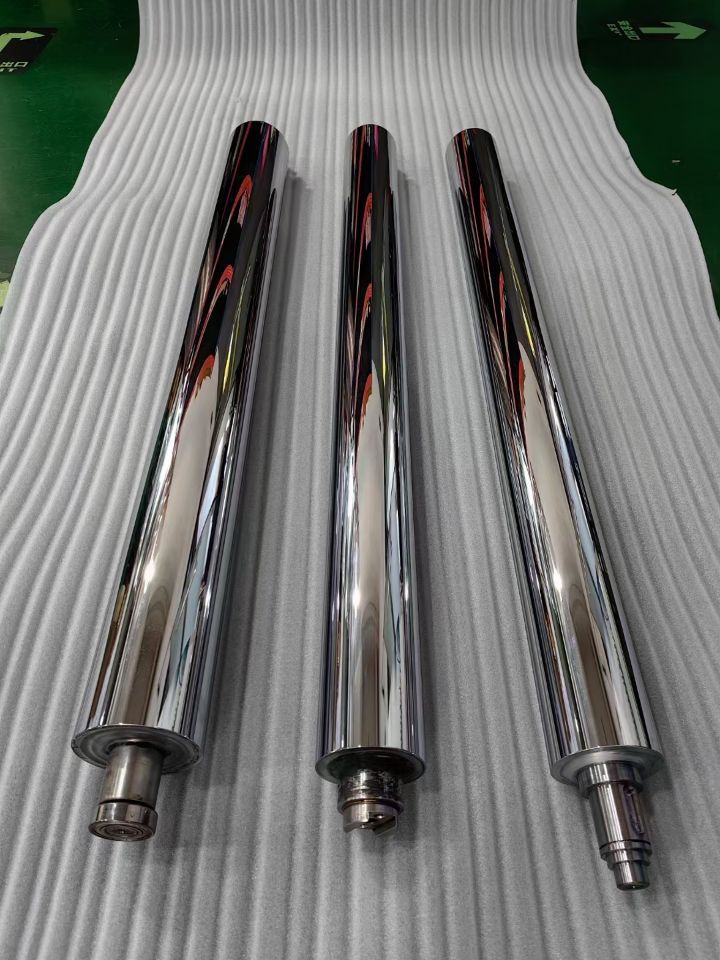
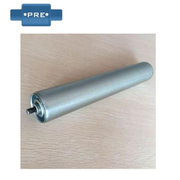
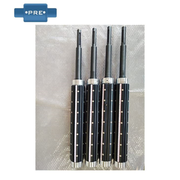
Aluminum guide rollers, also known as aluminum alloy guide rollers, are made of excellent aluminum alloy materials, which are suitable for printing, packaging, plastics, papermaking, fiberglass, pharmaceutical, electronic batteries, textiles and other machinery industries and various coil processing industries. Aluminum alloy guide rollers are also used in their respective printing work, and the aluminum guide roller products produced are all roller products like aluminum rollers. You can see at a glance the difference between aluminum rollers and mirror rollers. The higher the hardness, the better the quality. High hardness is often a prerequisite for durability.
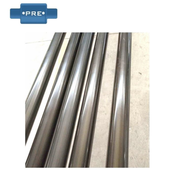
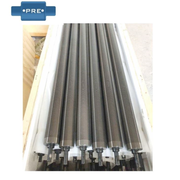
The aluminum guide roller is extruded from excellent aluminum alloy, with nine stiffeners and a wall thickness of 5cm, which can play a reinforcing role. Surface treatments include ordinary oxidation, hard oxidation, PTFE, etc. According to the user's requirements, its rigidity and wear resistance are ensured. Advanced balancing and correction are introduced, enabling the balance to reach 2g. Using imported precision machining equipment, tools and measuring tools, the surface roughness and coaxiality of the rolled can reach 0.8 and 0.02mm, and the reasonable shaft head connection method can run easily and freely, and it will not be deformed at any running speed. Aluminum guide rollers have the characteristics of high strength, low resistance, corrosion resistance, light weight, stable rotation and no rust.
The frosted surface of the aluminum guide roller is finished with precision equipment and special tools to make the surface smooth and the coaxiality reaches 0.02mm. The whole shaft is balanced and corrected by the computer within 2g, and the special process of the shaft end is matched with the imported bearing, so that it can run easily and at high speed. Depending on the requirements of the industry, its surface can also be treated with special treatments: sandblasting, anilox, Teflon and special hardening treatments, which make it have good scratch resistance and abrasion resistance.
The aluminum guide roller and its processing technology comprise a hollow aluminum tube matrix, wherein: the two ends of the aluminum tube matrix are provided with grooves, an aluminum block matching the size of the groove is arranged in the groove, the aluminum block is fixed in the groove, and the aluminum block is provided with a coaxial through hole with the aluminum tube matrix. According to the different requirements of strength, aluminum tube substrates with different inner diameters can be selected. Since the overall strength of the aluminum guide roller is mainly guaranteed by the wall thickness of the aluminum block, the wall thickness of the aluminum tube matrix of the aluminum guide roller of the same strength will be thinner, so the weight is lighter and the material is saved.
The role of aluminum rollers:
1) Roll pressing: Aluminum rollers can be used for roll pressing, such as rolling, stretching or pressing metal materials in the metalworking process. Aluminum rollers are widely used because of their good mechanical properties and corrosion resistance.
2) Printing & Coating: In the printing & coating industry, aluminum rollers are used as printing pressure rollers or coating rollers. These rollers are used to transfer ink or paint to the printing or coating surface, ensuring uniform application and printing results.
3) Transmission: Aluminum rollers can also be used as a part of the transmission device, such as in conveyor belts, roller transmission systems. These rollers are used to provide support and transfer power or material.
4) Drying: In the textile, printing or coating industries, aluminum rollers can be used as drying rollers. These rollers speed up the drying process of the material by conducting heat or hot air.
5) Packaging & Coiling: Aluminum rollers are also widely used in the packaging industry for coiling and packaging materials, such as in the coiling and cutting of paper, film or metal foil.
6) Other industry applications: In addition, aluminum rollers can also play a role in glass, plastic, food processing and other industries for processing, production and transportation.
The structure of aluminum guide rollers can be roughly divided into:
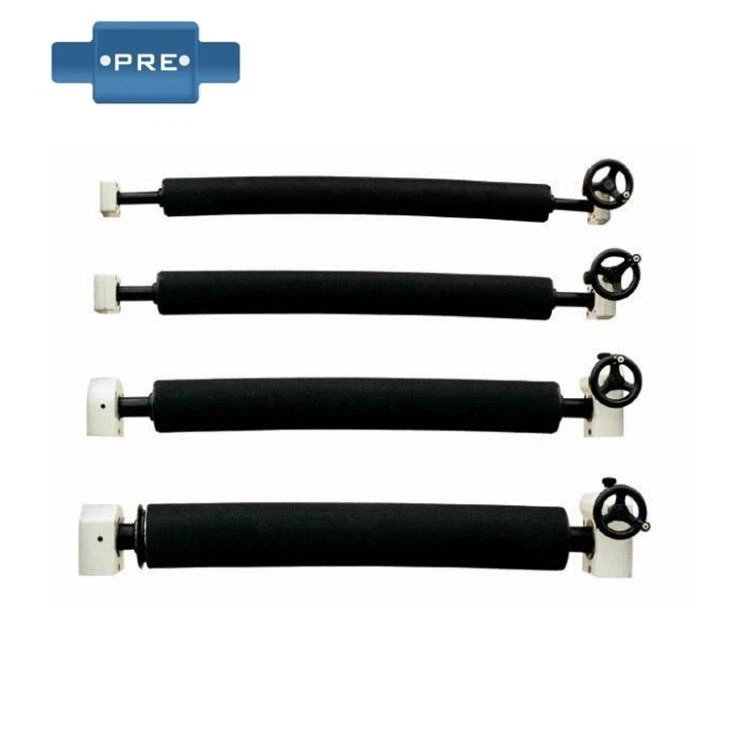
(1) Hollow aluminum roller: inner bearing structure, the bearing is installed in the bearing holes at both ends.
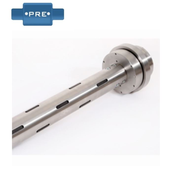
(2) Shaft aluminum roller: The two ends of the roller body are combined with the steel shaft or stainless steel shaft end to form an integrated structure.
(3) Aluminum roller with water: cooling or heating liquid enters and exits from both sides and circulates in the roller body.
Processing methods of different surfaces of aluminum guide rollers:
(1) Smooth surface: smooth surface, low resistance, according to the requirements of different surface roughness Ra0.3 ~ Ra6.3.
(2) Face thread line: commonly used thread line and center unfolding line (bisected from the center and extended to both end faces).
(3) Concave and convex surface: CNC lathes can process various concave and convex surfaces and arc surfaces. Motor torque price
(4) Sandblasting or shot blasting: Sandblasting or shot blasting can obtain a rough surface, which can increase friction.
(5) Knurled or network cable: different sizes of pattern surfaces can be provided according to customer requirements.
(6) The inflation operation time of the aluminum guide roller is short, and the separation and placement of the inflation shaft and the paper core can be completed in only 3 seconds, and it can be tightly meshed with the paper core without separating any parts on the end side of the shaft. Simple Tube Placement: The tube can be moved and fixed anywhere on the shaft surface by inflating and deflating. Large bearing capacity: the shaft diameter can be determined according to the actual needs of customers, and high-strength steel can be used to increase the bearing capacity. High economic benefits: The shaft is designed with special functions, which can be applied to paper tubes with various thick, thin, wide and narrow aluminum guide rollers. Simple maintenance and long service life: it is a single part, and each part in its structure has a fixed specification, which can be used interchangeably for easy maintenance. Hollow aluminum roller: inner bearing structure, the bearings at both ends are installed in the bearing hole.
(7) Shaft aluminum guide roller: the two ends of the roller body are combined with the steel shaft or stainless steel shaft end to form an integrated structure.
(8) Aluminum roller with water: cooling or heating liquid enters and exits from both sides and circulates in the roller body.
(9) Special rolls: rolls of various special structures processed according to the drawings.
What are the differences between different materials of aluminum guide rollers?There may be some differences in performance, durability and applicable scenarios between different materials of aluminum guide rollers. Here are some common differences:
1) Aluminum alloy guide rollers: Aluminum alloy guide rollers usually have low weight and good mechanical properties, including high strength, corrosion resistance, and thermal conductivity. They are suitable for use in environments that require high strength and corrosion resistance, such as in the food processing, pharmaceutical, and chemical industries.
2) Steel guide rollers: Steel guide rollers are usually more wear-resistant and durable than aluminum alloy guide rollers, and are suitable for high-load and high-speed operation in heavy-duty industrial environments. Steel guide rollers are commonly found in metalworking, mining, and logistics.
3) Plastic guide rollers: Plastic guide rollers are lightweight, stainless steel, non-conductive, and rust-free, and are suitable for scenarios with high requirements for no scratches on the surface of the guide rollers, such as light conveyor lines, food processing and pharmaceutical industries.
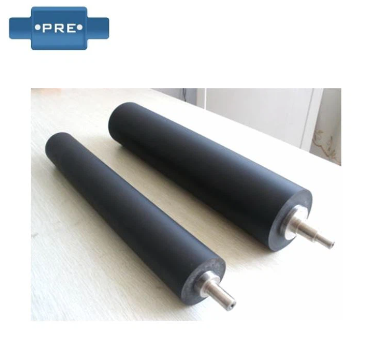
4) Rubber guide roller: Rubber guide roller has good shock absorption and noise reduction characteristics, and is suitable for occasions with high requirements for product surface and easy damage, such as printing, paper processing and glass industry.
5) Ceramic guide rollers: Ceramic guide rollers have excellent wear resistance and corrosion resistance, and are suitable for scenarios with extremely high surface requirements for guide rollers, such as precision machining, semiconductor production, optical manufacturing and other fields.
6) Composite guide roller: Composite guide roller combines the advantages of a variety of materials, such as aluminum alloy shell and rubber or plastic surface covering, with good comprehensive performance, suitable for special environments or occasions with high requirements.
Aluminum guide rollers are devices used in industrial production to guide and support the movement of materials or products. The following is an introduction to the basic use of aluminum guide rollers:
1) Installation position selection: First, determine the installation position of the aluminum guide roller to ensure that its position is appropriate and meets the process requirements. Typically, aluminium guide rollers are installed at the turn of the conveyor line or where the material needs to be guided.
2) Installation and fixation: Fix the aluminum guide roller in the appropriate position, usually by bolts or other fixing devices to install it on the bracket of the conveyor line or machine. Make sure the installation is secure and avoid shaking or shifting during use.
3) Adjust the angle and position: Adjust the angle and position of the aluminum guide roller according to the actual needs to ensure that it can accurately guide the material or product. In general, the angle of the aluminum guide roller should match the direction of the conveyor line and be appropriately away from the movement path of the material or product.
4) Keep it clean: Regularly inspect and clean the aluminum guide rollers to make sure there is no accumulation of debris or dirt on their surface. Cleaning maintains the smoothness of the surface of the guide rollers, reduces frictional resistance, and prolongs service life.
5) Regular lubrication: Regular lubrication is carried out on the bearings or rolling parts of the aluminum guide rollers as needed to ensure their normal operation and reduce friction loss. Choose the appropriate lubricant and lubricate it according to the manufacturer's recommendations.
6) Monitor the operation: regularly check the operation of the aluminum guide roller, including whether the bearing is normal, whether the guide roller has abnormal noise or vibration, etc. Identify and address problems in a timely manner to avoid failures that impact production.
7) Pay attention to the operation: When using the aluminum guide roller, pay attention to the operation to avoid fingers or clothing being caught in the guide roller to avoid injury. At the same time, make sure that there is no debris accumulation around the guide rollers for proper operation.
Maintenance measures for aluminum guide rollers:
1) Aluminum alloy guide roller varnishing maintenance: remove the glass layer on the surface of the rubber roller to maintain good surface roughness.
2) Decalcification maintenance of aluminum guide roller: During the printing process, the hydrophilicity and ink absorption of rubber roller often decrease, resulting in serious water and ink ingress of the ink roller. It is easy to cause problems in the printing field and the silk screen, which is often caused by the calcification of the rubber roller. In printing, calcium comes from paper and water, and calcium is constantly deposited on ink and water rollers every day. Therefore, decalcification is an essential maintenance procedure in printing.
3) Cleaning and maintenance of aluminum alloy guide roller discoloration: during the printing process, when the dark color changes to light color and the spot color changes, it is often difficult to clean, and the discoloration time is long, which reduces the efficiency of the printing machine and increases the rejection rate; And if it is not cleaned, it will accumulate on the rubber surface, reducing the surface roughness of the rubber roller. Therefore, we emphasize that maintenance should start every day, and every cleaning must be cleaned.
4) Aluminum guide roller idling maintenance: In order to prevent the influence of temperature on the rubber roller and keep the rubber of the idle seat in good condition, the dry running ink roller needs special care and maintenance.