Tel: +86-134-31394972
E-mail: sales@pre-webguidesystem.com
Tel: +86-134-31394972
E-mail: sales@pre-webguidesystem.com
How do aluminum guide rollers meet different machining needs?
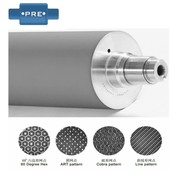
Aluminum guide rollers are common parts in the machining industry, and their role is to play a guiding role in machining, reduce friction as well as to protect the processing equipment and improve production efficiency.
However, due to the diversity of machining processes, the needs of aluminum alloy guide rollers may also be different. This article will discuss how to meet the different machining needs.
Material Selection of Aluminum Guide Rollers
Aluminum alloy is a common lightweight material with excellent corrosion resistance, thermal conductivity and wear resistance, making it one of the ideal materials for manufacturing guide rollers.
When choosing aluminum alloy as the guide roller material, factors such as the requirements of machining on the guide roller and environmental conditions should be considered. There are many kinds of aluminum alloys, such as Aluminum 6061, Aluminum 7075 and so on. These aluminum alloys have different performance in cutting and machining.
Some aluminum alloys are more suitable for machining than others. Considering the characteristics of the machining process, the selection of aluminum alloys suitable for machining can ensure the precision and quality of guide roller processing and improve production efficiency.
Precision and size control of aluminum guide rollers
In the field of machining, the size and precision control of guide rollers is crucial. The size and precision of the guide roll will directly affect the precision and quality of the machining process. The key to controlling the size and accuracy of aluminum guide rollers is to plan and control the machining process to reduce errors and defects.
In the machining process, suitable tools, regular cutting parameters and high-precision measuring tools should be used for monitoring and control to ensure that the size and accuracy of the guide rolls meet the machining requirements.
Surface treatment of aluminum alloy guide rollers
In the machining process, it is often necessary to treat the surface of the guide roller to enhance its surface properties, reduce friction and prevent wear.
Oxidation, anodizing, plating and other surface treatment methods are usually used. For example, through the oxidation treatment can form a layer of thickness of about 10 microns of oxide film, the oxide film can reduce the friction coefficient of the guide roller and the workpiece, improve machining accuracy, and has excellent wear resistance.
Through anodic oxidation treatment, a layer of oxide layer with a thickness of about 20 microns will be produced on the surface of the aluminum alloy guide roller, and the oxide layer can improve the surface hardness and mechanical strength, and well protect the surface of the guide roller from abrasion.
Through electroplating treatment, a layer of nickel alloy or tungsten hybrid can be plated on the surface of the guide roller, which can effectively improve the wear resistance and corrosion resistance of the guide roller.
In summary, aluminum alloy guide rollers should be considered from the aspects of material selection, machining accuracy and size control, and surface treatment when meeting different machining needs.
Correct selection of suitable materials, strict size and precision control and reasonable surface treatment can ensure that the aluminum alloy guide rollers meet the requirements of the machining process and improve production efficiency.
Previous: Production Process And Technical Points Of High-quality Aluminum Rollers
Next: How To Choose The Right Aluminum Alloy Guide Roller Material To Cope With Different Equipment?