Tel: +86-134-31394972
E-mail: sales@pre-webguidesystem.com
Tel: +86-134-31394972
E-mail: sales@pre-webguidesystem.com
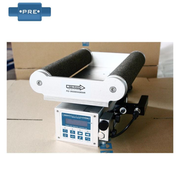
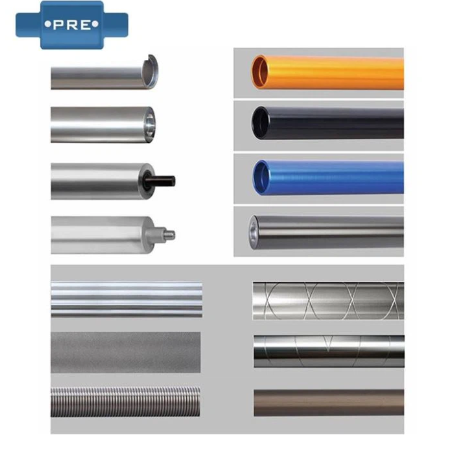
The table plate roller and the inner plate axle are two different types of rollers in the printing machine. Their differences are as follows:
1) Different positions: The table plate roller is a roller installed on the surface of the printing machine, while the inner plate shaft is a roller installed on the inside of the printing machine.
2) Different functions: The table plate roller is mainly used to transfer the ink to the printing plate, and then transfer the image on the printing plate to the printing material. The inner plate roller is used to transfer the printing material, which will transport the printing material from the paper inlet through the printing plate, and finally to the paper outlet.
3) Different appearance: The table printing plate roller usually uses silicone roller, which has a smoother appearance. The lining plate roller usually uses rubber roller, which has a rough appearance.
4) Different diameters: The diameter of the plate axis is usually larger than that of the plate roller, because the plate roller needs to cover a larger printing surface, while the plate roller only needs to transfer the printing material.
To sum up, there are great differences between the table printing plate roller and the inner plate roller in terms of position, function, appearance and diameter, but they are both indispensable and important components of the printing machine, which jointly ensure the printing quality of the printed matter.
Attention needs to be paid to the production of printing plate rollers and their solutions:
1) The reverse side is sticky
The number one cause of dirty backside stickiness is too much ink, insufficient powder spraying, and uneven powder spraying.
Solution(s):
Adjust the printing condition to the best and reduce the amount of ink if agreed;
Choose the powder spraying with appropriate particle diameter and dispersion density, and the dispersion density specification of powder spraying with a diameter of more than 20μm is 5~10 pieces/mm2.
2) The delivery is uneven
The reason for the uneven delivery of the paper is that there is static electricity in the receiving section.
Solution(s):
Paste carbon cloth on the delivery roller;
Install an electrostatic fan or electrostatic rod in the delivery section;
Install a humidifier, if there is a humidifier, enhance its humidification function;
At the final transfer drum, the electrostatic rod is installed, and the dust on the electrostatic rod is frequently cleaned, and if it is aged, it will be replaced in time.
3) Ink Skin
Ink skin is mainly caused by impurities such as paper powder and ink crusting.
Solution(s):
When the layout of the watermark plate presents the ink skin, the operator can directly scrape it off, and the silicone layer of the non-watermark plate is very easy to be scratched, and there will be scratches if you are not careful, resulting in the scrapping of the whole plate, and the printing plate roller can not use the water roller with the function of removing the ink skin, therefore, in order to prevent the ink skin from being on the printing plate, the ink removal roller can be installed at the first ink roller;
Replace the rubber roller that adsorbs ink skin difference;
Dry a strip of ground at the mouth of the plate, so that the ink skin is attached to the strip;
The non-graphic part is covered with color bands, but it is necessary to pay attention to the sticky dirty side of the reverse side;
Thoroughly clean the ink rollers and ink fountains, and replace the aging ink rollers;
Use a special de-inking skin for printing plate rollers.
4) Missing parts of the pile of ink and pictures and texts
The primary reason for the lack of ink and graphics is that the ink viscosity of the printing plate roller is too high or the surface strength of the paper is too low.
Solution(s):
Choose printing plate roller inks with low ink viscosity;
The temperature of the printing paper should not be too low, and the paper should be sent to the printing workshop as early as possible to adjust the paper to a suitable temperature;
Reduced printing speed (a helpless countermeasure);
Clean the blanket and use the old paper that is not easy to cause problems at the beginning of printing to evenly ink (the old paper should be prevented from being reused many times, and it should be decided whether to use it according to the appearance of the paper).
5) Abrasions
Abrasions are primarily caused by knocking on the paper caused by static electricity.
Solution(s):
Paste anti-static adhesive tape on the delivery drum to reduce the static electricity caused by friction between the rollers and prevent the delivery roller from sticking ink;
A static eliminator is installed on the delivery drum.
6) Ghosts
The ghost is mainly caused by the poor fluidity of the ink, and it is difficult to completely remove the ghost for some special patterns.
Solution(s):
Add color blocks locally outside the graphic part to add fluidity to the ink;
Pay attention to the aging of the ink roller and admit that the ink roller pressure is within the appropriate range;
Prevent the ink layer from being too thick, and adjust the printing pressure and plate layout temperature to an appropriate state;
When choosing to use imposition printing, if the printing layout is to the point, try to evenly distribute the position of the graphics and texts;
In the case of not getting dirty, it is promised that there is a certain string momentum of the ink roller.
7) Dirty
Dirtiness is caused by a decrease in ink viscosity due to the increase in the temperature of the printing press.
Solution(s):
When printing more than 10,000 pieces of work, the printing machine due to high-speed work, the temperature continues to rise, the mouth part of the printing sheet will gradually show the phenomenon of dirty, in view of this situation, can eliminate the dirty by lowering the set temperature of the cooler, of course, this needs to spend some time, the temperature of the cooler can be set separately according to the long job and the short job, such as when printing the long job, after printing thousands of sheets, the temperature of the cooler can be reduced according to the temperature specification of the long job, but this is not conducive to stabilizing the temperature of the printing workshop;
Reducing the temperature of the printing press, such as lowering the cooling temperature of the ink circulation part of the printing equipment, adding the number of electric fans, etc., to increase the fluidity of the air around the printing machine, and reduce the heat retention of the printing machine;
increase the ability of air conditioning and refrigeration; Reducing the printing speed (a helpless countermeasure).
8) Chromatic aberration
There is a slight difference between the color of the printed product printed by the printing plate roller method and the printing method printed by the water printing method, and it is necessary to follow the color.
Solution(s):
When the printing plate roller is selected for overprinting and reprinting, if the color of the overprinted and reprinted print is inconsistent with the printed product with water printing (there may be changes in the book curve of water printing), the first thing to recognize is that there is a book curve of water printing, and then adjust the book curve of the printing plate roller accordingly (make several printing plate rollers in advance).
9) Poor slippery properties on the ground
Poor ground wetting is mainly caused by the low pressure between the printing plate and the rubber cylinder, the high viscosity of the ink, the dry ink on the printing machine, and the low pressure of the ink roller.
Solution(s):
Acknowledging the appropriate pressure between the plate and the rubber cylinder; Replace the smooth blanket; Acknowledging the plate temperature, using the appropriate type of ink, and setting the appropriate cooling temperature; Confirm whether the ink on the press is dry, and if necessary, clean the ink roller or spray anti-drying agent.
Previous: How Does A Banana Roller Work To Flatten Out (paper, Film, Metal Plates Etc)?
Next: The Anilox Roller Is The Heart Of Flexographic Printing