Tel: +86-134-31394972
E-mail: sales@pre-webguidesystem.com
Tel: +86-134-31394972
E-mail: sales@pre-webguidesystem.com
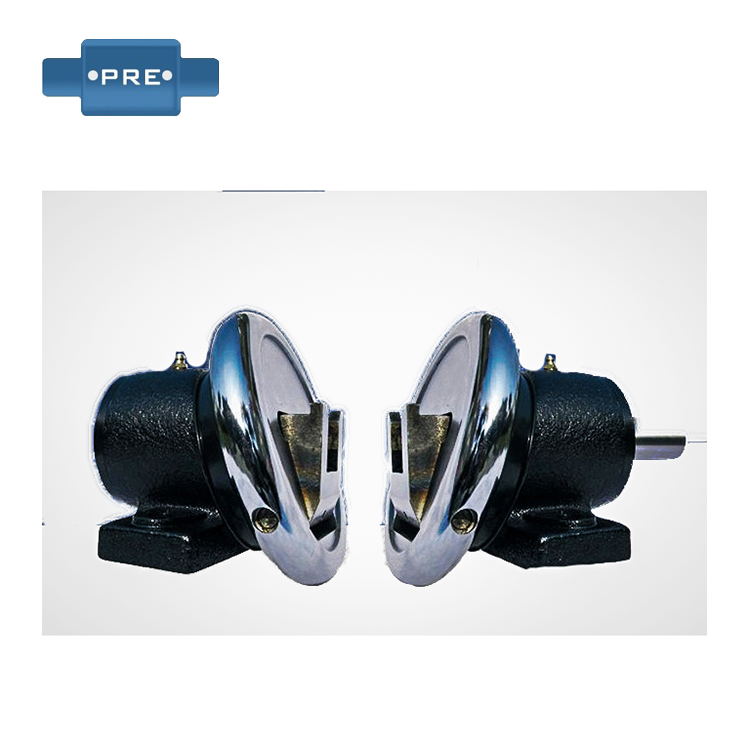
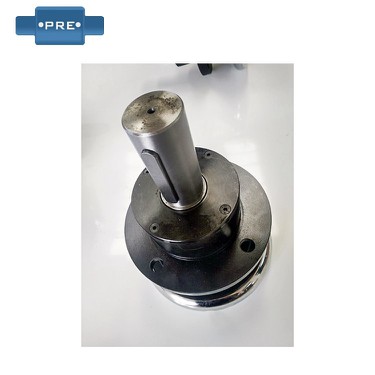
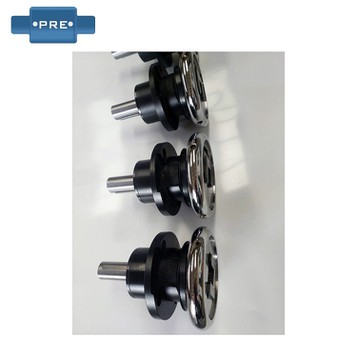
The safety chuck is a device that can be quickly connected and applied to the reels of receiving and unloading, so as to save the operator's time in loading and unloading, and there is no need to move the structure of the machine every time when changing materials.
The safety chuck provides the operator with the function of quickly replacing the material when the material is collected and unloaded, reducing the time of loading and unloading the material, and making the operator's work more efficient to achieve cost savings.
Structural characteristics of the safety chuck:
1) The overall structure of the safety chuck is reasonable, the rigidity is good, it can withstand large torque, and eliminate the loosening phenomenon in rotation.
2) Precise machining accuracy to ensure the accuracy of positioning, the reel bracket adopts a special heat treatment process;
3) Provide replaceable VT type reel bracket, which greatly prolongs the service life of the safety chuck;
4) The use of special alloy steel materials with superior performance, superior durability and strong durability;
5) The bayonet is nickel-plated, the bayonet has high hardness and durability after hardening, which can ensure good performance in heavy load and high speed applications;
6) The reasonable tolerance of the bayonet parts ensures the smooth and continuous torque transmission process, which greatly enhances the safety performance of the machinery.
7) Simple installation, suitable for continuous sliding or high-frequency use, buffer starting, with the characteristics of soft starting.
Choose the right safety chuck according to the classification of the safety chuck:
Safety chuck models include flange safety chuck, shaft seat type safety chuck, mechanical chuck, shaftless chuck, torque chuck, and pneumatic metal expansion key chuck. Its working principle is to use the system to calculate that the chuck rotates once as a parameter, and there is a correct degree measurement. For example, for the safety chuck installed on the cutting machine, the roundness of the pipe is required to be a little lower, and sometimes the pipe is slightly bent, and it can be cut by adjusting the position of the bracket.
The following factors should be considered during the use of safety chucks:
1) Safety is the most important consideration when using safety chucks. First, make sure that the jigs and chucks are properly installed and securely attached to the machine. When clamping the workpiece, it should be ensured that the workpiece is clamped evenly and securely, avoiding loosening or offset. Before operating the machine, it is important to check that the clamping system is properly closed and that there are no loose parts.
2) Before installing the safety chuck, the safety chuck must be loaded into the lock nut first, and then the lock nut equipped with the safety chuck must be gently screwed on the tool holder, the adapter or the spindle; In order to obtain the best performance, it is necessary to clean the safety chuck, the threaded part of the lock nut, the positioning surface and the cone before installing the safety chuck.
3) In addition, regularly inspect and maintain the safety chuck, and replace worn or damaged parts in time. The safe operating procedures of the machine should always be followed and appropriate personal protective equipment should be used when operating. If in doubt or if further safety guidance is required, a professional or supplier of jigs and chucks should be consulted.
Daily maintenance and maintenance methods of safety chucks:
1) Daily check-ups
Visual inspection
Before each use, check the appearance of the safety chuck for damage, deformation or cracks, and if any abnormalities are found, it should be stopped immediately and overhauled or replaced.
Inspect the surface of the chuck for signs of corrosion, rust or wear, and if necessary, use sandpaper or wire brush to gently remove rust from the surface and apply rust inhibitor.
Clamping force check
Regularly check whether the clamping force of the safety chuck is normal, and you can use a torque wrench or other suitable tool to measure the clamping torque of the chuck to ensure that it is within the specified range.
If the clamping force is insufficient, it may be caused by wear or damage to the parts inside the chuck, at this time, the parts inside the chuck should be replaced in time to restore the clamping force.
2) Cleaning and lubrication
clean
Clean the safety chuck regularly to remove dust, oil, and other impurities from the surface, you can use a clean cloth or brush to gently wipe the surface of the chuck, and avoid using organic solvents or corrosive cleaning agents to avoid damaging the surface coating of the chuck.
For the parts inside the chuck, they can be cleaned with compressed air or a vacuum cleaner to ensure that there are no impurities left inside.
lubrication
In order to ensure the normal operation of the safety chuck, it needs to be lubricated regularly, and the appropriate amount of oil or grease can be applied to the moving parts of the chuck, such as clamping screws, sliders, etc.
It is very important to choose the right lubricating oil or grease, and you should choose products with good lubricating properties and anti-wear properties according to the use environment and requirements of the chuck, and at the same time, you should pay attention to the amount of lubricating oil or grease used to avoid too much or too little.
3) Storage and safekeeping
Storage environment
The safety chuck should be placed in a dry, ventilated, and non-corrosive gas environment when stored, avoiding direct sunlight and humid environment, so as not to affect the performance and life of the chuck.
Specialized storage bins or shelves can be used to store the safety chucks, ensuring that the chucks are not crushed, bumped, or otherwise damaged.
Regular check-ups
Even if the safety chuck is not in use during storage, it should be checked regularly to check for changes in the appearance of the chuck, if the clamping force is normal, and for signs of rust or corrosion. Proper maintenance and upkeep can be carried out if necessary.
4) Professional maintenance
Troubleshooting
If there is a failure of the safety chuck, such as insufficient clamping force, unable to loosen or unstable clamping, etc., it should be stopped immediately and troubleshooting, you can refer to the instruction manual of the chuck or consult professional and technical personnel to determine the cause of the fault and the solution.
Professional repairs
For some complex faults or situations that require replacement of parts, professional maintenance services should be sought, and qualified maintenance institutions or manufacturers should be selected for maintenance to ensure maintenance quality and safety.
After the repair is completed, rigorous testing and inspection should be carried out to ensure that the performance and function of the safety chuck are restored to normal.
Application areas of safety chucks:
Safety chuck, it is widely used in plastic film machinery, carbon fiber working machinery, rubber machinery, coiling machine, cable equipment, papermaking machinery, trimming, unloading, positioning, tension control and other occasions, packaging machinery, printing machinery, textile machinery, wire and cable machinery, winding machine, tire building machine, cord cutting machine, etc.
Previous: Choose The Right Safety Chuck Model