Tel: +86-134-31394972
E-mail: sales@pre-webguidesystem.com
Tel: +86-134-31394972
E-mail: sales@pre-webguidesystem.com
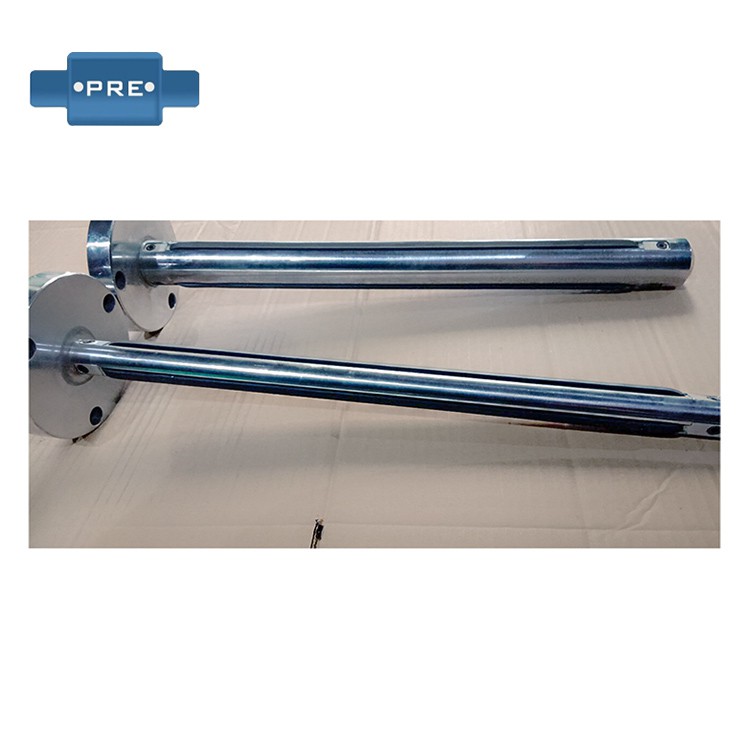
The processing technology mainly has the following steps:
1) Shaft body machining
Turning: When turning the shaft body, it is necessary to pay attention to controlling the cylindricity and concentricity of the shaft body. The cylindricity error will cause the inflatable shaft to vibrate during rotation, which will affect the winding quality of the web material. Generally speaking, the accuracy of the cylindricity of the shaft is required to be within ±0.02mm, and the concentricity error should be controlled within ±0.03mm. At the same time, the turning speed and feed should be reasonably selected according to the shaft material and the tool material to avoid the situation that the surface roughness does not meet the requirements or the tool wears too fast.
Milling: If the keyway needs to be machined on the shaft body to install the keybar, the dimensional accuracy and position accuracy of the keyway should be ensured when milling the keyway. The width tolerance of the keyway is generally controlled within ±0.03mm, the depth tolerance is controlled within ±0.05mm, and the parallelism error between the keyway and the center line of the shaft body should be controlled within ±0.05mm/100mm.
Drilling and tapping: For inflatable shafts where valves or other connectors need to be installed, the quality of drilling and tapping is also critical. When drilling, the verticality of the hole and the accuracy of the hole diameter should be ensured, and the thread after tapping should meet the standard requirements to ensure that the installation of the connector is firm and reliable.
2) Airbag installation and fixation
Before installing the airbag, make sure that the space inside the shaft body is clean, free of debris and sharp corners to avoid scratching the airbag. During the installation of the airbag, it is necessary to pay attention to the accuracy of its position to ensure that the key strip can be evenly ejected after the airbag is inflated. Generally, special fixtures or positioning tools are used to assist in the installation of airbags to ensure the correct position of the airbags in the shaft.
The airbag fixation method is also very important, and the common fixation methods are glue, mechanical clamps, etc. If the gluing method is used, it is necessary to choose the appropriate glue, and ensure that the adhesive surface is clean and dry during the gluing process, and the glue should be applied evenly to avoid the situation that the airbag is not firmly fixed or local air leakage. When the mechanical clamp is fixed, it is necessary to pay attention to the tightening strength of the clamp, not only to ensure that the airbag will not be displaced, but also not to damage the airbag too tightly.
3) Installation and debugging of key strips
The key strip should be installed to ensure that it can slide flexibly in the keyway, and the top of the key bar should be slightly higher than the surface of the shaft after installation, generally 0.1 - 0.2mm higher, so that the key bar can better jam the inner wall of the drum material after the airbag is inflated. During the installation process, it is necessary to check the fitting gap between the key bar and the keyway, too large the gap will affect the stability of the key bar, and too small the gap may cause the key bar to be difficult to install or jammed during use.
After the installation is completed, it is necessary to debug. A simulated sample that observes the expansion and contraction of the key strip by inflating and deflating, and checks whether the key strip can expand and contract synchronously, whether the expansion and contraction is smooth, and whether it can firmly jam the web material. If you find that the key bar is not smooth or stuck, you should check the installation accuracy of the key bar in time, whether there are foreign objects inside the shaft body, etc., and make adjustments.
4) Quality inspection stage
a. Visual inspection
Check whether the surface of the shaft body of the inflatable shaft has defects such as scratches, bumps, and sand holes. These surface defects may affect the strength and aesthetics of the shaft, and are not allowed for applications with aesthetic requirements (such as some high-precision electronic material processing equipment). At the same time, it is necessary to check whether the installation of airbags, key strips and other components is firm, whether the appearance is smooth, and whether there is exposure or warping.
b. Performance testing
Inflation performance test: test the inflation performance of the inflatable shaft, including inflation speed, pressure holding capacity after inflation, etc. The inflation speed should meet the requirements of actual use, and generally the inflation time should not exceed 30 seconds under the specified inflation pressure. After inflation, the inflatable shaft should be able to maintain a steady pressure for a certain period of time (e.g., 24 hours) and the pressure drop should not exceed 5%.
c. Tension test: Tension test is carried out on the inflatable shaft by simulating the actual winding or unwinding process. Under different tension conditions, check whether the inflatable shaft can work stably, whether the key strip can effectively jam the reel material, and whether the reel material slips and shifts on the inflatable shaft. During the test, the tension should be gradually increased until the rated tension of the inflatable shaft is reached, and the working state of the inflatable shaft and the force of each component should be observed.
Concentricity and runout detection: Use professional testing equipment (such as dial gauge) to detect the concentricity and runout of the inflatable shaft. The concentricity error should be controlled within ±0.05mm, and the runout should not exceed 0.1mm when rotating at high speed (such as more than 1000r/min), so as to ensure the stability of the inflatable shaft during rotation and reduce the adverse impact on the roll material and related equipment.
Advantages of air expanded shafts(roller):
1) Efficient and convenient: the inflatable shaft realizes the fixing and release of the drum through the filling and discharging of air pressure, which is very fast and simple, compared with the traditional mechanical locking method, the inflatable shaft can significantly shorten the operation time and improve the production efficiency.
2) Strong adaptability: The design of the inflatable shaft is flexible and diverse, and can be customized according to different drum sizes and weights, whether it is a thick or thin reel, the inflatable shaft can provide a stable fixing effect to ensure the smooth progress of the production process.
3) Strong bearing capacity: the inflatable shaft is made of high-quality steel, which has high bearing capacity and durability, and for the drum with large weight, the inflatable shaft can still maintain a stable working state to meet various production needs.
4) Operation safety: The inflatable shaft does not need complex mechanical action during operation, and can be fixed and released only through air pressure control, which greatly reduces the labor intensity of the operator and reduces the safety risk caused by mechanical failure.
5) Simple maintenance: The structure of the inflatable shaft is relatively simple, easy to decompose and combine, and when there is a failure or need to be repaired, it can be easily replaced or adjusted, which reduces the maintenance cost and time.
6) Energy saving and environmental protection: The inflatable shaft uses air pressure as the power source, which is more energy-saving and environmentally friendly than the traditional mechanical locking method, and can significantly reduce energy consumption and environmental pollution in the process of long-term use.
7) Improve product quality: The inflatable shaft can ensure the stability and accuracy of the drum during operation, and reduce the production problems caused by loose or offset of the reel, which helps to improve the quality and consistency of the product and meet the higher requirements of customers.
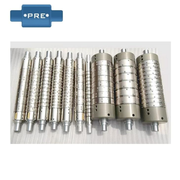
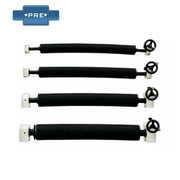
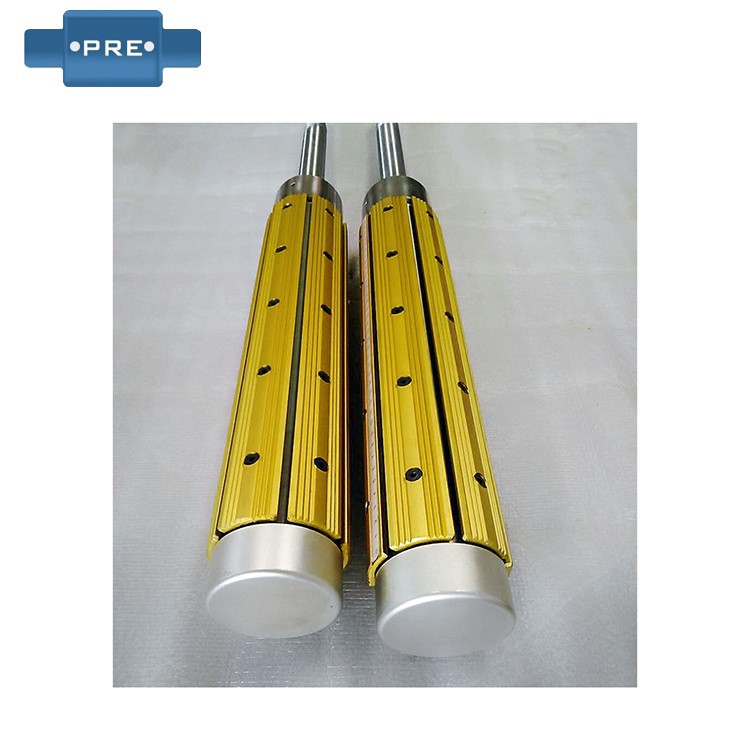
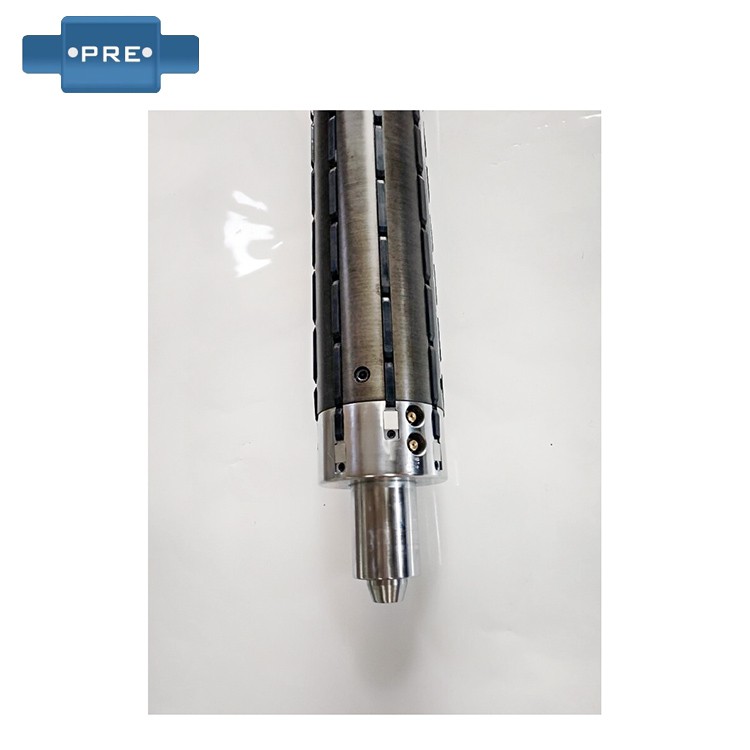
According to different structures and uses, the appropriate inflatable shaft can be divided into many types, such as key inflatable shaft, plate inflatable shaft, through-key inflatable shaft, key cantilever inflatable shaft, plate cantilever inflatable shaft, etc. The specifications and sizes of the inflatable shaft are also very diverse, such as 1 inch, 1.5 inch, 2 inch, 2.5 inch, 3 inch, 6 inch, 8 inch, 10 inch, 12 inch, etc., to meet the needs of different mechanical equipment.
The application field of the air pneumatic shaft is very wide, covering almost all the mechanical equipment that requires the function of winding and unwinding. Here are some of the main application areas:
Printing industry: On the printing machine, the inflatable shaft is used to fix the paper roll or printing material to ensure the flatness and stability of the material during the printing process.
Textile industry: In textile machinery, the inflatable shaft is used to stretch fabrics, fix fabrics, etc., and its flexible inflation and deflation functions allow fabrics to be easily coiled or released on the shaft, thus adapting to different production needs.
Coating industry: On the coating machine, the inflatable shaft is used to fix the coating material to ensure the smooth progress of the coating process, and by accurately controlling the inflation volume of the inflatable shaft, the uniform coating of the coating material can be realized, and the coating effect and product quality can be improved.
Other industries: In addition to the above industries, inflatable shafts are also widely used in slitting machines, die-cutting machines, rewinding machines, paper tube machines, bag making machines, laminating machines, laminating machines and other mechanical equipment, in which inflatable shafts play an important role in fixing and releasing coils.
Previous: What Are The Factors That Affect The Price Of Air Expanded Shafts
Next: The Range Of Expanded Air Pressure Of The Inflatable Shaft