Tel: +86-134-31394972
E-mail: sales@pre-webguidesystem.com
Tel: +86-134-31394972
E-mail: sales@pre-webguidesystem.com
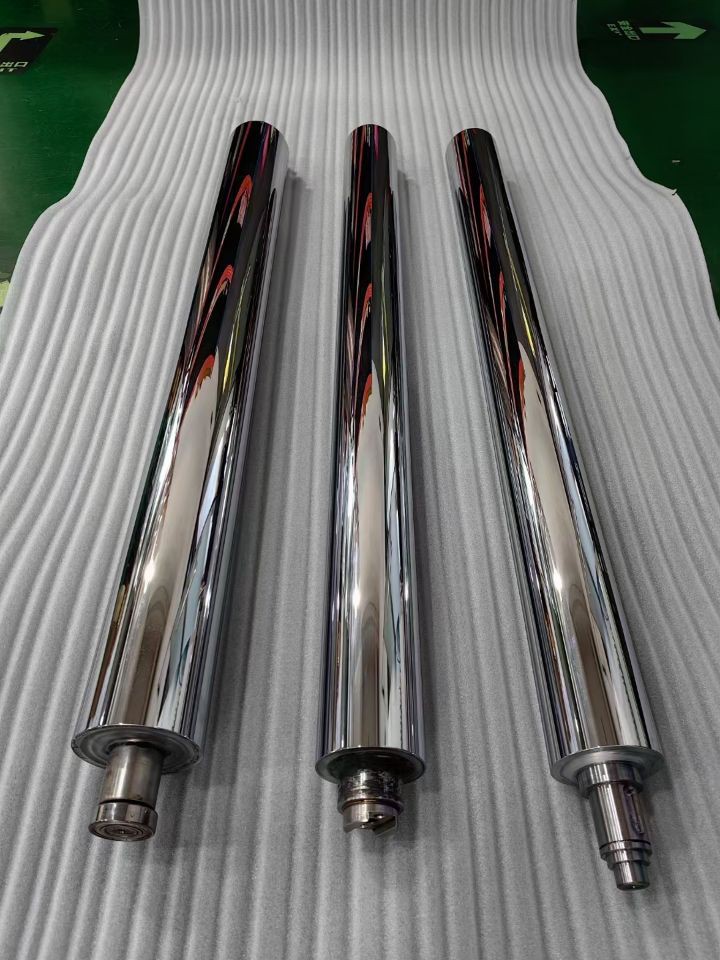
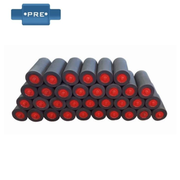
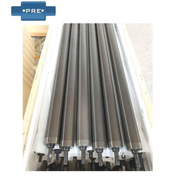
Rubber rollers for printing machinery: divided into hard sticks and soft rollers, used in printing machinery, as a rubber roller for embossing, ink mixing, and ink transfer.
Printing rollers are prone to failures during use and their causes:
1) Heat aging
The heating of the rubber roller will accelerate the desulfurization, resulting in thermal aging, making the surface sticky, soft, and even cracked into orange lines. At this time, the rubber roller can only be replaced.
2) Colloidal lumps
The ink dries early in the process of colloidal surface transfer, and the dry ink film decreases due to its ductility, and in the process of rolling, the colloidal surface will be destroyed with the cracking of the ink film, resulting in colloidal lump. The reason for the early drying of the ink is mainly the addition of desiccant to the ink, the printing of the ink with fast drying (such as POP ink for aluminum foil), and the failure to clean the ink roller as required, so that the ink is dry on the rubber roller during long-term use.
During the processing of the roller, the temperature is too high, the surface is easy to carbonize, and the block will fall in a short time of printing.
Excessive printing pressure adjustment, when the machine is idling, if the idling protection measures are improper or not timely, it will also accelerate the destruction of the surface of the roller body.
Solution: The rubber roller that has fallen off can be replaced to solve the printing failure caused by it.
3) Surface glaze
In the printing process, the organic and inorganic substances in the binder in the ink, the hydrocolloid in the dampening solution, the peeling filler in the paper, and the coating will form a layer of "bright film" on the surface of the ink roller, which will make the surface of the ink roller vitrified and the ink transfer performance will be reduced.
4) Crystalline compounds are produced on the surface of the rubber roller
5) Expansion of rubber rollers: In addition to the cause of heat, the main reason is the use of improper cleaning agents, which makes the colloids swell. Solution: Choose the appropriate cleaning agent. (Organic solvents that often swell rubber rollers: MEK methylacetaldehyde ketone, trichloroethylene, acetone, cyclomethane, banana water; Non-swelling organic solvents: alcohol, kerosene, light oil, roll cleaner)
6) Circumferential streaks: In addition to crystalline compounds that can cause similar circumferential streaks, the dry ink skin on the hard ink roller and the garbage will scratch the surface of the soft rubber roller during operation and form circumferential streaks. At this point, a dead ink remover must be used to remove the dry ink skin.
7) Ink staining of water bucket roller: After adsorbing dampening solution on the surface of the chrome roller, the ink can be fully isolated, but excessive dampening solution and the acidity of the dampening solution will increase the emulsification of the ink, and the emulsified ink will return to the bucket roller with the return channel, and the adsorption of ink on the bucket roller will cause poor dampening and local water failure. The ink on the bucket roller must be removed in a timely manner. At the same time, the size of the dampening solution and its composition are adjusted.
8) Water splashing at both ends of the water roller: During the printing process, there are water droplets dripping on the printing surface of the substrate at both ends of the plate water roller, and the reasons for this situation are: the length difference between the water bucket roller and the metering roller exceeds the allowable range, and the length difference is greater than 0.5mm; The corners of the bucket roller are well treated, and the roundness of the corners is greater than 0.5mm.
Correct use and maintenance measures of printing plate roller:
1) The newly cast printing plate roller should not be put into use immediately
Because the internal structure of the newly cast printing plate roller is not stable enough, if it is put into use immediately, it is easy to reduce the service life. Therefore, the new printing plate roller just out of the cylinder should be placed for a period of time, so that the printing plate roller can maintain a relatively stable state after contacting the temperature and humidity of the external environment, so as to increase the toughness of the colloid, thereby improving the durability.
2) Proper storage of idle printing plate rollers
After the printing plate roller to be used should be cleaned, the fluid should be sealed with plastic film, stored in a cool, dry and ventilated place, and in a vertical or horizontal state, and must not be stacked together or leaned against the wall by a few sticks, so as not to cause undue loss to the colloid, and should also avoid storage with acid, alkali, oil and sharp and hard substances, so as not to corrode and damage the printing plate roller. After the printing plate roller is stored for 2~3 months, it should be changed to prevent bending and deformation in one direction for a long time, and pay attention to prevent rust in the shaft head. In the transportation process of sending the waste printing plate roller to processing and casting, it is necessary to avoid littering and pressing or heavy pressure, and keep the roller core not eccentric or bent to ensure the normal use of the roller core.
3) The printing plate roller head and bearing should be well lubricated
We know that the accuracy of the roller head and bearing of the printing plate directly affects the role of ink transfer and ink distribution. If the lubrication is poor, the wear and tear of the bearing and the clearance of the printing plate roller head will inevitably lead to the disadvantage of uneven printing ink color. At the same time, it will also be due to rubber jumping and slipping
and other undesirable conditions cause printing marks. Therefore, lubricating oil should be added to the head and bearing of the printing plate roller frequently, so as to prevent the normal operation of the printing plate roller from wearing the machine parts and ensure the printing quality.
4) When the machine is stopped, the printing plate roller and the printing plate cylinder should be disengaged in time to remove the load to prevent static pressure deformation.
5) When installing and dismantling, it should be handled with care, and should not collide with the roller neck and rubber surface, so as not to cause damage to the roller body, bending or damage to the rubber surface; The roller neck and the bearing should be tightly matched, and if it is loose, it should be repaired in time.
6) After printing, wash the ink on the printing plate roller. Cleaning ink should choose a special cleaning agent, and check whether there is still paper wool and paper powder on the printing plate roller has not been washed off, and the paper wool and paper powder usually stay on the ink roller and need to be wiped with a cloth.
7) The hardened film of the ink is presented on the surface of the printing plate roller, that is, when the vinyl surface is vitrified, it is ground off with pumice powder. When cracks appear on the surface of the printing plate roller, grind it as early as possible to remove it.
8) When the printing rubber roller is stored, it should be stored in the shaft of the supporting shaft, and it is strictly forbidden to squeeze and stack, and the roller spacing should not be less than 5mm.