Tel: +86-134-31394972
E-mail: sales@pre-webguidesystem.com
Tel: +86-134-31394972
E-mail: sales@pre-webguidesystem.com
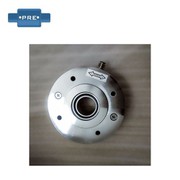
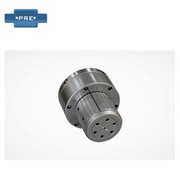
The difference between eddy current, magnetic powder and hysteresis brakes lies in the design of the brakes themselves. The coil (in the stator) generates a magnetic field under the excitation current. All rotor and stator designs use this technology.
Powder brakes ... Use metal powder between the rotor and stator of the brake. When an excitation current is generated, the powder adheres to the rotor (according to the magnetic field lines) and is braked by friction. Powder brakes have a powerful (nominal) braking torque at 0 rpm, but are limited in speed (up to 1000 to 3000 rpm based on size)
Eddy current brakes ... splined rotors. The braking effect is produced in the spline part of the rotor magnetic field. The braking power of an eddy current dynamometer is proportional to the speed (without braking power at 0 rpm), especially for medium and high speed (up to 50,000 rpm or even 100,000 rpm).
Hysteresis brake consists of two parts: rotor and stator poles. The rotor is made of special hysteresis material. There is a certain gap in the stator poles, and the rotor rotates in the gap. When the coil is energized, a magnetic field is generated in the gap, causing the rotor to produce a hysteresis effect. When the hysteresis rotor rotates against the hysteresis force under the action of external force, it generates the rated torque. The torque is only related to the magnitude of the exciting current and has nothing to do with the speed.
Both hysteresis and eddy current dynamometers can be used in vertical applications, but this must be mentioned (in RFQ) because the vertical version is a special design. Powder brakes are not suitable for vertical applications.
Select the correct technology based on the actual application and determine the torque that corresponds to the speed range you want to test.
Previous: Features And Functions Of Magnetic Powder Brake
Next: Problems Of Operation And Maintenance Of Magnetic Powder Brake Machine Seal