Tel: +86-134-31394972
E-mail: sales@pre-webguidesystem.com
Tel: +86-134-31394972
E-mail: sales@pre-webguidesystem.com
Reel material refers to long continuous materials such as paper, film, sheet, cloth, metal foil, wire, wire, and the like. During the processing of the coil material, the coil material needs to be subjected to unwinding, process processing, winding, and the like. During this series of operations, the deviation of the coil may occur due to the deviation of the coil itself or the equipment. The web guide control system is designed to reduce the occurrence of such situations. The position of the coil is always tracked during the production process and corrected in real time, ensuring and improving production quality and efficiency without manual intervention.
The working principle of the guide system:
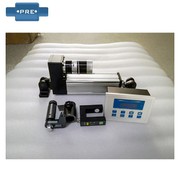
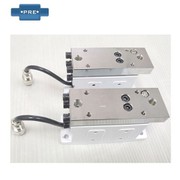
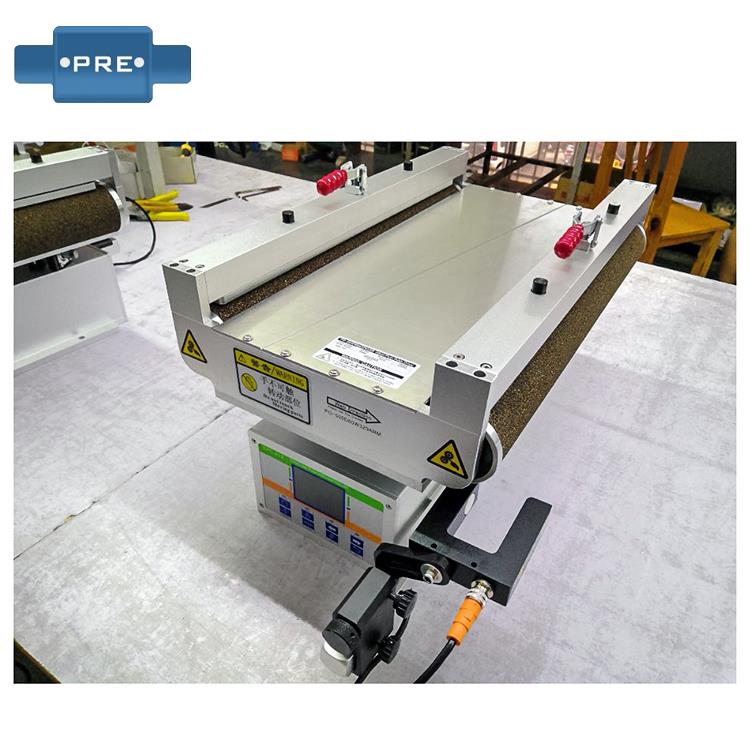
The Techmach guide Control System consists of a controller, a rectification sensor, an electric drive, and a rectification guide mechanism that together form a closed loop control system. The correcting sensor detects the edge position of the coil, reads the deviation of the actual position from the set position, and converts the deviation into a voltage signal proportional to it, and sends the signal to the controller. After the controller amplifies and calibrates the signal, it outputs it to the electric drive. The electric drive drives the web guide mechanism to perform the guiding action according to the size of the input signal, and guides the coil to a preset position.
Industry applicable to the web guiding system:
Printing and packaging industry, label industry, sanitary products industry, tire rubber industry, textile printing and dyeing industry, corrugated paper industry, metallurgical industry, lithium battery industry, etc.
Three typical applications of the guide system:
Unwinding guide:
Make sure that the coil is always exported from the pre-set position during the unwinding process in order to get to the next step accurately.
Design and installation precautions: unwinding the movable frame and the exporting roller as one. When the driver performs the telescopic action, the unwinding movable frame and the take-up roller work together; the edge detecting sensor needs to be installed after the exporting roller and is independently fixed; if it is a photoelectric sensor, It is then irradiated on the movable take-up roll or on other guide rolls integrated with the unwinding frame, that is, when the drive is actuated, the guide rolls illuminated by the photoelectric sensor also move with the drive together with the unwinding movable frame.
Web guide between marches:
Make sure that the web is always passing through the pre-set position during travel to prevent the material from appearing serpentine or uneven edges when entering the next process.
Design and installation precautions: The edge sensor should be fixed independently. If it is a photoelectric sensor, it should be irradiated on the nearest fixed roller or fixed baffle after the deflection roller of the guide frame.
Winding correction:
Make sure the curls are neat during the winding process.
Design and installation precautions: Winding correction is very similar to unwinding, but the installation is quite different. The correcting sensor is integrated with the winding movable frame. When the driver performs the telescopic movement, the correcting sensor and the winding movable frame act together; the introduction roller is independently fixed after the edge detecting sensor; if it is a photoelectric sensor, it should be irradiated on the independent fixed guiding roller. on.