Tel: +86-134-31394972
E-mail: sales@pre-webguidesystem.com
Tel: +86-134-31394972
E-mail: sales@pre-webguidesystem.com

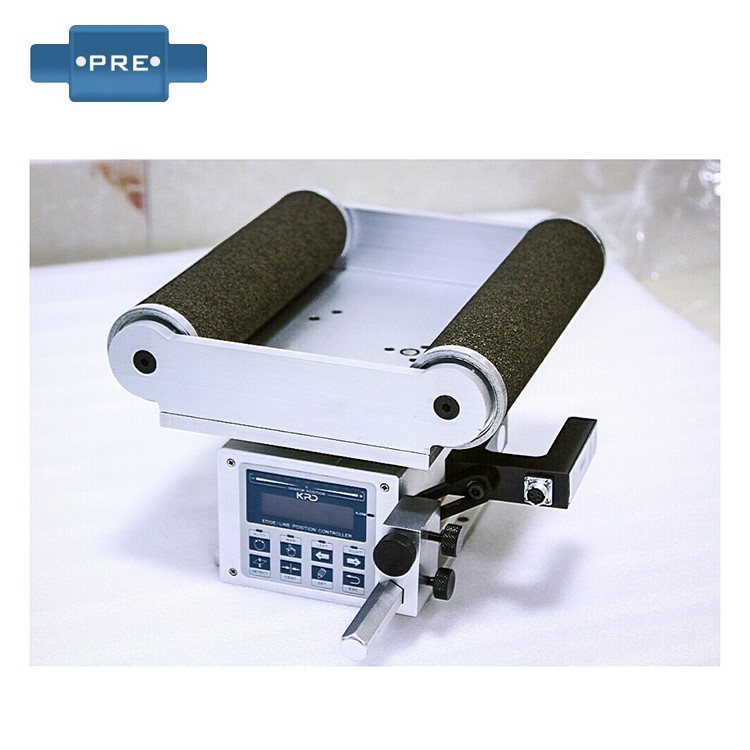
In order to better understand the web guiding sensor, we first understand the working process of the guiding system: the guiding sensor detects the relative position of the edge, line or color block of the coil, compares the deviation between the detected value and the set value, and converts it into a proportional signal for correction by the electric actuator after the controller program calculation. There are many types of sensors, and there are five kinds of sensors commonly used in the correction machine: photoelectric sensor, ultrasonic sensor, CCD image correction sensor, electromagnetic correction sensor and capacitive correction sensor, which are generally selected according to the material of the coil. For example, the photoelectric sensor is more suitable for breathable membranes such as non-woven fabrics, which are sensors that use optoelectronic components as detection elements to convert optical signals into electrical signals; Ultrasonic sensors are more suitable for use in non-airtight coils such as tapes and films, and it is a sensor that converts ultrasonic signals into electrical signals, and so on.
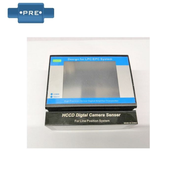
CCD image guiding sensor: Made of a highly sensitive semiconductor material. A charge-coupled device (CCD) is used for high-precision image acquisition of the web. By capturing the position of the web in the image, with a specific image processing algorithm, the offset of the web can be analyzed in real time. The sensor is capable of continuously taking images of the web and precisely detecting its edges or specific markings to calculate position deviations. Its accuracy is extremely high, often in the micron range, which meets the stringent requirements of the electronics manufacturing, printing and other industries for the accuracy of the position of the coil. At the same time, the CCD image guiding sensor also has strong versatility and can adapt to different colors and materials. In addition, the visual monitoring function provides a real-time image of the web, allowing the operator to visualize the position of the web and the guiding process. However, the cost of the sensor is high, the requirements for processing algorithms and computing power are relatively high, and the maintenance cost is also expensive, requiring regular cleaning of the lens, checking the circuitry, etc.
Ultrasonic guiding sensors: They also have extremely high detection accuracy, capable of achieving micro-precision such as 0.05 mm. The sensor is usually composed of multiple wires, including positive electrode, negative electrode, signal line and voltage line, etc., providing a variety of output methods for easy connection with the control system. The ultrasonic guiding sensor is easy to operate, does not require manual adjustment, and can be detected directly after wiring, which greatly simplifies the operation process.
Electromagnetic guiding sensor: using the principle of electromagnetic induction, the alternating magnetic field is generated by the emitting coil, and when the coil moves in the magnetic field, the magnetic field changes, and the receiving coil detects this change and converts it into an electrical signal, so as to determine the position deviation of the coil. The sensor has a good detection effect on metal materials or coils containing certain metal components, and can usually achieve high detection accuracy, especially in the guiding of metal coils.
Capacitive guiding sensor: Detects the position of the web based on changes in capacitance. When the web is close to or far from the sensor, the capacitance value between the sensor and the web is changed, and the position deviation of the web is determined by measuring this change. The sensor is non-contact detection, will not cause damage to the coil, and is not affected by the surface material and color of the coil, and has strong adaptability. At the same time, it is able to detect small position deviations with high accuracy. However, capacitive guiding sensors can be affected by ambient electromagnetic interference and require a high degree of flatness on the web surface.
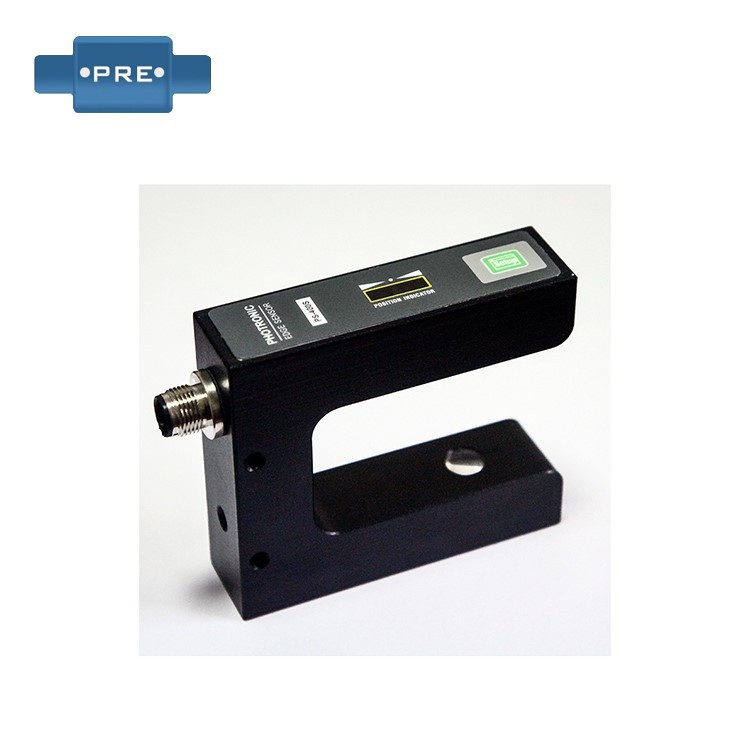
Photoelectric guiding sensor: It usually uses the principle of light reflection, occlusion or transmission to detect the position of the coil. For example, by emitting a beam of light, when the web blocks the light, the receiver detects a change in light intensity and thus determines the position of the web. The accuracy of the sensor is in the millimeter range, which is sufficient for some applications where accuracy is not particularly high. At the same time, the cost of photoelectric guiding sensors is relatively low, and the installation and maintenance are relatively simple, so they are widely used in some low-end application scenarios. Its anti-interference ability is relatively strong, and it has a certain adaptability to changes in ambient light. However, when inspecting transparent or translucent strips, false detections may occur.
Distinguish between CCD image guiding sensors and photoelectric guiding sensors:
The CCD image correction sensor is based on the principle of optical imaging, which focuses the image of the strip on the CCD chip through the lens, and analyzes the image on the strip to determine whether the strip is offset. The CCD image guiding sensor is suitable for occasions with high requirements for guiding accuracy and fast strip speed. For example, in high-speed printing machines, film production lines, etc. The CCD guiding sensor can also adapt to different colors and materials of strips, which has strong versatility. However, the anti-interference ability is weak, and it is sensitive to interference factors such as environment and dust.
The photoelectric correction sensor is based on the principle of reflected light, through the luminaire to emit light to the strip, the light on the strip will be reflected, the receiver will receive the reflected light, by comparing the intensity of the reflected light and whether the position changes, to judge whether the coil is offset. Photoelectric guiding sensors are suitable for some occasions where accuracy is not high and the environment is relatively simple. For example, in some ordinary packaging production lines, textile production lines, etc., photoelectric guiding sensors can effectively detect the offset of the strip and control the deviation. The photoelectric guiding sensor has strong anti-interference ability, but special attention should be paid to the fact that the photoelectric guiding sensor may be falsely detected when detecting transparent or translucent strips.
Contact factory in Guangdong, China
(Over 20 years experience in web guiding system production )
Previous: No Information