Tel: +86-134-31394972
E-mail: sales@pre-webguidesystem.com
Tel: +86-134-31394972
E-mail: sales@pre-webguidesystem.com
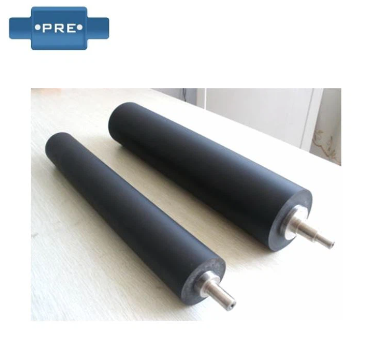
What is a rubber roller?
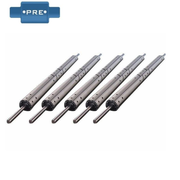
The bearings and shaft head inside the rubber rollers are very precise in structure, and any slight difference will directly affect the usage effect. If the bearings and shaft head are not well lubricated, it is easy to cause wear and tear, and it will seriously affect the quality of the rubber rollers, thus affecting the quality of the products.
How to store?
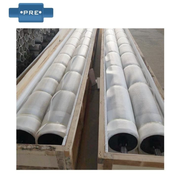
The correct way of storage is: wash the rubber roller with clean water, then seal it with plastic film, preferably to keep it away from the air, and then put it in a special place for storage, do not fall over, which will affect its internal mechanical properties and the quality of the rubber surface.
Internal bearings and shafts need to be well lubricated.
We recommend that in the daily situation, it is best to use the rubber roller every week to make certain maintenance, its rubber surface and internal lubrication must be done well enough.
What kinds of rubber are commonly used on rubber rollers? Their characteristics and their application in the roller how?
① Neoprene rubber: It is suitable for making various soft printing rollers, photogravure printing rollers and so on. Roll forming can be moulded, film wrapped roll forming, winding forming or pressing out forming methods. Because of the poor storage stability of the rubber, so in the manufacturing process, should pay attention to avoid parking in direct sunlight. At the same time to control the temperature conditions of the rubber parking.
② Nitrile rubber: used in the manufacture of printing rollers, food industry rollers, textile printing and dyeing rollers, contact with solvents such as soft rubber rollers. NBR has poor ozone resistance, so processing should be avoided in the high ozone concentration environment. Nitrile rubber and polyvinyl chloride and use, can be obtained with good ozone resistance and weather resistance of the rubber.
③ Polyurethane rubber: with outstanding tensile strength, abrasion resistance and anti-cracking properties, polyester-type polyurethane rubber has good resistance to a variety of solvents. In addition, continued exposure of the rubber to high temperatures and humidity can adversely affect performance. For polyurethane rolls used at high speeds and high pressures, the focus should be on improving the dynamic off-roll problem and cracking phenomenon.
④ Silicone rubber: heat resistance of 200-250 degrees, good resistance to chemicals, the main drawback is the low tensile strength. Typical use of silicone rubber rollers are fabric heat-setting, plastic heat-setting embossing, calendering, copying machines, such as fixing. Forming silicone rubber rollers using film wrapped roll forming, due to the low strength, the operation must be careful.
⑤ chlorosulfonated polyethylene; high toughness and elasticity. Wear-resistant, heat-resistant up to 150 degrees Celsius, a variety of chemicals, oil has a good resistance, has excellent insulation. Available in addition to casting method other than a variety of methods of manufacture, the production process of rubber to avoid sunlight.
⑥ ethylene propylene rubber: can be used in 150 degrees high temperature conditions, has excellent chemical resistance, resistance to polar solvents, but not resistant to hydrocarbon solvents and oils can be used for the production of extrusion rollers, conveyor rollers, contact with acetone and ester solvents containing ink printing rollers. The rolls can be wrapped and pressed out of moulding, and the process operation should be careful to avoid contact with oil and hydrocarbon solvents.
What is the production process of rubber rollers?
1, cleaning rubber roller iron core: if it is a new rubber roller iron core need to core surface of oil and other cleaning agents to wash; if it is an old rubber roller iron core, need to remove the old rubber roller outer layer of the rubber, and at the same time with the cleaning agent to the core surface of the remaining rubber clean.
2、 Rough treatment of the surface of the rubber roller iron core: rough the surface of the rubber roller iron core, in order to increase the surface of the rubber roller iron core and the adhesive area of the rubber cover.
3, sandblasting: the rough treatment of the rubber roller iron core for sandblasting, sandblasting will be based on the material of the rubber roller iron core to choose a different nature of the sand to sandblasting. Sandblasting is to make the surface of the rubber rollers more rough, rubber and iron core bonding better after wrapping.
4, rubber coating: After the above treatment of the rubber roller core according to customer requirements for rubber coating, rubber coating materials are different to achieve different requirements, such as: rubber coating ink resistance performance is good, the package of polyurethane rubber abrasion resistance and pressure resistance performance is good, package of silicone high temperature resistance performance is good.
5, rubber roller vulcanisation: rubber rollers generally need 10-15 hours of vulcanisation time, after vulcanisation of the rubber roller iron core and rubber will be tightly bonded, a rubber roller formation.
6、 Rubber roller polishing: according to the customer's requirements of the size and shape to be polished, some customers have higher requirements for the surface of the rubber roller, you need to use a CNC grinder to polish the rubber roller with a mirror surface.
What is the buying process of suitable rubber rollers?
1, first determine the demand for rubber rollers: determine the size, colour, hardness and whether you need to buy rubber rollers, high temperature resistance, solvent resistance and so on.
2、 Find a suitable rubber roller manufacturer: directly communicate with you on the requirements of the rubber roller, so that the rollers can meet your requirements, and can provide drawings with parameters is the best.
3、 Ask for quotation and sign the purchase agreement: after both sides negotiate the price, sign the purchase agreement. In this process, both parties need to have detailed communication on the use of rubber rollers, rubber material, colour, hardness, size, etc. In the agreement, it is also indicated that the demand for rubber rollers, as well as the delivery time, payment method and other information, so that both parties can be guaranteed.
4, Roller factory start to produce rubber rollers: rubber roller factory and the purchaser signed the agreement, received the deposit of the purchaser will start to produce rubber rollers, according to the amount of rubber rollers, in general, the delivery period of 10-15 days, if the case of special urgency, please contact the roller factory special instructions. The quality of rollers produced by DongGuan Precision Converting Transmission Co.,Limited is good, if you need to make rollers, please contact us.
5、 Shipment: The rollers will be sent to the customers by express or freight, or the customers can pick up the rollers by themselves if they are near.