Tel: +86-134-31394972
E-mail: sales@pre-webguidesystem.com
Tel: +86-134-31394972
E-mail: sales@pre-webguidesystem.com
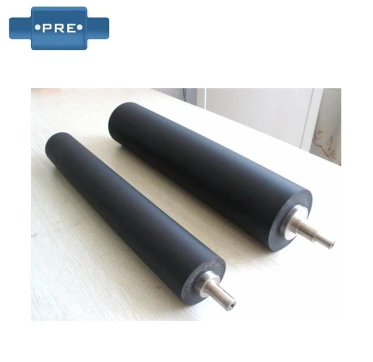
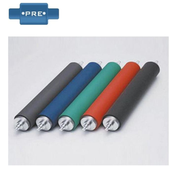
Rubber roller is a commonly used high-precision process product, which is widely used in printing, coating, weaving, plastic, paper, food, medical and packaging industries. It has the characteristics of strong adhesion, good wear resistance, chemical corrosion resistance, high temperature resistance, etc., which can effectively improve production efficiency and product quality. The following will introduce the production process of lagging rollers, including material preparation, processing technology and quality inspection.
*Preparation of Materials:
The main materials of rubber rollers are rubber and metal, of which rubber is divided into two types: natural rubber and synthetic rubber. Natural rubber is derived from the sap of rubber trees, while synthetic rubber is obtained through chemical synthesis. In the process of material preparation, it is necessary to select the appropriate rubber and metal materials according to the product requirements, and to mix and process them.
*Processing process:
1. Rubber preparation: The selected rubber material is washed and dried to ensure that the material is dry and clean.
2. Rubber mixing: Put the pretreated rubber and other auxiliary materials into the rubber mixing machine for mixing, so that the rubber materials have better processing properties and physical properties.
3. Roller core preparation: According to the size and shape requirements of the roller, suitable metal materials are used for the preparation of roller cores, usually steel or aluminum.
4. Rubber covering: The mixed rubber is coated on the roller core, which is usually carried out by gluing. During the coating process, it is necessary to ensure the uniformity of the rubber layer and a strong adhesion to the roller core.
5. Pressing and curing: Put the rubber-coated roller core into the press for pressing and curing. This step allows the rubber to be fully bonded to the core and the surface of the roll smooth.
6. Precision machining: According to the product requirements, the roller after pressing and curing is precision machining, including cutting, grinding and grinding. Through these processes, the size and appearance of the rolls can be made to meet higher precision requirements.
7. Surface treatment: According to the specific needs, some special treatments can be carried out on the surface of the roller, such as chrome plating, spraying, etc., to improve the service life and surface performance of the roller.
*Quality Inspection:
After the production is completed, the lagging roller needs to be inspected for quality to ensure that it meets the product requirements. Common quality inspection methods include visual inspection, dimensional inspection, hardness testing, adhesion testing, etc., through which the quality and performance of the roll can be judged to meet the standard. If quality problems are found, they need to be rectified and repaired in time to ensure that the product quality meets the requirements.
Rubber roller is a kind of equipment widely used in various industrial fields, which has many excellent characteristics, and can provide efficient, stable and reliable support for industrial production. Here are some of the features of rubber rollers:
1. Excellent shockproof and vibration damping performance
The core part of the rubber roller is made of high-quality rubber, which can effectively absorb shock forces and vibrations, thereby reducing noise and radiation caused by vibration, and protecting machinery and products.
2. The material is uniform and the performance is stable
The high-quality materials and production process of rubber rollers ensure its material uniformity and performance stability, which can meet the requirements of different working environments and production needs, and provide reliable guarantee for industrial production.
3. Excellent wear resistance and corrosion resistance
The rubber roller has excellent wear resistance and corrosion resistance, which can ensure long-term stable work efficiency and life, reduce the frequency of maintenance and replacement, and save production costs.
4. High-precision processing and manufacturing technology
The rubber roller adopts high-precision processing and manufacturing technology to ensure that its dimensional accuracy and surface quality meet the high requirements of various industrial production, and can provide precise support for various production equipment.
5. Suitable for various industrial fields
Rubber rollers are suitable for various industrial fields, such as printing, textile, papermaking, food processing, machinery manufacturing and other fields, and are widely used in rubber rollers, conveyor belts, maintenance, aluminum rollers and other fields.
Classification of rubber rollers:
According to different adhesive layer materials, rubber rollers can be classified into natural rubber rollers, ethylene propylene rubber rollers, neoprene rollers, silicone rubber rollers, fluorine rubber rollers, etc.
1. Natural rubber rollers: This kind of rubber rollers have excellent elasticity and mechanical strength, good alkali resistance, and are often used in papermaking, leather, textile, packaging and other equipment in the compression type rubber roller, metallurgy, mining and other industries traction type rubber roller;
2. EPDM rubber roller: with excellent ozone aging resistance, weather resistance, can work for a long time under -65 °C ~ 140 °C working conditions, excellent insulation performance, the rubber roller can be used in plastic printing machinery, leather machinery and other general fields. Rubber roller factory tanning roller, printing rubber roller is more commonly used;
3. Neoprene roller: It has excellent wear resistance, high fire resistance, oil resistance, aging resistance, good heat resistance, and acid and alkali resistance, and can be manufactured into printing rubber rollers, iron printing rollers, tanning rollers, coating rollers, etc. It is used for printed board corrosion machine, plastic, tanning, printing, food printing iron, ordinary coating machine and other equipment;
4. Silicone rubber roller: It is used for processing hot adhesive products, such as polyethylene calendering, embossing, printing and dyeing, film and fabric coating adhesive, plastic compounding, corona treatment and other machinery, and is also used as a release roller and non-woven fabric manufacturing on sugar production and packaging machines;
5. Polyurethane rubber roller: with high mechanical strength and wear resistance, corrosion resistance, aging resistance and oil resistance, it is often used in metallurgical industry, papermaking paper varnishing, chemical fiber, wood processing, plastic processing, printing iron varnishing and other machinery. Advanced printing rubber rollers, printing iron rollers, metallurgical rollers are commonly used;
6. Fluorine rubber roller: It has high heat resistance, oil resistance, acid and alkali resistance, air permeability, electrical insulation, aging resistance, flame resistance, wear resistance and other properties, and is used in special coating equipment.