Tel: +86-134-31394972
E-mail: sales@pre-webguidesystem.com
Tel: +86-134-31394972
E-mail: sales@pre-webguidesystem.com
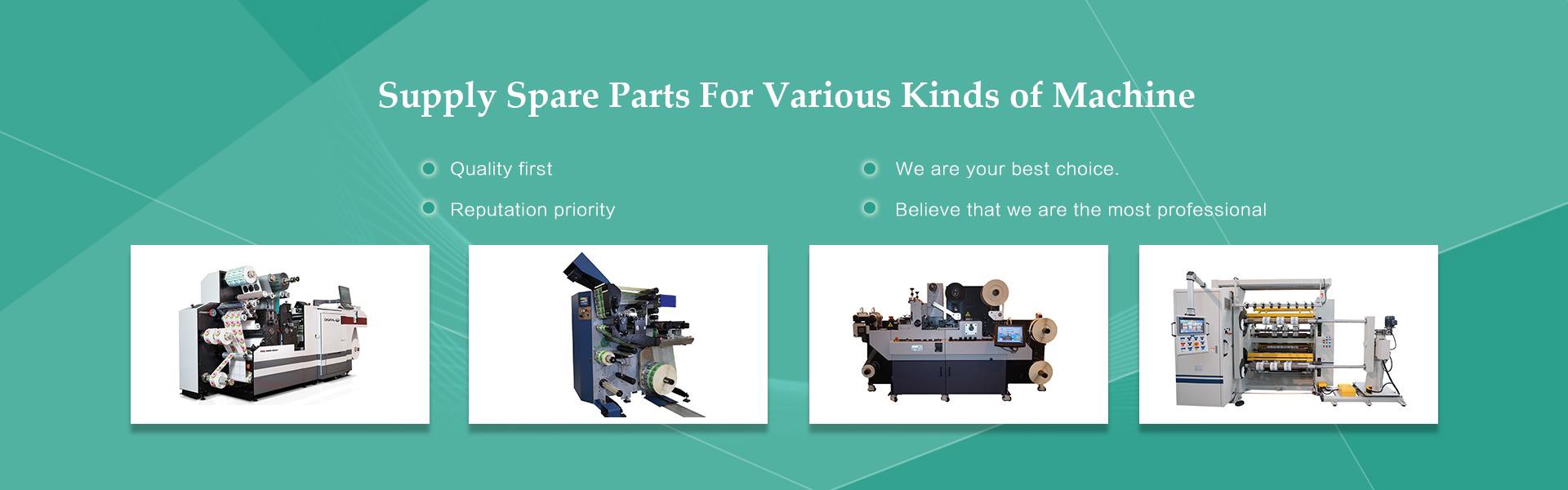
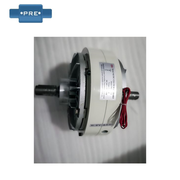
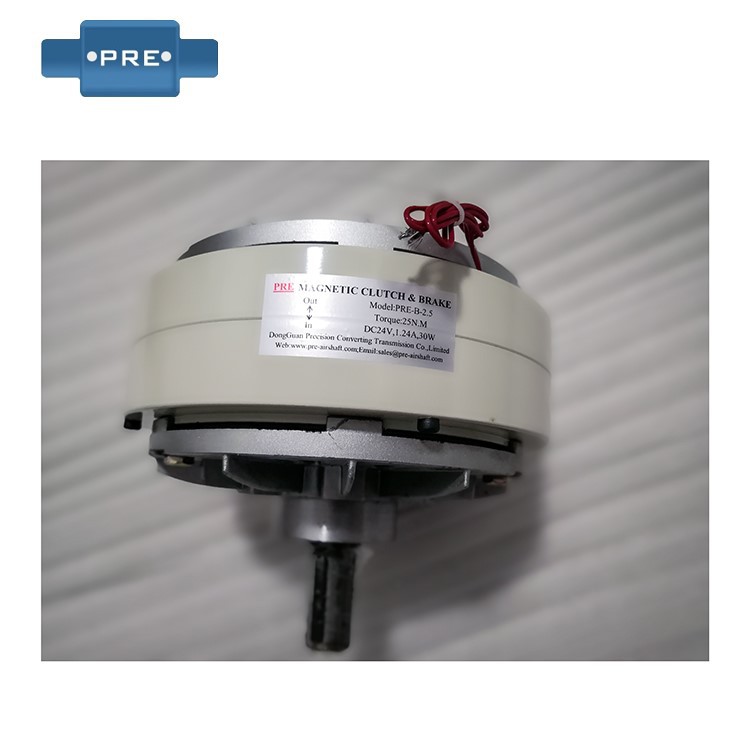
Magnetic particle brakes are based on electromagnetic principles and the use of magnetic particles to transmit torque. It has the characteristics that the excitation current and the transmission torque are basically linear. It can transmit a certain torque under the condition that it has nothing to do with the slip, and has the advantages of fast response, simple structure, no pollution, no noise, no impact vibration and energy saving. It is a multi-purpose automatic control element with superior performance. It has been widely used in papermaking, printing, plastics, rubber, textile, printing and dyeing, wire and cable, metallurgy, tablet press and other related winding processing industries in unwinding and winding tension control. Magnetic particle brakes are also often used for dynamometer loading and braking of transmission machinery.
Similarities
1. Torque Specification:
Single-shaft magnetic particle brake: torque specifications 6Nm, 15Nm, 25Nm, 50Nm, 100Nm, 200Nm, 400Nm.
Hollow shaft magnetic powder brake: torque specifications 6Nm, 15Nm, 25Nm, 50Nm, 100Nm, 200Nm, 400Nm.
2. Braking principle:
The strength of the magnetic field is used to control the adhesion characteristics of the magnetic particle to achieve the effect of braking. This braking method has the advantages of stable braking torque, no noise and no pollution, and is a very environmentally friendly braking method.
3. High reliability and long life: Because the particles of magnetic particles are very small, and they have a certain elasticity, they wear very little in high-speed friction, so their life is longer than that of traditional friction brakes.
4. Flexible adjustment and fast response: Since the magnetic powder can be braked and released in an instant, it has better flexibility and response speed in adjustment and control, and can control the operation of the equipment more accurately.
5. Small size, light weight and simple structure.
Differences
1. Working principle:
Single-shaft magnetic particle brake: It is formed by the merger of the transmission unit (input shaft) and the driven unit (output shaft). The space between the two sets of cells is filled with granular magnetic particles (about 40 μm of rest volume). When the magnetic coil is not conductive, the torque will not be transmitted from the transmission shaft to the driven shaft, but if the coil is electromagnetically energized, the magnetic particle will be attracted by the effect of magnetic force and hardened, and the torque will be transmitted between successive sliding. The single-shaft magnetic particle brake is a high-performance active control element. It uses magnetic powder as the working medium and excitation current as the control method to achieve the purpose of manipulating the brake or transmitting torque. Its output torque has a good linear relationship with the excitation powder current and has nothing to do with the speed or slip, and has the advantages of fast response speed and simple structure.
Hollow shaft magnetic powder brake: the selection of imported bearings, magnetic powder and 100% use of enameled coils, etc., can greatly improve the linearity of the brake, generally speaking, the volume of the hollow shaft is relatively smaller, and the required magnetic power is smaller than the single shaft magnetic powder brake. Because the magnetic coil of the hollow shaft magnetic powder brake is hidden in the transmission assembly, it needs to pass through the slip ring brush flux coil.
2. Structure:
The structure of the single-shaft magnetic particle brake is relatively simple, and because there is no hollow shaft, it can be installed on the transmission shaft more flexibly. The braking area of this type of brake structure is relatively small, and it is suitable for low-power, low-to-medium speed and periodic operation of mechanical equipment.
The hollow shaft magnetic particle brake is very prominent in braking area and braking force, so it is suitable for higher power, high speed, high frequency and continuous operation equipment. The braking area of the hollow shaft magnetic powder brake is larger, has a larger bearing capacity, and can withstand higher torque, making its braking effect more stable and reliable.
3. Installation and maintenance
Single-shaft magnetic particle brakes are simple to install and maintain, and are suitable for a variety of different mechanical equipment, with no restrictions on installation positions.
The installation of hollow shaft magnetic powder brakes needs to consider the size and length of the shaft, as well as the reduction of thermal efficiency due to external influences, and the requirements for the operating environment are relatively high.
The correct way to use the single-shaft magnetic particle brake:
The correct way to use the hollow shaft inner shell magnet particle brake:
1. When the hollow shaft magnetic particle brake and clutch are used for continuous sliding of coiling and coiling, the product and life will vary depending on the use conditions (relative sliding speed, etc.). However, generally speaking, the life of iron powder when the fixed torque is reduced in the fixed current is about 4500~7500 hours. However, in some cases, it cannot be used below the fixed torque, so it can be used continuously, and the service life can be extended. However, even with the same sliding rate, the sliding rotation speed, i.e., the relative rotation speed, tends to decrease when the rotation speed is continuously high, so it is necessary to aim to reduce the relative rotation speed when setting.
2. In order to prolong the life of iron powder, it is also a way to make the allowable sliding working rate more abundant when using. For example, if it is used at 50% of the allowable sliding rate, the service life can be extended by about double.
3. If the driven component is used as the input side, it will continue to idle for a long time, and the iron powder will be stirred, and the service life will be greatly reduced. Please avoid this method as much as possible, and if it is structurally unavoidable anyway, set the current to a weak excitation state when using it. When operating at a low speed (16 RPM or less), stable torque characteristics are generated during continuous operation such as tension control. However, if there is intermittent rotation accompanied by idling, the activation of torque may be delayed by adding voltage, so please use it as described below:
Previous: Don't Ignore The Extent To Which Magnetic Particles Work On Magnetic Powder Brakes
Next: How To Choose Magnetic Particle Brake And Magnetic Clutch Products?