Tel: +86-134-31394972
E-mail: sales@pre-webguidesystem.com
Tel: +86-134-31394972
E-mail: sales@pre-webguidesystem.com
The purpose of the tension control system is to:
The purpose of tension control is to keep the tension of the material constant. Good tension control improves machining accuracy, effectiveness and material utilization. It is mainly introduced from the following four aspects:
1) Stable conveying material
A: Prevent the material from sliding horizontally;
b: Prevent slippage between the winding shaft and the material;
C: Prevent entanglement.
2) Prevent deformation of the material
3) Ensure dimensional accuracy
A: Width, thickness
b: Hole spacing
C: Crease
4) Make sure the material is well rolled: if the winding is not good, cut off the protruding and concave parts, resulting in material waste; If the winding is good, a lot of material loss is reduced.
The basic components of the tension control system are:
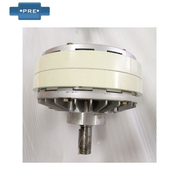
1) Unwinding: Magnetic powder brake/servo motor, unwinding at a constant speed.
2) Intermediate control: tension detection, uniform speed traction.
3) Rewinding: Magnetic powder clutch/servo motor, deviation correction control, uniform speed rewinding.
Application of tension control system in the film production industry:
In the film production industry, the tension control system is usually used as a signal to better control the thickness and tension of the coil in the production process, so as to better improve the production efficiency of film products. How exactly do these sensors assist in the production of thin films? Let's take a look.
The principle of the tension control system to facilitate the production of thin film products:
In the process of coil production, the film raw materials are added to the coiling machine and processed by flattening rollers, deviation correction system, cutting, etc., and then the film products are longitudinally slitted and rewinded. In the process of this kind of process treatment, the equipment operation speed will be very fast, and the process treatment needs to be accurately controlled, and in the control process, the tension sensor is the core position of the whole process control. It can well maintain the tension of film raw materials in the whole film equipment processing process, so as to better ensure the smooth progress of the entire film product production.
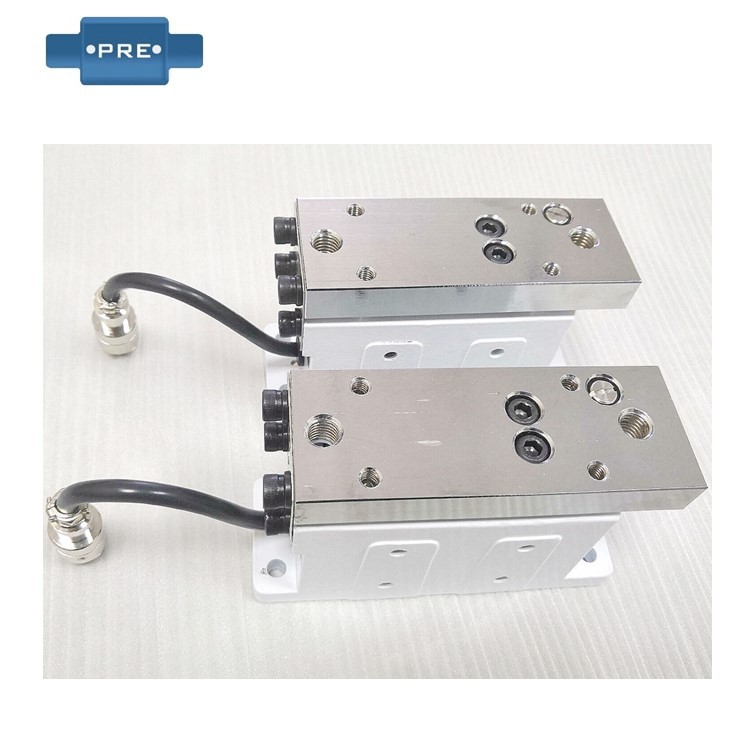
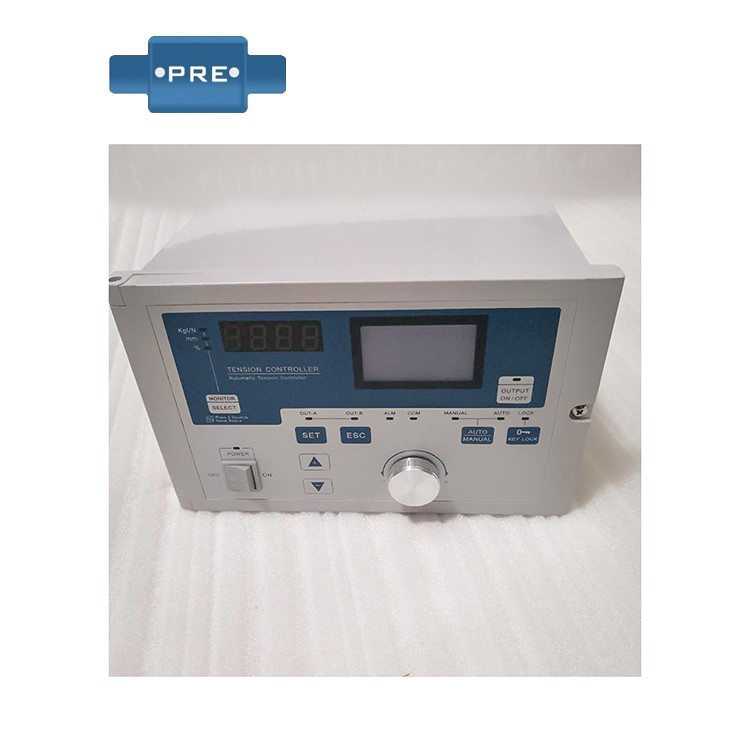
Tension controller wiring precautions:
1) Weak wires such as input signal lines, switching input and output terminals, and output power supplies should be kept away from strong wires such as instrument power lines and power supplies to avoid signal interference.
2) Note that the weak current terminals such as input signal, switching input and output terminals, and output power supply must not be connected to strong electricity, otherwise the entire instrument will be burned.
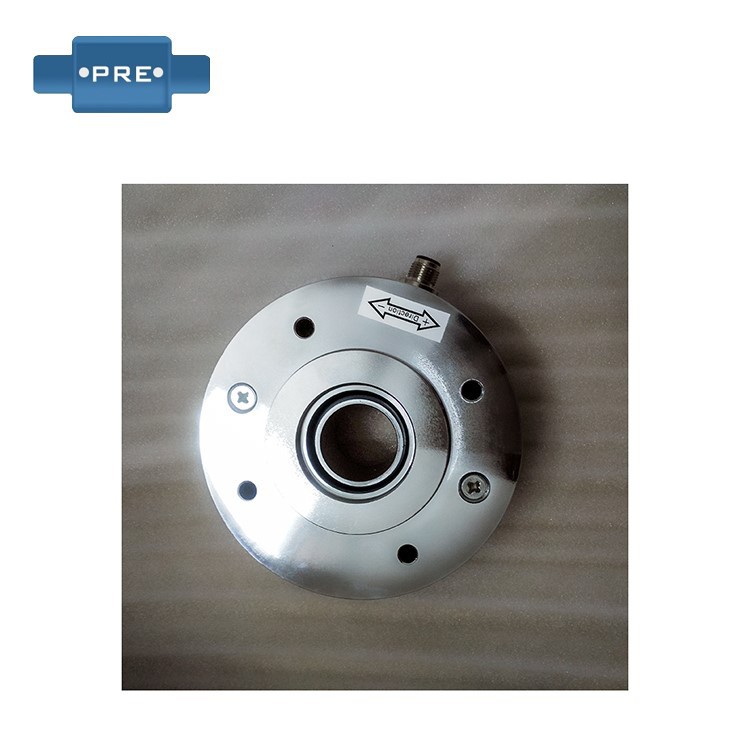
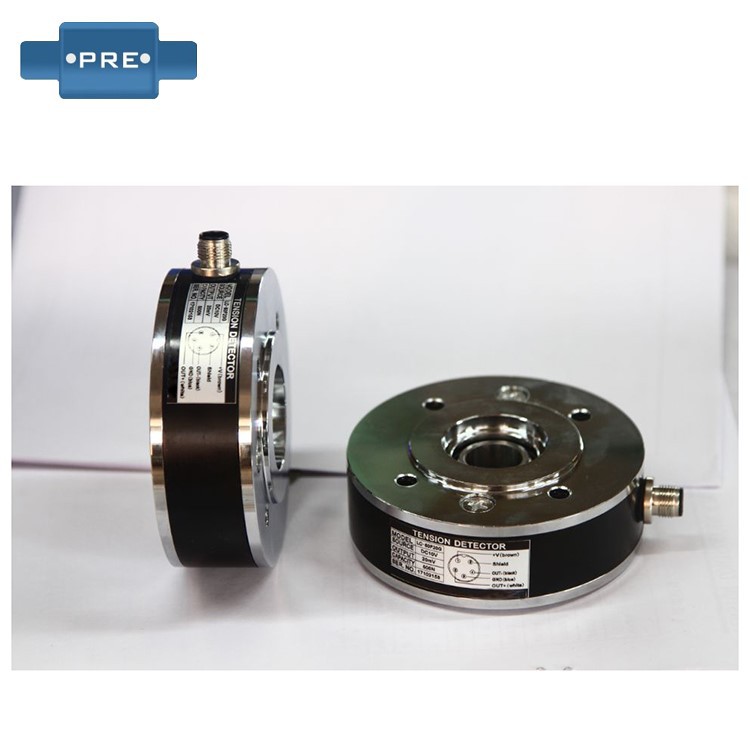
3) Connect the tension sensor signal according to the correct wiring diagram, if you need to connect two tension sensors, you must pay attention to the signal polarity can not be connected wrong, otherwise the measured value displayed will be inaccurate.
4) If only a single tension sensor is connected, the input terminal of the unconnected tension signal must be shorted.
5) The shielded wire of the tension sensor must be connected to the SG terminal.
Precautions for the installation of the tension controller:
a. Great care should be taken to avoid installation deviations during installation
(1) The tightening gland should be carried out after the coupling is aligned, and the bolt should be evenly supported to prevent the end face of the gland from being deviated, and check each point with a feeler gauge, and its error is not more than 0.05 mm.
(2) Check the matching clearance (i.e., concentricity) between the gland and the outer diameter of the shaft or shaft sleeve, and the surrounding area should be uniform, and the tolerance of each point should be checked with a feeler gauge not more than 0.01 mm.
b. The amount of spring compression should be carried out according to the regulations, and it is not allowed to be too large or too small, and the error is required to be 2.00 mm. If it is too large, it will increase the specific pressure of the end face, and the end face will wear at another speed. Too small will cause insufficient specific pressure to play a sealing role.
c. After the moving ring is installed, the mustache ensures that it can move flexibly on the shaft, and it should be able to automatically bounce back after pressing the moving ring to the spring.
Precautions when disassembling the tension controller:
a. Be careful when disassembling the mechanical seal, and it is strictly forbidden to use a hand hammer and a flat shovel to avoid damaging the sealing elements. A pair of wire hooks can be made, and the sealing device can be pulled out at the gap of the transmission seat in the direction of self-financing. If the fouling cannot be disassembled, it should be cleaned before disassembly.
b. If mechanical seals are used at both ends of the pump, take care of each other during assembly and disassembly to prevent one from neglecting the other.
c. For the mechanical seal that has been run, if the gland is loose and the seal moves, the dynamic and static ring parts must be replaced, and should not be re-tightened and continued to be used. Because after the rotation of the friction pair, the original trajectory of the friction pair will change, and the tightness of the contact surface will be easily damaged.
Previous: The Tension Control System Plays An Important Role in The Coil Rewinding And Unwinding Process
Next: How To Get A Clearer Picture Of The Tension Control System?