Tel: +86-134-31394972
E-mail: sales@pre-webguidesystem.com
Tel: +86-134-31394972
E-mail: sales@pre-webguidesystem.com
When selecting a magnetic powder clutch and brake, calculate the torque, speed, and slip power (calorific value) to be used, and confirm that all indicators are within the allowable values.
The following is an explanation of the selection method and precautions for each item.
1. Torque
It is necessary to calculate the large and small values of the used torque, and confirm whether the calculated values are within the controllable range. The torque of the magnetic particle clutch and brake can be controlled in the range from the rated torque to the idling torque* of the product (2~100% of the rated torque). * Idle torque: Due to the loss of torque in the bearings and sealing rings inside the product, the torque will not be 0 N·m even if the excitation current is set to 0A. This idle torque is usually about 2% of the rated torque, but it varies depending on the product. )
2.Rotational speed
High speeds, whether it is a magnetic clutch or a brake, need to be controlled below the allowable speed. In addition, the minimum speed of the magnetic particle brake should be controlled at more than 15r/min, and the difference between the input and output speed of the magnetic particle clutch should be set at more than 15r/min (that is, the slip speed of both the magnetic particle clutch and the magnetic particle brake needs to be more than 15r/min).
Low slip speeds can worsen the internal particle distribution, resulting in unstable torque performance or longer the time it takes to reach the specified torque after start-up.
In addition, the ZKB, ZKG, and ZX magnetic particle clutches and brakes can be used from a slip speed of about 5 r/min.
3. Slip power (calorific value)
Since magnetic clutches and brakes are usually used in a continuous slip state, the temperature of the magnetic particle clutch and brake will rise due to the heat of slip. The temperature rise value is limited by the heat-resistant temperature of the parts to be used, so the permissible continuous slip power (allowable value of heat generation) is specified depending on the model. In other words, when operating within this allowable range, the magnetic particle clutch and brake can be used in a stable state for a long time. On the other hand, if the allowable continuous slip power is exceeded, the magnetic particle clutch and brake will be damaged, so be careful.
Slip power (calorific value) P (W) can be calculated by the following formula.
P=0.105×T×Nr (W)
where T: torque (N·m); Nr: Differential slip speed of magnetic particle clutch and brake (r/min).
Distinguish between magnetic particle brakes and magnetic clutches:
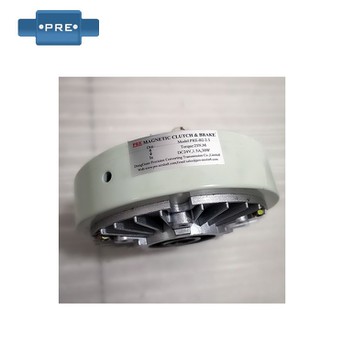
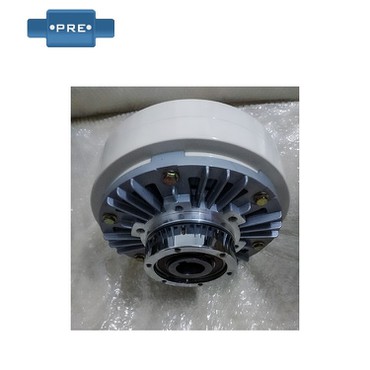
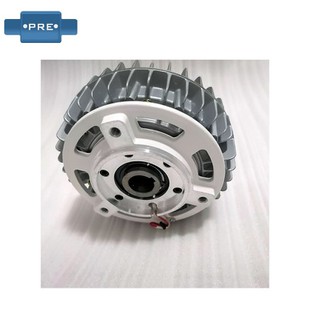
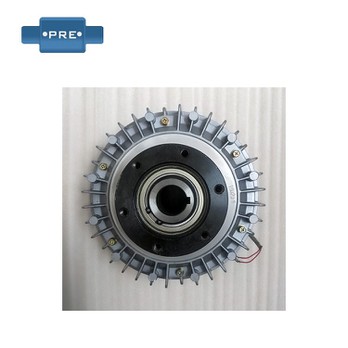
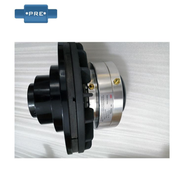
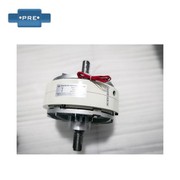
The main function of the magnetic particle brake is to transmit power to the moving workpiece and control it. When a voltage is applied to an ion-coated rotor, the magnetic force adsorbs the magnetic particle onto the fixed ionic coating, creating a resistance that slows down or stops the rotor from spinning. The unit is typically used in applications such as drum brakes, servo robots, and metalworking to meet high-speed transmission, smooth stop, and control requirements.
Magnetic particle clutches provide a controllable multi-speed transmission that can be used in some cases to achieve shifting needs. The design principle is basically the same as that of the magnetic particle brake, but the magnetic particle clutch has very low resistance in the clutch state and high resistance in the disengaged state. This adjustable nature allows the magnetic particle clutch to be used in a wide range of applications such as pressure controllers, coil units, etc.
Common faults and repairs of magnetic particle brakes and clutches:
Both the magnetic particle brake and the magnetic particle clutch transmit torque after the hardening phenomenon of the magnetic particle after being energized, so in the process of use, small faults are inevitable. In general, the most common failures are the following:
1. When there is current, there is no torque or the torque is small;
2. When there is no power-on, it is inflexible to go with torque;
3. The surface temperature of the magnetic particle brake and the magnetic particle clutch is too high;
4. The internal coil will be burned out after a moment of power-on. The reasons for the above failures are insufficient trial operation in the early stage, the magnetic particle is damp and aging, the quality of the device is not passed, the bearing is damaged, the capacity of the brake and clutch is too low, the quality of the heat dissipation device is not good, and the operation is not in accordance with the product instruction manual.
In view of the above failures and causes, how should we deal with and repair them? First of all, we must carefully read the product manual of the brake and clutch before the follow-up operation, and then carry out the test run, after the test run, we must carefully check the assembly quality and magnetic particle quality of each element, and then increase the air flow of the heat dissipation device.
Precautions for the operation of magnetic particle clutches and brakes:
1. The surface temperature of the clutch and brake in normal operation, especially the newly installed clutch and brake, should not exceed 80 degrees Celsius, the water-cooled brake should not exceed 90 degrees Celsius, and the forced air-cooled type should not exceed 60 degrees Celsius.
2. For water and air cooling in the process of operation, water and wind must not be cut off, if it is not guaranteed that the water supply and wind will not be interrupted, protective devices should be installed.
3. The life of the magnetic powder of the clutch and brake varies according to the different conditions of use, when the torque drops to 70% of the rated torque, it can be considered that the magnetic powder has been aged, and the magnetic particle should be replaced
4. The clutch and brake after replacing the new magnetic powder should also be put into trial operation before the official operation.
Daily maintenance of magnetic clutch and brake:
1. When the magnetic powder is damp, the expected effect may not be realized at once, be careful not to let water or oil materials enter the inside of the clutch and brake, especially near the gearbox, which may enter the interior through the shaft, therefore, it is recommended to use non-viscous oil.
2. Check whether all the installed bolts are loose, and the bolts must be locked.
3. When the magnetic particle clutch and brake reach the expiration date, please replace this product.
4. When installing sprockets or elastic connectors at the end of the protruding shaft of the magnetic particle clutch and brake, do not knock the end of the mounting shaft with metal.
5. When replacing the magnetic particle, if it cannot be replaced by itself, it should be sent back for maintenance.
Application of magnetic particle clutch and magnetic particle brake in winding machine:
Due to its small size, light weight and good control characteristics, the magnetic particle mechanism has been widely used in tension control systems. The magnetic particle brake has such good constant torque characteristics that it has been widely used in light industrial industries such as winding machines, printing, and prevention as an executive component of the tension system.