Tel: +86-134-31394972
E-mail: sales@pre-webguidesystem.com
Tel: +86-134-31394972
E-mail: sales@pre-webguidesystem.com
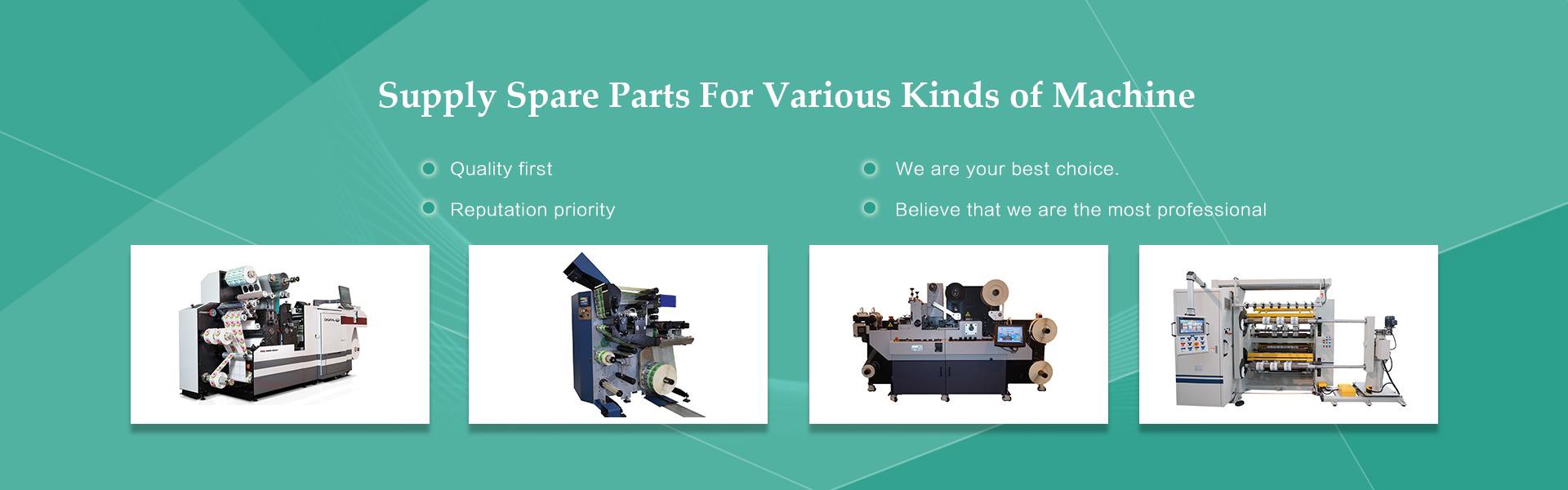
The magnetic particle brake transmits torque after the hardening phenomenon of the magnetic particle after being energized, so in the process of use, small faults are inevitable. In general, the most common failures are the following:
1. When there is current, there is no torque or the torque is small;
2. When there is no power-on, it is inflexible to go with torque;
3. The surface temperature of the magnetic particle brake and the magnetic particle clutch is too high;
4. The internal coil will be burned out after a moment of power-on. The reasons for the above failures are insufficient trial operation in the early stage, the magnetic particle is damp and aging, the quality of the device is not passed, the bearing is damaged, the capacity of the brake and clutch is too low, the quality of the heat dissipation device is not good, and the operation is not in accordance with the product instruction manual.
The structure of the magnetic powder brake:
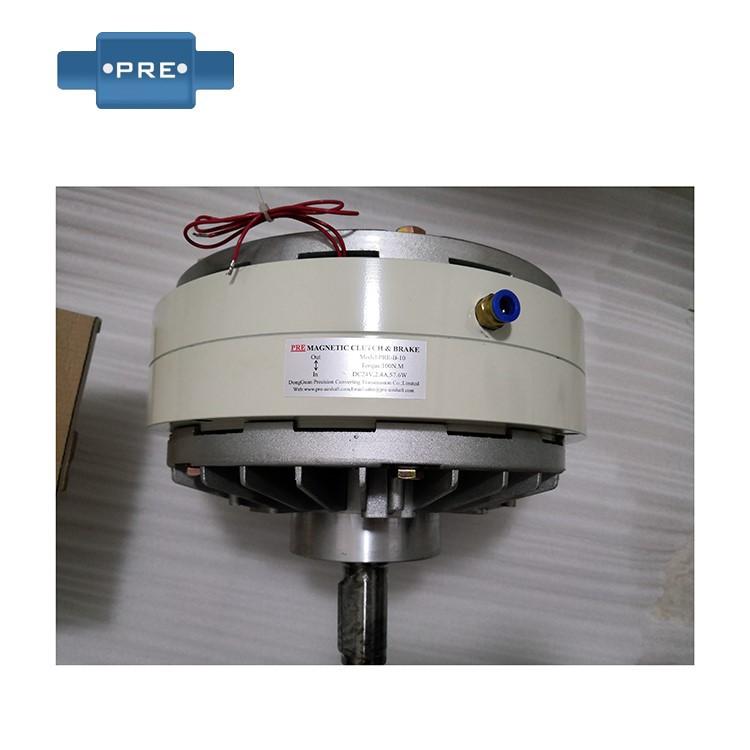
Magnetic particle brakes are mainly composed of stator, rotor and magnetic particle. The stator is permanently connected to the mechanical drivetrain, while the rotor is connected to the part that needs to be braked. The stator and rotor are filled with magnetic particles, and the power and movement are transmitted with the help of the binding force between the magnetic particles generated by electromagnetic attraction and the friction between the magnetic particles and the working surface.
The working principle of magnetic particle brake:
Magnetic particle brake is to use the magnetic action of magnetic powder in the magnetic field to achieve braking and control. When a current is introduced to the stator, a magnetic field is generated inside the stator, and the magnetic particle is affected by the magnetic field to produce magnetism, forming a rotating magnetic field synchronized with the stator. At this time, the rotor and stator rotate synchronously to achieve the purpose of transmission. When the stator current changes, the magnetic field strength changes, resulting in a change in the binding force between the magnetic particles, which in turn changes the rotational speed of the rotor. By controlling the magnitude and direction of the stator current, the speed and direction of the rotor can be precisely controlled.
Features of magnetic particle brakes:
Magnetic particle brakes are formed by merging the transmission unit (input shaft) and the driven unit (output shaft). The space between the two sets of cells is filled with granular magnetic particles (about 40 μm of rest volume). When the magnetic coil is not conductive, the torque will not be transmitted from the transmission shaft to the driven shaft, but if the coil is electromagnetically energized, the magnetic particle will be attracted by the magnetic force and the hardening phenomenon will be transmitted, and the torque will be transmitted between successive sliding.
Magnetic particle brake is an automatic control element with superior performance. It uses magnetic powder as the working medium and excitation current as the control means to achieve the purpose of controlling braking or transmitting torque. Its output torque has a good linear relationship with the excitation powder current and has nothing to do with the speed or slip, and has the advantages of fast response speed and simple structure
Because the magnetic particle brake has the advantages of smooth operation, no noise, wide range control, fast response speed, etc., it has a wide range of applications. For example, the characteristics of magnetic powder brake are used in the use of the laminating machine, which makes the unwinding, laminating and winding of the laminating machine smoother and neater, which greatly improves the product quality and work efficiency.
Matters to be paid attention to during the installation and use of hollow shaft magnetic powder brakes:
The magnetic particle brake is based on the electromagnetic principle and the use of magnetic particle to transmit torque, which has the characteristics of a linear relationship between the excitation current and the transmitted torque. It can transmit a certain torque under the condition that it has nothing to do with the slip, and has the advantages of fast response, simple structure, no pollution, no noise, no impact vibration and energy saving. The hollow shaft magnetic particle brake is a multi-purpose, high-performance automatic control element.
1. The installation of the hollow shaft magnetic powder brake shall be carried out according to the relevant mechanical regulations, and the torque input side and output side shall not be reversed, so as not to affect the heat dissipation conditions and reduce the slip power. Hollow shaft type magnetic particle brakes and hollow shaft type magnetic particle brakes should be installed in the horizontal direction of the shaft, and vertical installation is never allowed.
2. The water inlet of the magnetic particle brake must be installed below the vertical direction, and the cooling water in the clean water cavity must be discharged after long-term deactivation to prevent moisture and rust.
3. When the torque drops to less than 30% of the rated torque, the magnetic powder is replaced or the magnetic powder is supplemented, but the filling rate cannot be greater than 100% to prevent excessive heating.
4. The surface temperature of the continuously running hollow shaft magnetic powder brake is not higher than the following table value: self-cooling: below 80~90oC Water cooling: forced air cooling below 90oC: below 70oC.
5. The forced air-cooled brake or the air input from the brake must be degreased and dewatered, so as not to cause moisture and damage to the coil insulation.
6. The magnetic particle working cavity is not allowed to infiltrate oil and water. If the hollow shaft magnetic particle brake is installed near the gearbox, the oil seal must be used to prevent grease from penetrating along the shaft.
Factors for the high accuracy of the control torque of the magnetic particle brake:
The magnetic particle brake converts electrical energy into mechanical energy through sliding friction, and converts the movement of mechanical energy into heat energy for energy dissipation, so as to achieve the purpose of braking. It uses the action of a magnetic field to realize the rotation of the brake shaft, thus constituting a braking device. In the magnetic particle brake, the magnetic properties of the magnetic particle under the action of the magnetic field are controlled by controlling the current of the coil, so as to achieve accurate control of the torque.
The magnetic particle brake can control the torque output to a high precision level within a certain range, and its main principle is that the magnetic particle presents different magnetic states under the action of the magnetic field, and the friction coefficient between the powders changes under the action of different magnetic fields, so as to achieve different sizes of braking torque. The current output of the control coil is directly related to the change of the magnitude of the magnetic field, so it has a direct impact on the braking torque of the brake.
Causes and maintenance methods of excessive temperature during the use of magnetic particle brakes:
Magnetic particle brakes are mechanical parts that stop or slow down moving parts in machinery. It is commonly known as brake and brake. There will be some failures after the magnetic particle brake is used for a period of time, so we need to maintain the magnetic particle brake regularly to ensure that the equipment can function normally in production.
Today we will talk about the causes of excessive temperature and hot during the use of magnetic particle brakes and maintenance methods as follows:
1. When there is a short circuit or short circuit inside the winding, the winding needs to be checked for phase protection;
2. When the bearing is poorly lubricated and stuck, the bearing needs to be cleaned and filled with high-temperature grease or the bearing should be replaced;
3. When the material is overweight and the linkage shaft roller is overloaded, it is necessary to reduce the load and fill the oil lubrication in the moving mechanism;
4. When the pressure of the fixing screw is uneven and the brake is out of position, the pressure needs to be retightened to be uniform.
Applications of Magnetic Particle Brakes:
Unwinding and winding tension control in papermaking, printing, plastics, rubber, textile, printing and dyeing, wire and cable and other related coiling processing industries. In these industries, magnetic particle brakes are widely used to control unwinding and winding tension. By precisely controlling the tension and speed, a stable and efficient machining process can be realized.
Dynamometer loading and braking of transmission machinery.
Previous: How To Choose Magnetic Particle Brake And Magnetic Clutch Products?
Next: Magnetic Powder Brakes For Textile Machinery Can Be Applied