Tel: +86-134-31394972
E-mail: sales@pre-webguidesystem.com
Tel: +86-134-31394972
E-mail: sales@pre-webguidesystem.com
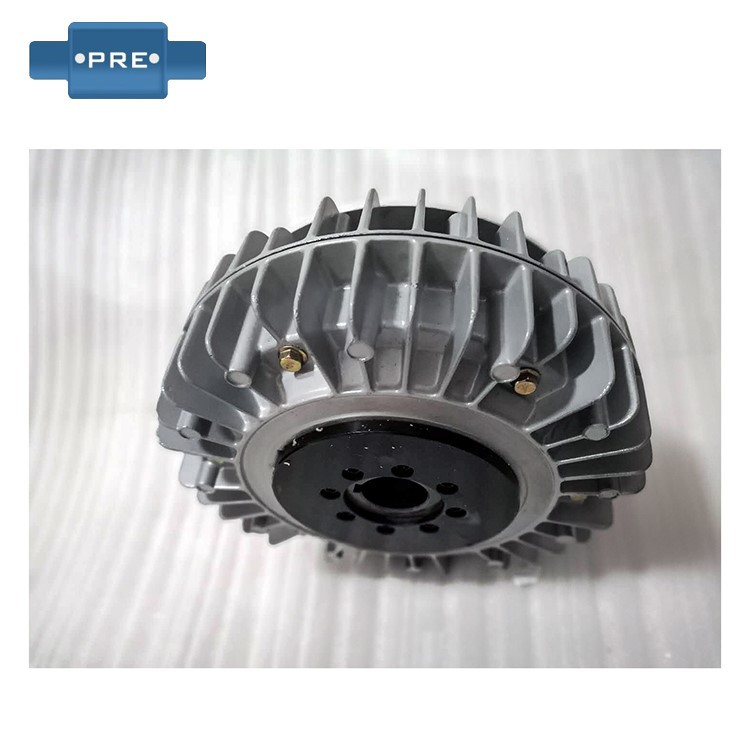
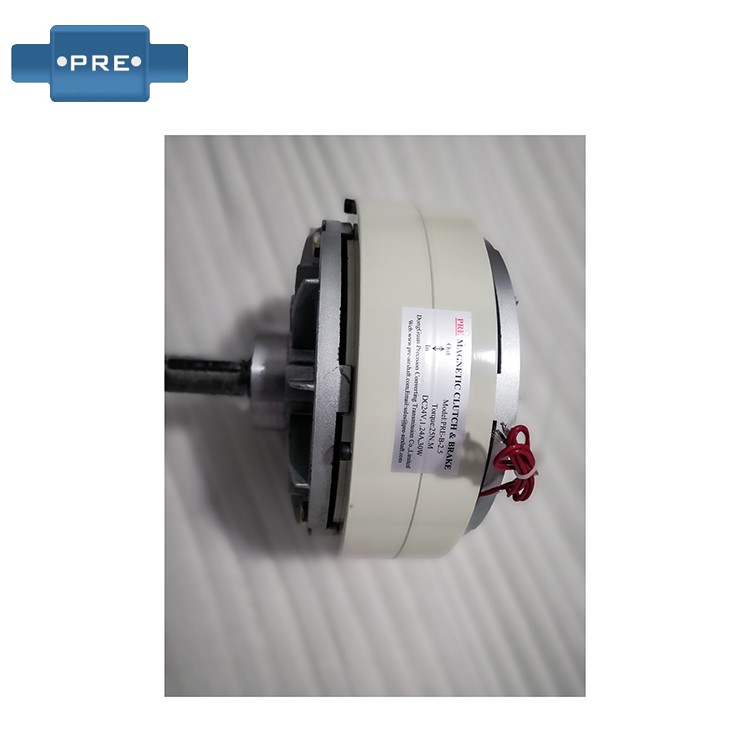
Magnetic powder brake is the use of magnetic particles under the electromagnetic effect to transmit torque, with the excitation current and the transmission torque base linear relationship, fast response speed, simple structure, no impact, no vibration, no noise, no pollution, etc.;
The magnetic particle brake is matched by a certain magnetic particle, and without the magnetic particle, the brake is not called a magnetic particle brake.
Characteristics of the magnetic powder itself:
Magnetic powder has the characteristics of high magnetic induction strength, high permeability, low remanence, low coercivity, high Curie point, and large transmission torque.
The relationship between the number of particles and the size of the particles operating in the magnetic brake:
Magnetic powder as a high-density recording material has long attracted people's attention, the number of magnetic particles of the magnetic particle brake has a great impact, generally speaking, the smaller the number of magnetic particles, the larger the number of magnetic particle brakes, the smaller the particles, the standard scale of the magnetic particle clutch is relatively wide, the equipment magnetic powder cavity is depicted in different sizes, and the sealing function of the commodity is inconsistent.
Magnetic particle brakes are often "stuck", which has a lot to do with magnetic particles, and there are the following reasons:
A magnetic particle brake consists of an active rotor, a driving rotor, and a yoke containing a coil. Under the centrifugal force of the active rotor and the driving rotor, the magnetic particles are evenly sprinkled on the inner wall of the working chamber. After a few months of use, the magnetic particle brake is stuck, how to solve it.
1) The use environment is humid
The service life of the magnetic particle brake depends on the magnetic particle life. The humid environment of the magnetic particle brake will affect the magnetic particle inside the magnetic particle brake, and the magnetic particle is easy to agglomerate after being wet, resulting in the inability of the magnetic particle brake to rotate, thereby affecting the life of the magnetic particle brake. Therefore, Tianji recommends that the magnetic particle brake machine is best used in a dry environment.
2) Internal leakage of magnetic particles
In the case of magnetic particle leakage, the main reason is that the shaft is stuck due to improper operation steps during installation, and there are also magnetic particle brakes that are magnetized, which causes the workpiece to break, and the magnetic particle leakage will occur in defective places. Therefore, Tianji recommends that you install the magnetic particle brake according to the manual, and try to avoid the magnetized environment.
3) Legacy of old magnetic powder
After the magnetic particle brake is used in the factory, the friction will occur when the magnetic particle is used, so that the torque will decrease, and after the torque drops, the use tension will not be reached. Therefore, it is necessary to replace the magnetic particles with new ones regularly. Therefore, Tianji suggests that after the speed of the magnetic particle brake drops, the magnetic particle needs to be replaced regularly to avoid affecting industrial production.
The role of magnetic powder in magnetic particle brakes:
The use of magnetic particle brake must be matched with the use of magnetic particle, magnetic powder is filled in the working cavity of magnetic particle brake, which plays a key role in the work, the selection of magnetic particle material, the amount of addition, particle size and the correct use of the method, the use time of the magnetic particle brake, the work efficiency and whether the work can be carried out normally plays a very important factor.
After a period of use, the magnetic particle filled in the machine will be reduced to the required tension, and the new magnetic powder must be replaced, the magnetic powder is a consumable, so the choice of practical magnetic powder can improve the work efficiency, prolong the use time, reduce the cost, and also prolong the use time of the magnetic particle brake.
Magnetic particles are small iron particles with high magnetization and wear resistance, each iron particle has a volume of about 40 microns; When the magnetic coil does not conduct electricity, the torque will not be conducted to the clutch or brake.
Application areas of magnetic particle brakes:
It is suitable for magnetic particle clutches, brakes, single-shaft, double-shaft, hollow shafts, etc. for slitting machines, laminating machines, coating machines, printing machinery, food machinery, bag-making machinery and other equipment, which can restore tension and balance torque. The magnetic particle particles are uniform and widely used in papermaking, printing and other industries.
How to select the product of magnetic particle brake:
When selecting a magnetic particle brake, calculate the torque, speed, and slip power (calorific value) used, and confirm that all indicators are within the allowable values.
The following is an explanation of the selection method and precautions for each item.
(1) Torque
It is necessary to calculate the Zui maximum and Zui minimum values of the used torque, and confirm that the calculated values are within the controllable range. The torque of the magnetic particle brake can be controlled in the range from the rated torque to the idling torque* of the product (2~100% of the rated torque). * Idle torque: Due to the loss of torque in the bearings and sealing rings inside the product, the torque will not be 0 N·m even if the excitation current is set to 0A. This idle torque is usually about 2% of the rated torque, but it varies depending on the product. )
(2) Rotational speed
Zui high speeds, whether magnetic clutches or magnetic brakes, brakes need to be controlled below the allowable speed. In addition, the Zui low speed of the magnetic particle brake should be controlled at more than 15r/min, and the difference between the input and output speed of the magnetic particle clutch should be set at more than 15r/min (that is, the slip speed of both the magnetic particle clutch and the magnetic particle brake needs to be more than 15r/min).
Low slip speeds can worsen the internal particle distribution, resulting in unstable torque performance or longer the time it takes to reach the specified torque after start-up.
In addition, the ZKB, ZKG, and ZX magnetic particle brakes can be used from a slip speed of about 5r/min.
(3) Slip power (calorific value)
Since magnetic particle brakes are usually used in a continuous slip state, the temperature of the magnetic particle brake will rise due to the heat of slip. The temperature rise value is limited by the heat-resistant temperature of the parts to be used, so the permissible continuous slip power (allowable value of heat generation) is specified depending on the model. In other words, when operating within this allowable value range, the magnetic particle brake can be used in a stable state for a long time. Conversely, it is important to be aware that the use of continuous slip power beyond this allowable can cause damage to the magnetic particle brake.
Slip power (calorific value) P (W) can be calculated by the following formula.
P=0.105×T×Nr (W)
T : Torque (N·m);
Nr: Slip speed of magnetic particle brake (r/min).
(This is the slip between the input speed and the output speed for magnetic particle clutches, and the input speed for magnetic particle brakes.)