Tel: +86-134-31394972
E-mail: sales@pre-webguidesystem.com
Tel: +86-134-31394972
E-mail: sales@pre-webguidesystem.com
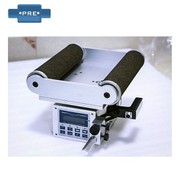
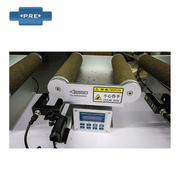
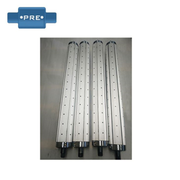
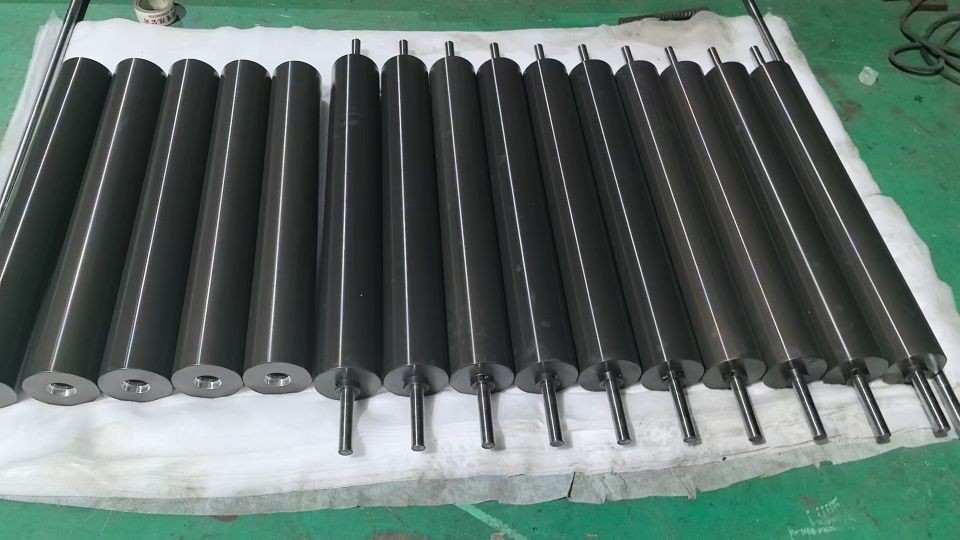
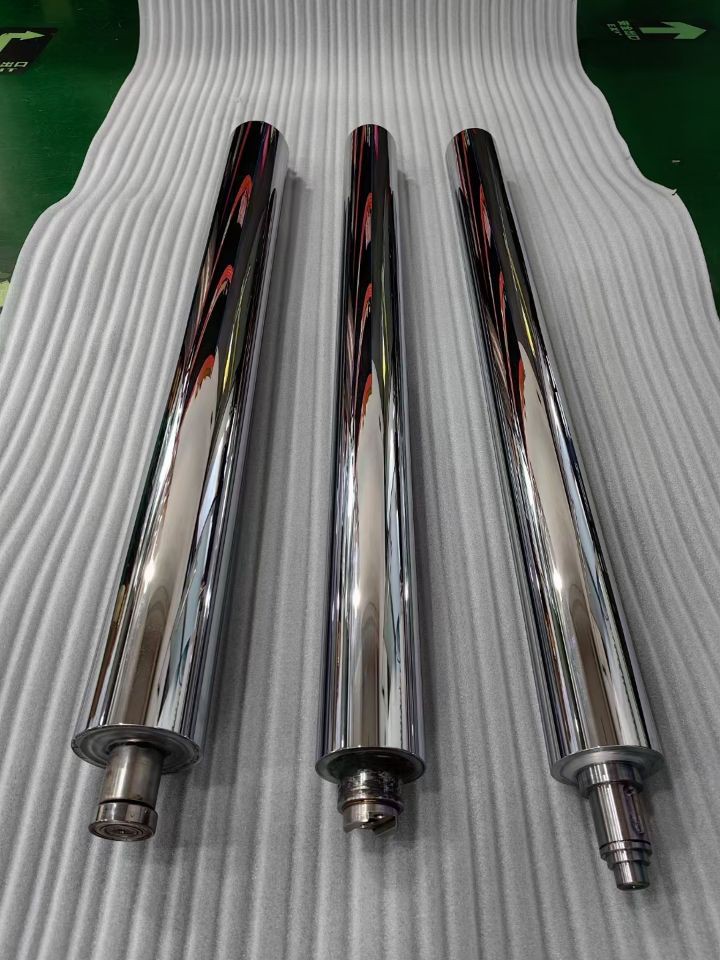
Aluminum guide rollers, also known as aluminum alloy guide rollers, are made of excellent aluminum alloy materials. It is suitable for printing, packaging, plastic, and electronic battery molding into tubes of various specifications (outer diameter 30mm-220mm). It has a reinforced ribbed structure and high strength. The surface is finished using precision equipment and special tools to make the surface smooth and the concentricity reaches 0.02 mm. The whole shaft can be easily run at high speed, the shaft end and imported bearing adopt special technology, and the computer balance correction is within 2g. Depending on the requirements of the industry, its surface can also be treated with special treatments: sandblasting, anilox, Teflon and special hardening treatments, which make it have good scratch resistance and abrasion resistance.
Aluminum alloy guide rollers have the advantages of high strength, low resistance, light weight, flexible rotation, no rust, wear resistance, corrosion resistance, etc., especially suitable for printing, packaging, plastics, electronic batteries and other precision machinery industries and various coil processing industries.
From the point of view of the surface structure of the aluminum guide roller, it is mainly composed of mesh holes and mesh walls. From the perspective of composition and structure, it is mainly composed of roller core, substrate and surface coating. The commonly used material for the base layer is electroplated copper, which is the basis for making mesh holes and mesh walls; The surface coating is made of metallic chromium or ceramic, which mainly improves wear resistance and blocks the corrosion of the substrate copper layer by solvents.
It can directly process the mesh and concave and convex patterns of various lines on the surface of the aluminum guide roller, without the need for special plating on the surface of the roller beforehand. It has a long service life, uniform patterns and patterns, and is suitable for composite gluing, coating, ink transfer, polishing and other fields. It is mainly used for sizing and coloring. It is suitable for plastics, leather, leather, papermaking, carton machinery and other industries.
Different surface treatment methods for aluminum guide rollers:
1) Smooth surface: smooth surface, low resistance, according to the requirements to achieve different surface roughness Ra0.3~Ra6.3.
2) Face thread line: commonly used thread line and center unfolding line (bisected from the center and extended to both end faces).
3) Concave and convex surface: CNC lathes can process all kinds of concave and convex surfaces and arc surfaces. Motor torque price
4) Sandblasting or shot blasting: Sandblasting or shot blasting can obtain a rough surface, which can increase friction.
5) Knurled or network cable: different sizes of pattern surface can be provided according to customer requirements.
6) The aluminum guide roller inflation operation time is short, and the separation and placement of the inflation shaft and the paper tube can be completed in only 3 seconds to complete the inflation and degassing, and it can be tightly meshed with the paper tube without separating any parts on the end side of the shaft. Simple Tube Placement: The tube can be moved and fixed anywhere on the shaft surface by inflating and deflating. Large bearing capacity: the shaft diameter can be determined according to the actual needs of customers, and high-strength steel can be used to increase the bearing capacity. High economic benefits: The shaft is designed with special functions, which can be applied to paper tubes with various thick, thin, wide and narrow aluminum guide rollers. Simple maintenance and long service life: it is a single part, and each part in its structure has a fixed specification, which can be used interchangeably for easy maintenance. Hollow aluminum roller: inner bearing structure, the bearings at both ends are installed in the bearing hole.
7) Shaft aluminum guide roller: the two ends of the roller body are combined with the steel shaft or stainless steel shaft end to form an integrated structure.
8) Aluminum roller through water: cooling or heating liquid enters and exits from both sides and circulates in the roller body.
9) Special rolls: rolls of various special structures processed according to the drawings.
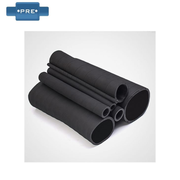
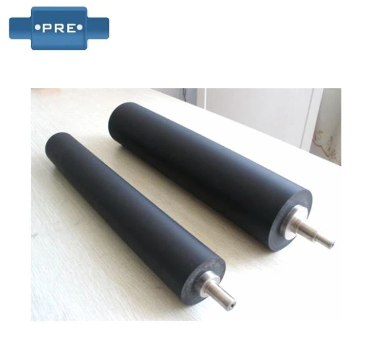
The printing roller is used on the offset press as a rubber roller for embossing, ink mixing and ink transfer, and its role is to transfer water and ink to the printing plate. The choice of rubber material and manufacturing process will affect the quality of rubber rollers, and different rubber rollers determine the quality, effect and efficiency of printing. The surface roughness of the printing roller is an important performance that affects the transfer of ink and dampening solution.
The use and maintenance process of the printing plate aluminum cylinder:
1) Before printing
Check whether there is any foreign matter between the rollers, whether the printing plate rollers are intact, whether the pressure between the rollers is uniform, confirm that it is normal, and print only after cleaning and cleaning.
2) Printing
The printing plate roller should always maintain a good contact state during operation, and the force should be uniform and consistent. Regardless of the width of the printed product, the whole surface of the printing plate roller should be lubricated with ink oil; depending on the amount of ink accumulated between the printing plate rollers, the ink volume should be adjusted in time to ensure the printing quality.
Under the premise of ensuring the printing speed, in order to prevent the ink from drying too quickly, the viscosity of the printing plate roller is reduced, and the surface is crusted, the amount of drying oil should be controlled for the ink that needs to be added to the drying oil, so as to prevent the printing plate roller from not being inking and the ink transfer is uneven.
3) After printing
It is necessary to disconnect the roller from the roller and the roller from the printing plate in time to remove the load pressure and prevent the deformation of the rubber surface caused by static pressure. It is necessary to clean the residual ink on the surface of the printing plate roller in time to prevent the drying of ink blocks, ink films, ink feces and dirt floating on the adhesive surface, (especially the ink blocks on both ends of the nylon roller) will be crushed and damaged when the glue surface is re-run, and the slag will be seriously produced on the matte surface.
4) Printing plate roller cleaning
Before and after printing, the printing plate roller must be cleaned with a special cleaning agent to keep the surface of the printing plate roller smooth and ready for use.
If the cleaning is not timely, the ink will adhere to the micropores through the fluffy micropores on the surface of the printing plate roller, and the paper wool and dirt will adhere to the surface of the printing plate roller. If the parking time is too long, the ink condensation film will cause the contact surface of the two rollers to stick, and the adhesive surface will be torn when driving again, so that the printing plate roller will be scrapped.
If the cleaning is not in place, it will produce glaze phenomenon, resulting in reduced ink philicity, ink transfer, and even deinking. The glaze increases the surface hardness and elasticity of the printing plate roller, and at the same time accelerates the wear of the printing plate roller, resulting in pitting and cracking on the rubber surface, resulting in slag dropping and affecting the printing quality.
Note: Glaze refers to the phenomenon that the surface of the printing plate roller hardens into a mirror shape.
5) Requirements for cleaning agents
a.Non-flammable, safe and reliable, no pollution to the environment.
b.It has good washing ability for ink.
c.There is no corrosion on the rubber roller and no deformation on the rubber surface.
d.UV ink printing plate roller uses a special cleaning agent for "UV ink".
e.The distiller's lees dampening roller uses a special cleaning agent for "alcohol dampening roller".
f.Cleaning method
It can be used to start the machine and spray cleaning agent on the ink roller.
Common problems in the printing process of printing plate rollers:
1) Crystallization and calcification on the surface of the printing plate roller.
The surface of the high-quality printing plate roller should be fine, smooth, slightly viscous to the touch, and have good ink transfer performance. However, due to the long-term influence of dampening solution, ink, paper and other factors, and the fact that each cleaning cannot be completely thorough, various substances are piled up on the surface of the printing plate roller layer by layer, and over time, the original capillary pores on the surface of the printing plate roller will be closed, forming a smooth crystalline layer similar to calcium, which seriously affects the ink transfer and water transfer performance, and cannot stably control the ink color of the printed matter.
In order to solve this problem, at first, special accumulation paste and water were used to clean, but it was more time-consuming, laborious, and virtually increased the production cost. Later, try to wash it again with some citric acid water after each wash, so that some calcium impurities on the surface of the printing plate roller will react chemically to form soluble substances for cleaning. Practice has proved that this method is effective and saves money and effort.
2) The surface of the printing plate roller is prone to scars and pockmarks.
Because the printing plate roller is relatively soft, the slightest hard object will be scratched during high-speed operation, especially the alcohol dampening solution depends on the plate water roller, once scratched, it can no longer be used. There are two main reasons: one is that the printing plate is not tightly pulled or the plate clamp is not tight, and there are often cracks and cracks at the end of the printing plate, which scratches the plate water and ink roller;
3) Premature cracking and aging of the printing plate roller.
There are many reasons for this problem, such as the excessive amount of dry oil in the ink, which makes the ink dry and hot on the rubber roller; the cleaning agent used to clean the rubber roller is not selected properly, and the cleaning time is too hasty, so that the impurities on the printing plate roller can not be thoroughly cleaned; the workshop environment temperature is high, and the dampening cooling system works poorly, so that a large amount of heat generated when the printing plate roller runs cannot be dissipated in time, and the cohesion temperature of the printing plate roller is very high: the bearing performance of the printing plate roller is not good, and it is rotated by the ink roller, resulting in runout friction, extrusion, etc. All of the above factors will accelerate the early cracking and aging of the printing plate roll.
Previous: Maintenance Procedures For Aluminum Rollers
Next: Tailor-made Industrial Rollers Of The Right Size For The Machine