Tel: +86-134-31394972
E-mail: sales@pre-webguidesystem.com
Tel: +86-134-31394972
E-mail: sales@pre-webguidesystem.com
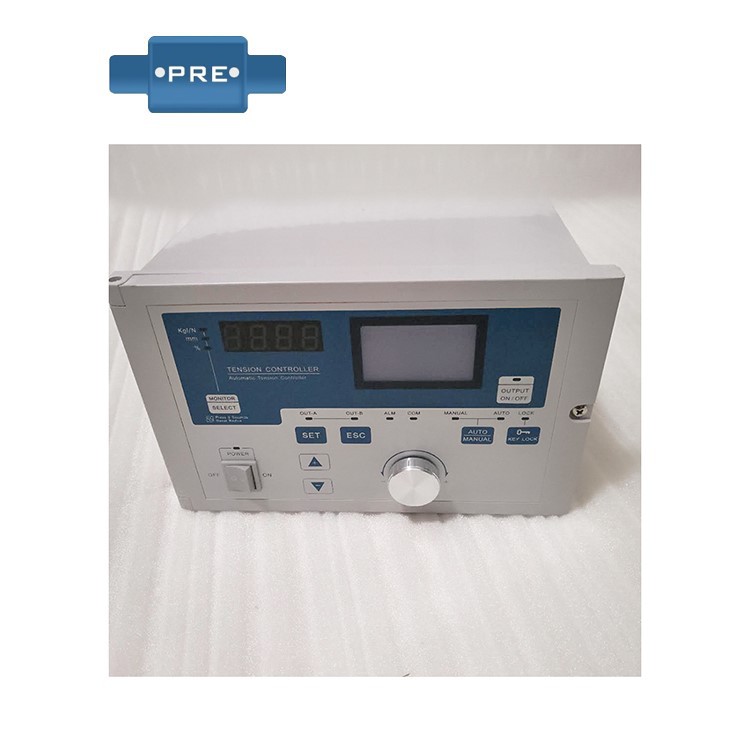
A tension control system is a device used to accurately control the tension of materials (such as paper, metal strips, textiles, etc.) in industrial production processes. The tension controller ensures that the material always maintains a stable tension during the conveying process, preventing the material from being too loose or too tight, so as to ensure the production quality and the stability of the equipment. It is widely used in production lines that require precise tension control, especially in the fields of winding, stretching, packaging, printing, etc.
Components of the tension control system:
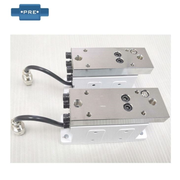
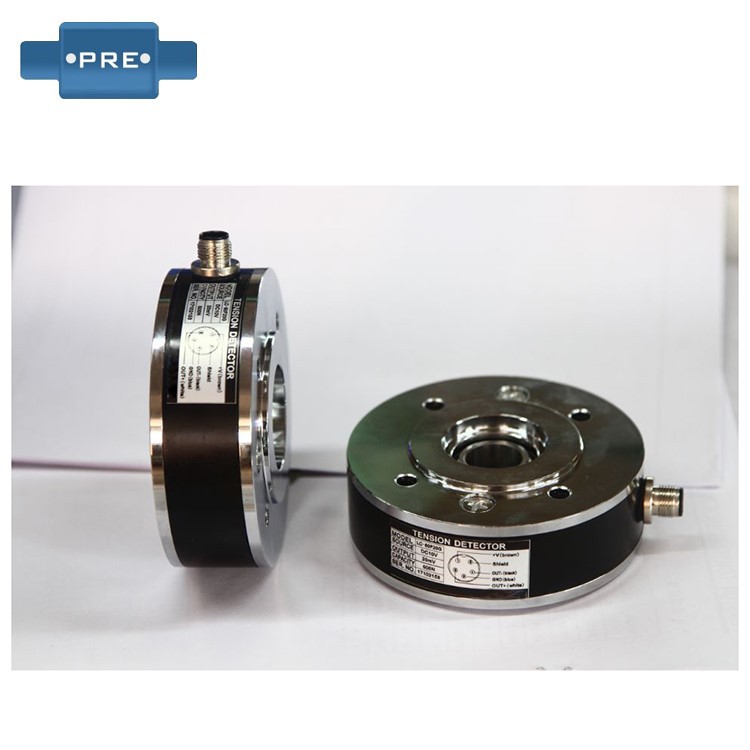
1) Tension sensor: used to monitor the material tension in real time and convert it into an electrical signal. Common sensors: torque sensors, capacitive sensors, strain gauge sensors, etc. The basic principle of the tension sensor is that when subjected to an external force, the sensitive body inside the sensor undergoes a slight mechanical deformation, which causes a change in resistance or inductance, and then produces a change in the electrical signal to achieve measurement. Because the deformation of the sensitive body has a certain range, it is easy to cause damage after exceeding the limit value, so the tension sensor needs to be selected according to the measuring range.
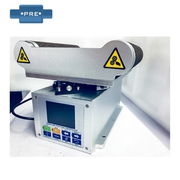
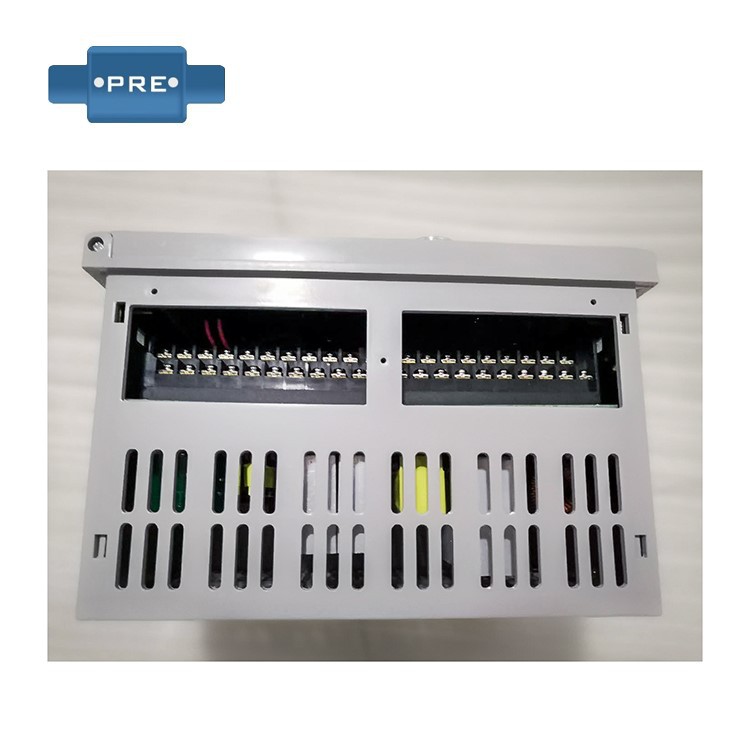
2) Controller: It is the "brain" of the tension controller, which is responsible for receiving sensor signals, data processing, and outputting adjustment signals. The controller adjusts the drive to operate according to the difference between the set value and the actual measured value. The controller usually contains a display interface, operation buttons, PID control algorithms, etc.
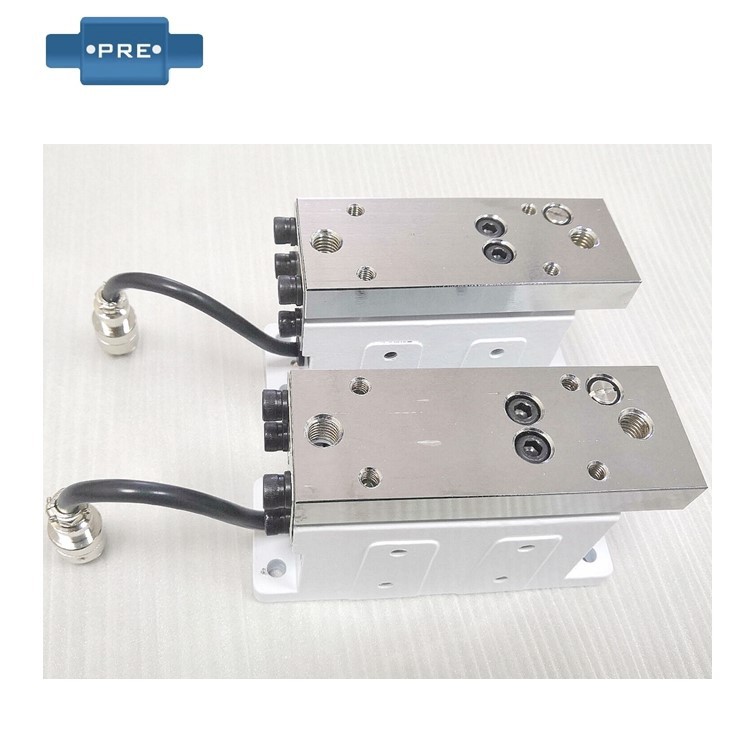
3) Drive device: adjust the transmission speed or tension of the material through the control signal, and the common driving device is electric motor, pneumatic system, etc.
4) Display and operation panel: for the operator to set the tension target value, view the current tension value, adjust the control parameters, etc. The display panel can include LCD screen, touch screen, etc., for human-computer interaction.
5) Power supply and circuit system: provide power support for controllers and sensors, and realize signal transmission and processing.
6) Feedback system: Some tension controllers are equipped with real-time feedback systems to adjust changes during transmission and maintain system stability.
The main function of the tension controller is to maintain and adjust the tension of the material during the production process to avoid relaxation or over-stretching of the material. How it works can be summarized as follows:
1) Tension detection: real-time monitoring of the tension state of the material through the tension sensor (or tension measuring equipment), the tension sensor is usually installed in the key parts of the material winding or transmission, such as on the reel, on the reel, on the stretching machine, etc. The sensor converts the change in material tension into an electrical signal.
2) Signal processing and feedback: The tension sensor transmits the collected signal to the tension controller, and the controller calculates the error according to the gap between the input signal and the set value, and converts the error signal into a control signal.
3) Adjust the output: the controller adjusts the driving device (such as motor, pneumatic device, etc.) according to the error signal, and changes the transmission speed, winding speed or tension application method of the material, so as to keep the tension within the set range.
4) Closed-loop control: The whole process is a closed-loop feedback control system. The tension controller continuously monitors and adjusts to ensure that the tension of the material is always stable under different working conditions.
Tension controllers are widely used in many industries and production fields, and their main application scenarios include:
1) Printing industry: In the printing process, the tension control of paper, film and other materials is very important. The tension controller ensures that the paper tension is constant during the printing process, preventing the paper from breaking or poor printing quality.
2) Textile industry: In the stretching and winding process of textiles, precise tension control can avoid deformation, wrinkles or uneven stretching of the fabric, and improve the quality of the finished product.
3) Paper industry: In the paper production process, the tension controller can ensure that the paper maintains a stable tension when rolling and conveying, thus preventing problems such as paper wrinkling, tearing or stuck.
4) Metal strip production: In the process of metal strip production and rolling, the tension controller helps to control the tension of the metal strip, avoid the fracture or folding of the strip, and ensure the production efficiency and material quality.
5) Packaging industry: In packaging machinery, the tension controller can ensure that the tension of the packaging film or bag is uniform during packaging, effectively avoiding the waste of packaging materials due to poor packaging.
6) Optical fiber and cable manufacturing: In the production process of optical fiber and cable, the application of tension controller can prevent the pull-off and deformation of optical fiber or cable and ensure the high-quality output of the product.
7) Film and coating production: In the production of film or coating, the tension controller is essential for the stretching of the film or the uniform coating of the coating, which can effectively control the deformation or adhesion of the material.
8) Food industry: In some automatic packaging production lines, the tension controller can also ensure the stability of the tension of food packaging materials and prevent poor packaging or machine stuck.
Contact factory in Guangdong, China
(Over 20 years experience in tension contorller system,magnetic powder brake,clutch production )
Previous: Tension Signal Amplifier
Next: Magnetic Powder Brakes And Tension Controllers Used in Slitting Machines